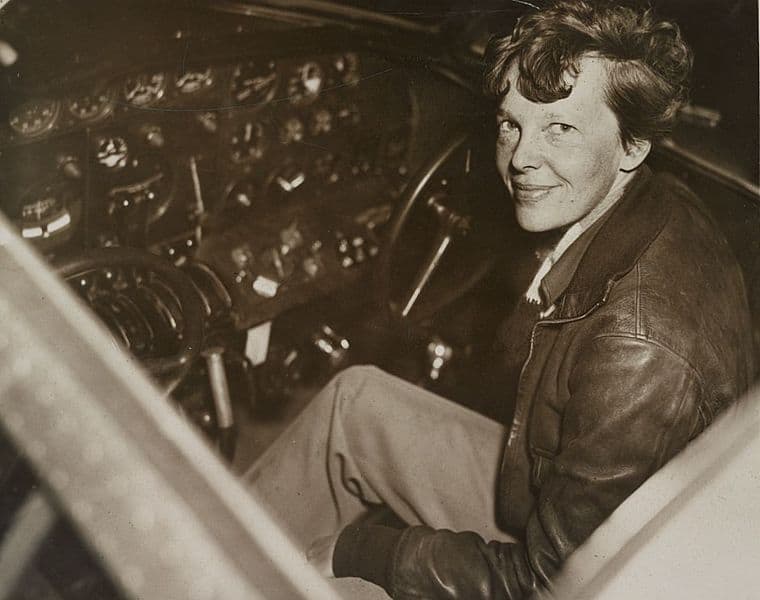
22. The Earhart survived and assumed another identity theory

In 1965 a researcher into the Earhart story met with a woman on Long Island named Irene Bolam. The researcher, Joe Gervais, noted the physical resemblance of Bolam to the missing flyer. Gervais created the theory that the two were in fact one; Bolam was Amelia Earhart. Gervais created the story that Earhart survived the crash and was captured by the Japanese, held for a time on Saipan, and transferred to the internment camp operated by the Japanese in Wieshien, on the Chinese mainland. There she remained until the end of the war, when she was repatriated with other surviving prisoners. Upon release, she assumed a new identity with the support and cooperation of the US government, which acted out of a sense of embarrassment that so distinguished an American citizen had undergone such an ordeal.
The theory was supported by a telegram sent to George Putnam and revealed in 1987. The telegram reported the well-being of its sender and admonished Putnam to give “love to mother”. Though later proved the telegram had been sent by a writer the name Ahmad Kamal, supporters of the Bolam was Earhart theory continue to cite it to support the belief that Earhart survived the war and lived out her life under an assumed name. Bolam doggedly denied she was Earhart in a press conference in 1970, when yet another book promoting the theory appeared. She successfully sued to have the book withdrawn. Since her death in 1982, forensic evidence conclusively proved that Irene Bolam and Amelia Earhart were not the same person, but the theory continues to percolate among conspiracy theorists in the 21st century.


