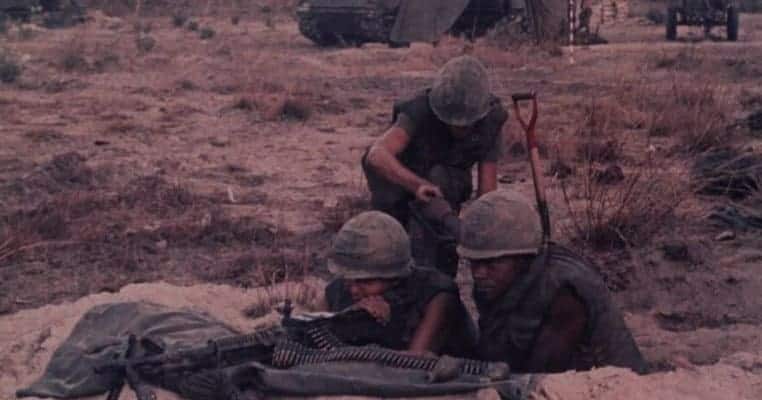
4. Training the Vietnamese Army was a problem for the Americans throughout the war

The first Americans sent to Vietnam were military advisors, dispatched to train the Army of the Republic of Vietnam (ARVN) to defend themselves against the North Vietnamese Army and the insurgents it supplied. After the Gulf of Tonkin incident, combat troops were sent to join them, but the advisory role remained significant throughout American involvement. It was largely a failure, and the likelihood of its failure was known by senior officers as early as the autumn of 1964. Advisers who had been to Vietnam and returned knew of the difficulties, not only in battling the enemy but in training their supposed ally. The South Vietnamese Army’s officer corps was corrupt, nepotism was rife, and sympathizers with the communists were rampant.
The advisors were also aware of problems within the US military, whose senior officers were veterans of World War II and Korea. They were not trained in the fighting of an insurgency, in a conflict in which there were no established battle lines. Beginning in 1955 and through the period of American involvement, ARVN was organized along the lines of the US Army, trained and equipped to stop an invasion of the South across the Demilitarized Zone. ARVN officers quickly exhibited a distaste for fighting against the insurgents which proliferated in South Vietnam. President Kennedy urged the American Army to alter its approach in Vietnam, using Army Special Forces, which he expanded – the Green Berets – for that reason, but the training of ARVN to fight the insurgency remained a problem throughout American involvement in the war.


