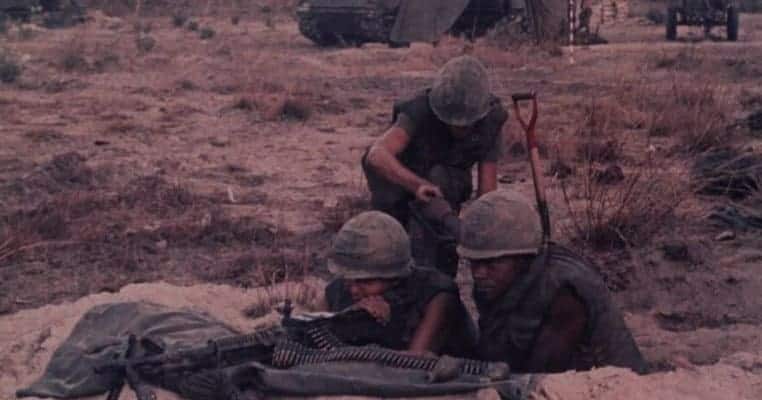
9. Training for warfare on Vietnamese rivers

The United States Navy was not trained for combat operations along inland waterways at the beginning of the Vietnam War. Though naval advisers had been supporting South Vietnamese units prior to the formal beginning of Operation Game Warden. They became the primary source of knowledge to prepare the riverine forces of the US Navy prior to their deployment. Besides training in small boat operation and maintenance, the sailors were trained in the use of the boat’s weapons, small arms, radio communication and signaling, visual signaling (semaphore and light), and other related disciplines. This was in addition to the training they had already received as part of their individual job disciplines, called rates in the Navy.
All members of the riverine crews endured a program called Survival, Evasion, Resistance, and Escape training (SERE). Originally developed by the US Air Force after World War II from techniques learned from Britain’s MI9, the Navy and Marines adopted the program during the Vietnam War. SERE training helped the brown water crews learn to survive on the land while evading capture by the enemy, eventually escaping back to a safe haven. The training was grueling. It lasted several days at a time in multiple phases. It also required the trainee to be able to survive by eating local grasses and weeds, berries, leaves, rats, snakes, insects, and whatever else could be obtained.


