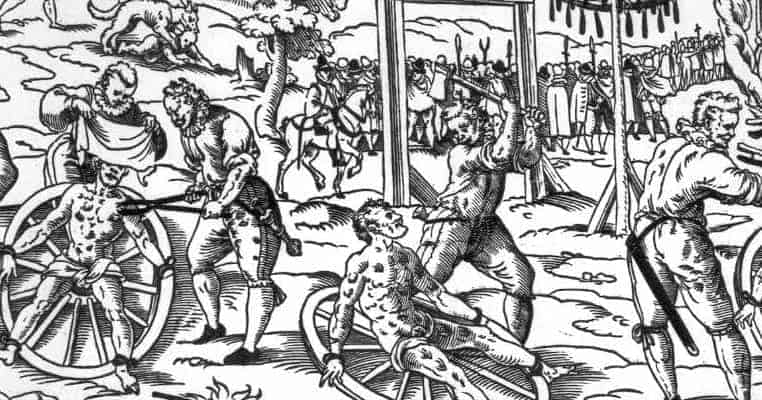

19. Death by a Thousand Cuts involved considerable skill and an agonizing death
Known in China as ling-chi, Death by a Thousand Cuts was practiced well into the 20th century in the country. In this form of execution, a victim was tied to a cross on a table which also contained a basket of razor-sharp knives, each with a different part of the anatomy written upon it, which was covered with a cloth. The executioner would slip his hand into the basket and draw a knife at random, like a diabolical raffle. He would read the knife’s inscription, and then slice the designated part of the body, before randomly selecting another blade.
The victim’s death could, technically, be instant. For amongst the knives (a thousand is obviously an exaggeration) was one instructing the executioner to stab the victim fatally through the heart. The executioner would have to keep the victim alive for as long as possible, which required near-medical knowledge of the limits of the human body. This also allowed an opportunity for bribes to be taken from friends and family to go straight for the heart. One modification of the execution was for amputations to be carried out rather than simple cuts, albeit in a prescribed order with a single knife.


