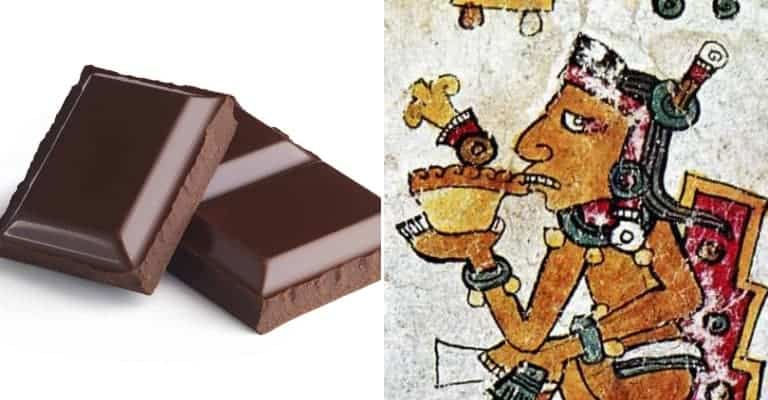

16. A bishop in Chiapas who banned chocolate during public masses found out the true meaning of death by chocolate
For one man, the expression ‘Death by Chocolate’ took on far too literal a meaning in the 1630s. That man was the Bishop of Chiapas in Mexico, and his story was reported in the Dominican friar and travel writer Thomas Gage’s 1648 Survey of the West Indies. The Bishop of Chiapas was sick and tired of women slurping cups of chocolate during mass. In fact, he got so cross that he threatened to excommunicate anyone who brought chocolate to church. No one paid any attention, however, and the Mexican women protested that they needed chocolate during the Bishop’s doubtless-thrilling masses.
Finally, the Bishop ordered his priests to seize the chocolate cups from his parishioners, but their husbands drew swords to protect the delicious beverages. The parishioners stopped attending the Bishop’s church altogether, heading to a more choc-friendly establishment, but as soon as they left, the Bishop grew gravely sick. Doctors all agreed that the Bishop had been poisoned, and appropriately enough the finger of blame pointed to a cup of chocolate he had quaffed in his own home. His disgruntled and chocolate-loving parishioners, according to Gage, were responsible. ‘Beware the chocolatte [sic] of Chiapas!’, was Gage’s pithy conclusion.


