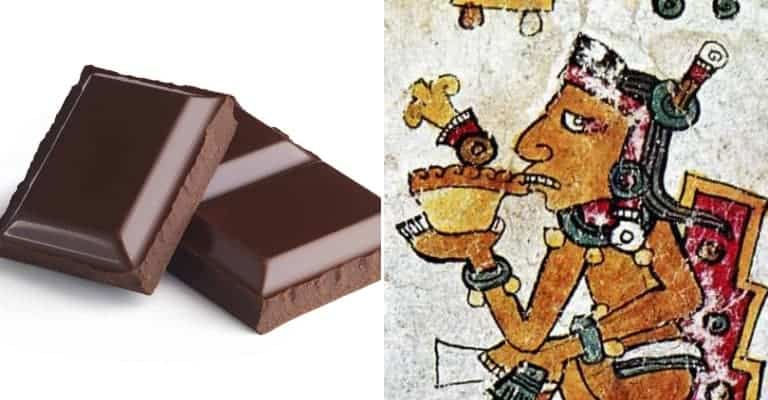

19. Chocolate was always a drink until the 19th century
For some reason or other, this writer always assumed that hot chocolate was a derivative of the more popular solid form of the stuff, but nothing could be further from the truth. For although it is assumed that cacao beans were eaten raw in Mesoamerica, they had not undergone the process to make them into chocolate, which was reserved for drinks. Chocolate as we know and love it today was actually invented in the mid-19th century (much more on that later). Indeed, the term ‘chocolate’ to anyone alive before this time would have meant a rich, thick drink.
Before it reached Europe, this drinking chocolate had a noticeably bitter taste (somewhere in the ball-park of the darkest chocolate you’ve ever eaten). In fact, the word ‘chocolate’ is believed to have come from the Mayan word xocolatl (‘bitter water’). It was prepared by crushing beans from the cacao tree (called cocoa after being crushed like this) and mixing the powder with water and chili peppers. Its thickness came from passing the liquid from one vessel to another, which gave the drink a pleasing frothiness. Later cultures roasted the beans before preparation, but never sweetened the final product.


