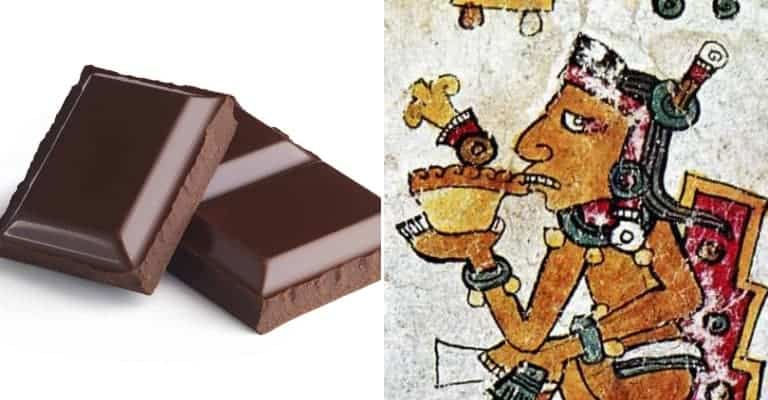

3. Modern chocolate was invented in the 19th century
As mentioned above, all chocolate consumed took the form of a drink until the early 19th century. The key innovation that led to today’s chocolate bar can be attributed to Coenraad Johannes van Houten (1801-87), a Dutch chemist, whose father, Casparus, owned a chocolate factory. In 1828, father and son patented a hydraulic cocoa press that squashed half the cocoa butter from the beans. This all sounds rather dull, but the resultant ‘cake’ could be smashed into cocoa powder, which is used for making drinks and mixing with sugar to make today’s more familiar form of solid chocolate.
The bar itself, however, was not invented until 1847, when the British confectioner Joseph Fry (1777-1861) learned how to add the cocoa butter back into the mixture to make a mouldable substance that could be sold in bars. Other companies, such as the more familiar Cadburys, soon followed suit. Milk chocolate, the most popular form of modern chocolate, was invented in 1875 by the Swiss chocolatier Daniel Peter, who added powdered milk invented by his neighbour Henri Nestlé into the paste. The resultant product was so successful that the pair founded… you’ve guessed it, Nestlé, the world’s largest food company.


