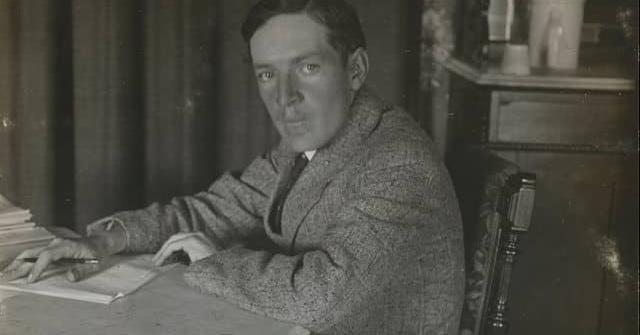

Jacob Riis
Jacob Riis was a trained carpenter who had learned English through the reading of Charles Dickens when he arrived in the United States from Denmark in 1870. His first act in America was to purchase a gun for protection in New York. It cost him half the money he had. He tried his hand at mining in Pennsylvania, found odd jobs as a carpenter and laborer back in New York, eventually pawned his pistol, and finally found a job in New Jersey. Eventually he became a salesman, with the help of the Danish Consulate in Philadelphia, selling flatirons. While working as a salesman he attempted to sell several articles and pieces of fiction.
By the time Riis returned to New York, again destitute, he knew well the ills of poverty, hunger, unemployment, homelessness, and hopelessness. He finally landed a job as a reporter, eventually purchased the newspaper, resold it for a large profit, and returned to Denmark to marry his longtime love there, Elisabeth. Riis and his bride returned to New York and he began working as a police reporter for the New York Tribune, based in the core of Five Points, then the worst of New York’s teeming slums, riddled with crime. Riis began to use photography to document the conditions of the slums where he worked.
In 1889 Riis published an article in Scribner’s Magazine entitled How the Other Half Lives, which included photographs of some of the city’s worst areas. The article was well received and Riis expanded the article into a book, providing greater detail of life in the slums and the attitudes of the slumlords responsible for their existence. Riis followed the successful book with several others and engaged in lecture tours, supported with photographs, to generate support for social reforms. Riis also documented the perils of the drinking water in New York, where other towns north of the city used water bound for New York as sewers.
The article describing the water situation led the city of New York to take steps to improve the water supply by purchasing the New Croton reservoir. Riis continued to urge social reform and both societal and government action to improve the lives of the urban poor, but in his books and articles he often attributed the condition of some of the tenements to be based on racial attitudes of the tenants, attributing their failures to rise out of poverty to racial shortcomings. His work was particularly harsh regarding Jews and Oriental immigrants, and he once wrote of urban blacks that they were happy living in poverty in the tenements.
Jacob Riis was responsible for raising public consciousness of the plight of the poor in the slums of New York and other cities. He did so by appealing to the emerging middle class and the wealthy. Riis managed to bring himself out of the depths of poverty and squalor in the tenements in a manner which was followed by many of the immigrants who settled there temporarily upon arrival in America, willing to endure them in order to save enough money to eventually emerge from them. His most significant contribution was his ability to raise awareness of health issues arising from poor sanitation and water distribution, which led to significant reforms.


