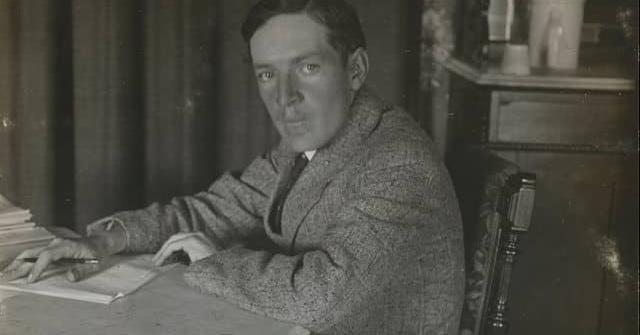

David Graham Phillips
David Graham Phillips was a graduate of Princeton University and an experienced journalist and novelist when he wrote a series of articles for Cosmopolitan Magazine in 1906 exposing the corruption within the United States Senate and its connection to wealthy American families. The series was entitled The Treason of the Senate, and although it presented a disturbing view of the corruption present between Senators and others outside of the body, it also presented areas of corruption within the Senate itself, including the manner in which Senators were selected, there being at the time no direct election of US Senators by voters.
After a foreword was published in February the first full article appeared in March 1906, and focused on Senator Chauncey Depew of New York. Depew was presented as a long time pawn of the steamboat and railroad magnate Cornelius Vanderbilt and William Vanderbilt, who had steered legislation through the Senate at Vanderbilt’s behest, using Vanderbilt’s money to obtain votes as necessary. Prior to Depew’s entry into the Senate he had bribed other elected officials to obtain votes as directed by the Vanderbilts, and his own Senate seat had been obtained through the railroad magnate’s persuasion of New York government officials.
The second installment was a description of the relationship between Senator Nelson Aldrich and the Rockefellers. Aldrich was one of the most powerful men in the Senate and was the Chairman of the Senate Finance Committee. Aldrich had steered bills manipulating tariffs through the Senate as directed by the Rockefeller influence, and he also controlled who in the Senate received contributions from the oil tycoon. This gave Aldrich control of a political bloc within the Senate itself which would have been viewed as a political machine were it applied to a municipal or state government. The attacks on Aldrich were particularly well documented.
The third installment in May described the corruption surrounding Senator Arthur Gorman of Maryland, who had been removed from his scandalous Senate office in 1896, but managed to use his influence and power in Maryland to get his Senate seat back. Gorman and Aldrich were political allies and used the money fed them to obtain votes in the interests of their supporters, including railroads and sugar interests in the case of Gorman. While President Roosevelt attacked the series and its author, few others did, including in the home states of the Senator’s involved, of which there were several more in smaller roles.
The series led to an increase in the demand for direct election of Senators by popular vote, which resulted in the 17th Amendment to the Constitution being ratified in 1913. Phillips could well claim to have been the most successful muckraker of all, since his work helped to amend the Constitution of the United States. There was little backlash against the article in other publications, despite its frequent use of purple prose in its description of some of the activities which went on in the deal-making of the Senate at the time. Phillips did not live to see direct election of Senators. He was murdered in New York in 1911.


