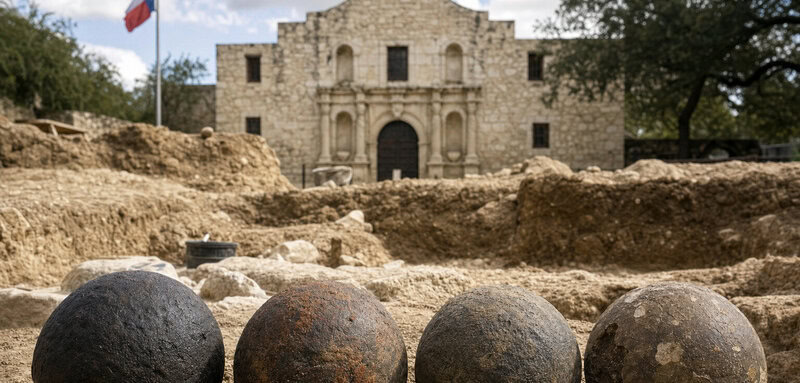
Somewhere beneath the sun-baked soil outside the Alamo Church, four iron and bronze spheres spent nearly two centuries waiting — silent witnesses to one of the most mythologized battles in American history. Now, an 18-month archaeological excavation has finally pulled them into the light, and what they’re revealing about the Battle of the Alamo is adding new physical dimensions to a story Texans have told themselves for generations.
February 1836: The Thirteen-Day Siege That Made the Alamo Immortal
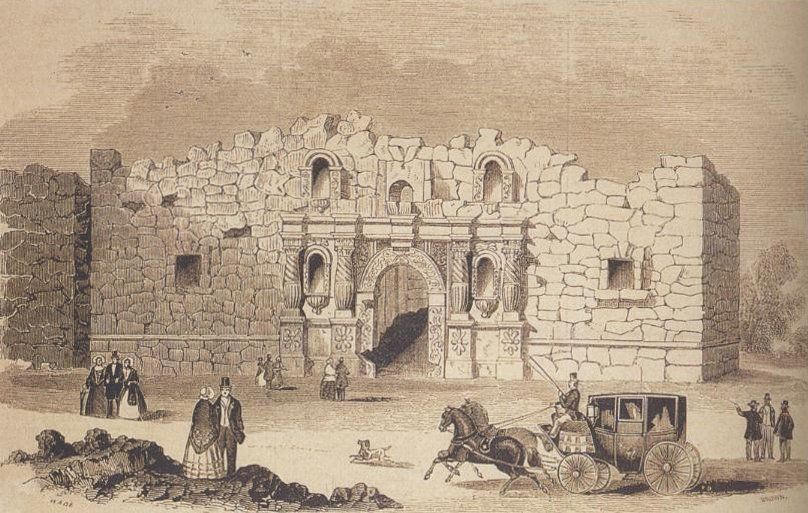
In the bitter cold of late February 1836, Mexican General Antonio López de Santa Anna encircled the crumbling mission walls of the Alamo with an army vastly outnumbering the Texian garrison sheltering inside. For thirteen days the two sides traded fire, the defenders holding out in an act of defiance that would eventually echo through every Texas schoolroom as “Remember the Alamo.” When Santa Anna’s troops finally stormed the compound on March 6, the battle was over in brutal, decisive hours — leaving somewhere between 180 and 260 Texian defenders dead, by most historical estimates.
Yet for all the legend that grew from those days, the physical record of the Alamo siege vanished almost immediately into the earth. Artillery shot from both sides gouged into the soil of the compound and stayed there, undisturbed, as the story above ground ballooned into myth while the evidence below ground simply waited.
Nearly 200 Years of Buried Evidence
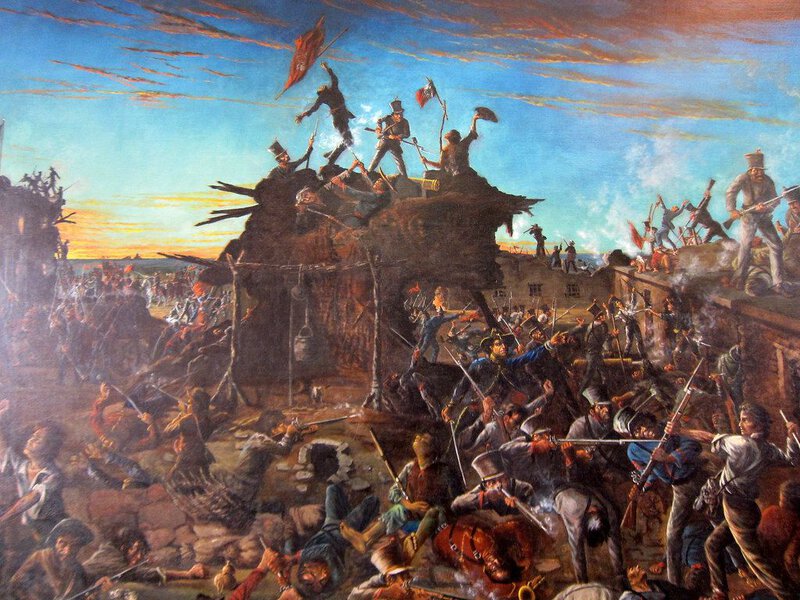
San Antonio grew up and over the Alamo like a city does over any wound — pragmatically, without ceremony. Streets were paved, buildings raised, and the grounds around the Alamo Church were landscaped and replanted, each layer of urban development pressing the battlefield’s physical evidence deeper into the soil. No modern, systematic excavation of the exterior grounds had ever recovered battlefield ordnance; the cannonballs lay exactly where the momentum of 1836 had left them.
That silence lasted the better part of two centuries, which meant that when archaeologists finally arrived with trowels and ground-penetrating surveys, they were beginning almost from scratch. The physical story of the battle — the angles of fire, the positioning of guns, the geography of the final assault — existed only in fragmentary written accounts and the contested memories of survivors.
The 18-Month Excavation Outside the Alamo Church
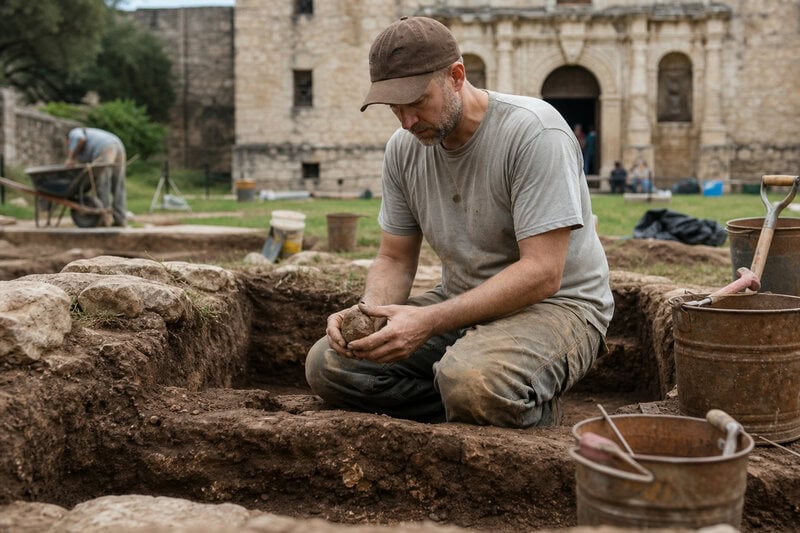
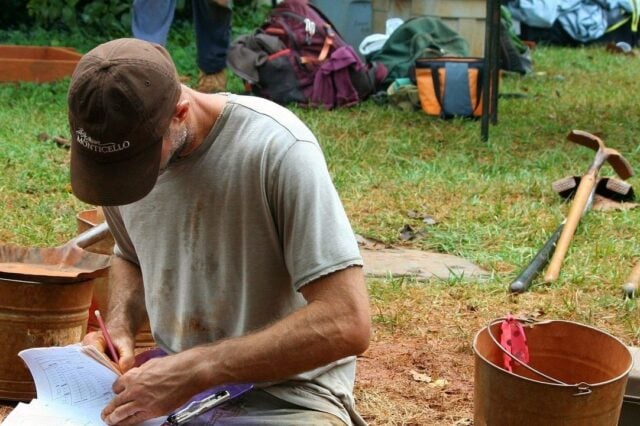
The dig that would change all of that was not a rushed salvage operation but a careful, methodical 18-month excavation focused on the exterior grounds surrounding the Alamo Church — the outer areas where much of the siege’s violence actually unfolded, rather than the photogenic chapel interior that tourists know. The project was conducted as part of a broader preservation and redevelopment effort, giving researchers the kind of controlled, sustained access to undisturbed ground that archaeologists rarely get in the middle of a living city.
Crews moved slowly and deliberately through soil layers that had not been professionally examined before, alert to the possibility that any fragment — metal, ceramic, bone — might redate or reframe the accepted timeline of the battle’s final hours. The patience that work demanded would prove justified.
First Cannonball Surfaces: A Bronze Sphere Emerges from the Dirt
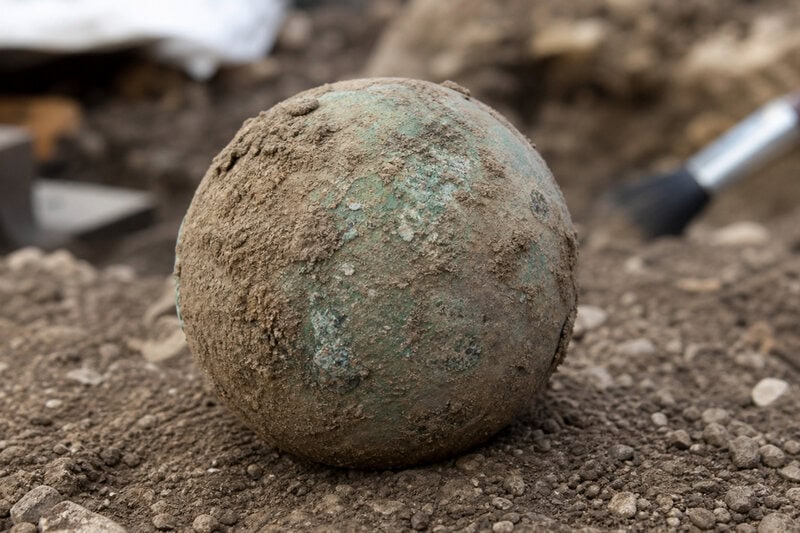
Among the first significant ordnance to emerge was a bronze cannonball, and its material immediately told a story. Santa Anna’s army relied on bronze cannon during the siege, so a bronze projectile recovered outside the church walls pointed toward the Mexican bombardment. More importantly, its precise find location gave researchers something they had never had before: a fixed geographical data point for mapping where incoming fire had actually struck.
Photos taken at the site showed archaeologists painstakingly cleaning the sphere, brushing nearly two centuries of compacted soil from a surface that had last caught daylight in the final chaotic hours of the 1836 battle.
June 2026: A Solid Iron Cannonball Pulled from the Northeast Corner
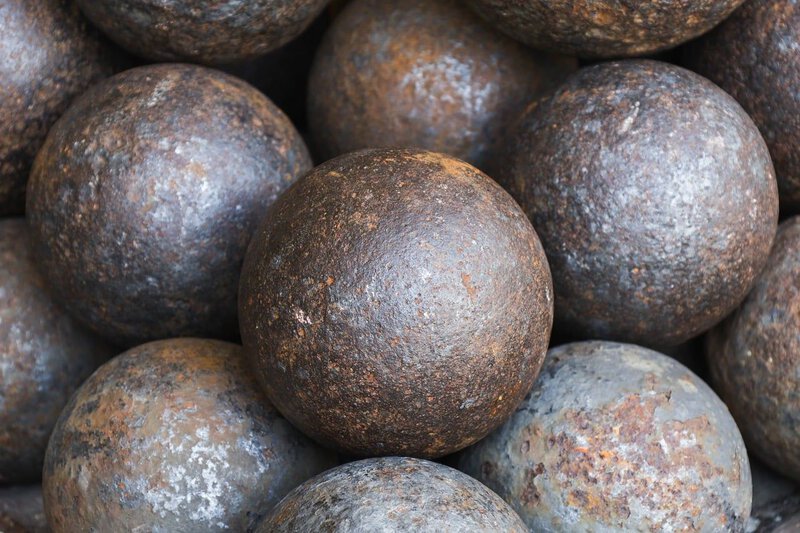
Excavators working a trench near the northeast corner of the Alamo Church recovered a second intact cannonball — a solid iron projectile whose composition told a different story from the bronze sphere. Iron shot of this type is consistent with ordnance used by the Texian defenders, raising the possibility that this was the first physical artifact directly attributable to the garrison’s own cannon fire ever recovered from the exterior grounds.
The northeast corner location added crucial spatial detail to a battle whose geography has long been reconstructed almost entirely from written accounts. Here was metal evidence of where defenders may have directed their fire — a specific quadrant of the compound, anchored in soil rather than in the pages of a contested historical record.
Physical Evidence from Both Sides of the Battle
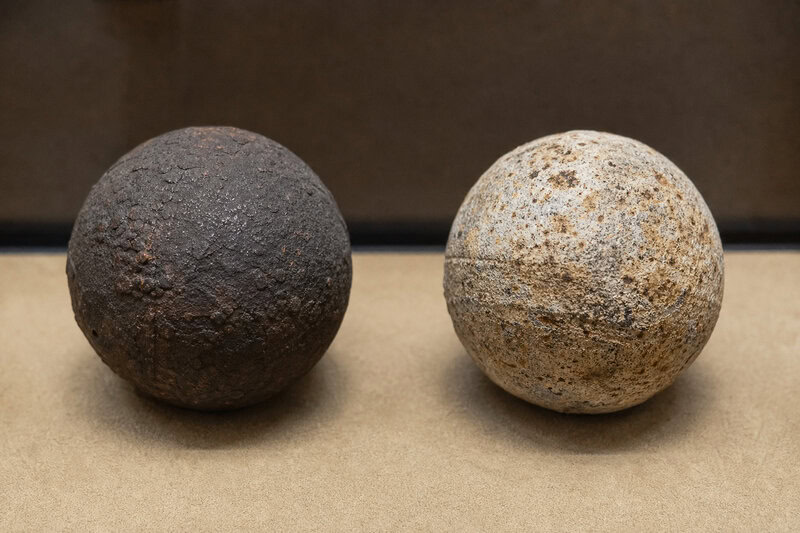
In the span of three months, the dig produced one cannonball attributed to Mexican forces and one attributed to the Texian defenders — the first time physical ordnance from both combatants had been recovered in a single dig at the site. Having artifacts from each side transformed the archaeology from a one-sided snapshot into something approaching a physical dialogue between the two armies.
Researchers could now begin cross-referencing find locations with period maps and surviving eyewitness accounts, building a spatial model of where guns had been positioned during the siege’s climactic final assault. The story that had lived only in words was acquiring coordinates.
The Final Tally: Four Cannonballs, Two Metals, One Buried Battle
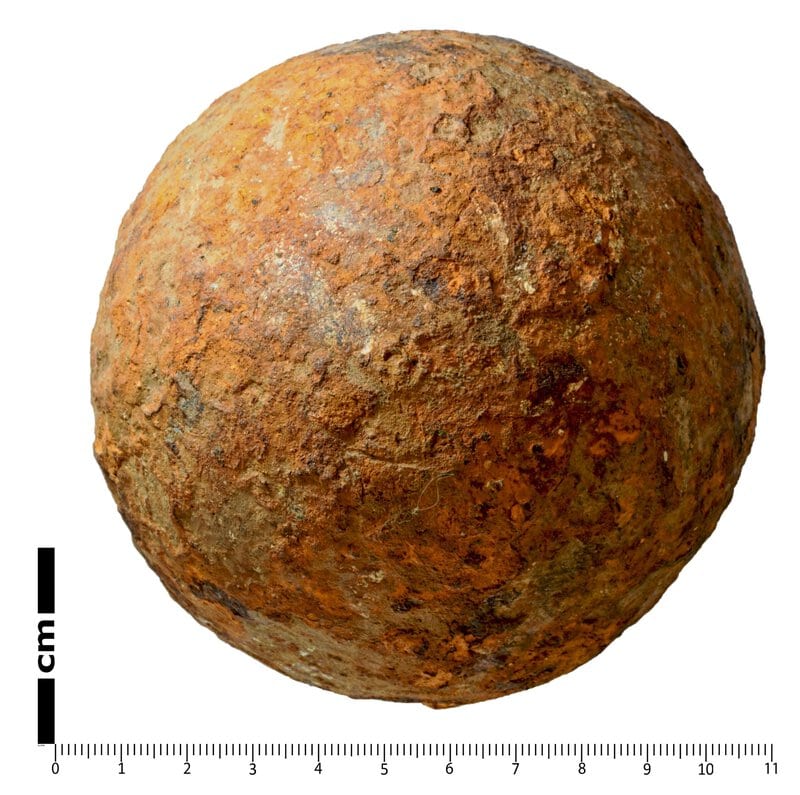
By the close of the 18-month excavation, the team had recovered four cannonballs in total from the grounds outside the Alamo Church — a mix of bronze and iron projectiles spanning both sides of the conflict. Four might sound like a modest haul, but battlefield ordnance almost never survives intact; most shot was recovered and reused by the armies themselves, and what remained in the ground typically corroded into unrecognizable fragments over two centuries.
Each intact sphere was therefore an extraordinary survival. Together, the cannonballs recovered during this project represent the most significant physical ordnance assemblage ever found at the site — a benchmark that underscores just how little the ground outside the church had previously yielded.
November 2026: The Public Announcement
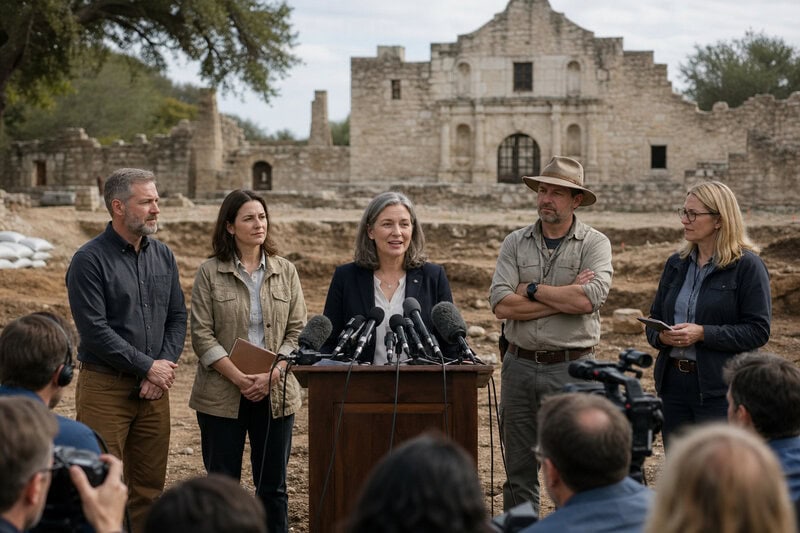
In November 2026, archaeologists formally announced the discoveries to the public, and the response was immediate and international. The findings were received not merely as a curiosity but as a meaningful contribution to understanding the final hours of the battle — where cannon were positioned, which areas absorbed the heaviest fire, and how the assault moved spatially across the compound in ways that written records had never precisely captured.
Researchers emphasized that at least one cannonball was confirmed fully intact and datable to the 1836 battle, making these not ambiguous relics open to interpretation but direct physical witnesses to the closing violence of the siege — objects that had been in flight during the battle itself and had simply never left the premises.
What the Cannonballs Are Actually Changing About Alamo History
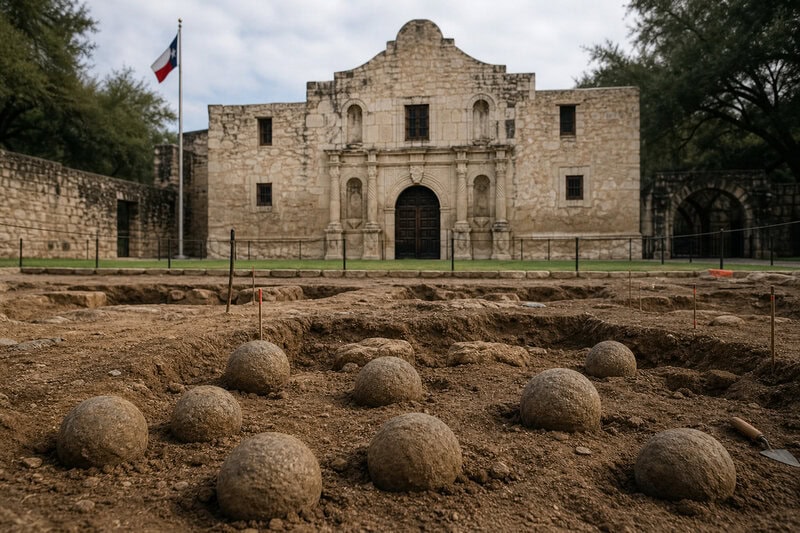
The specific find locations outside the church exterior are already allowing researchers to test long-held assumptions about the angles and phases of Santa Anna’s artillery bombardment. Written accounts of the battle have always carried the weight of their authors’ circumstances and agendas: survivors were few, Mexican military records are incomplete, and many Anglo-Texan sources were shaped as much by the desire to mythologize as to document. The result was a narrative that blurred history and legend almost from the moment the smoke cleared.
Physical evidence like this ordnance does something that no account written after the fact can fully accomplish — it anchors the story in soil and metal, in the specific place where a cannonball stopped moving on the morning of March 6, 1836. For Alamo archaeology, that kind of anchor is genuinely significant, even as researchers caution that four cannonballs represent a starting point rather than a final verdict on the battle’s contested geography.
Nearly 200 years of silence, and four iron and bronze spheres are contributing more hard physical data about the final hours of the Alamo than the ground outside the church had ever previously surrendered — a reminder that history’s most durable witnesses are sometimes the ones buried deepest.