8. Abraham Lincoln and the suspension of habeas corpus in Maryland
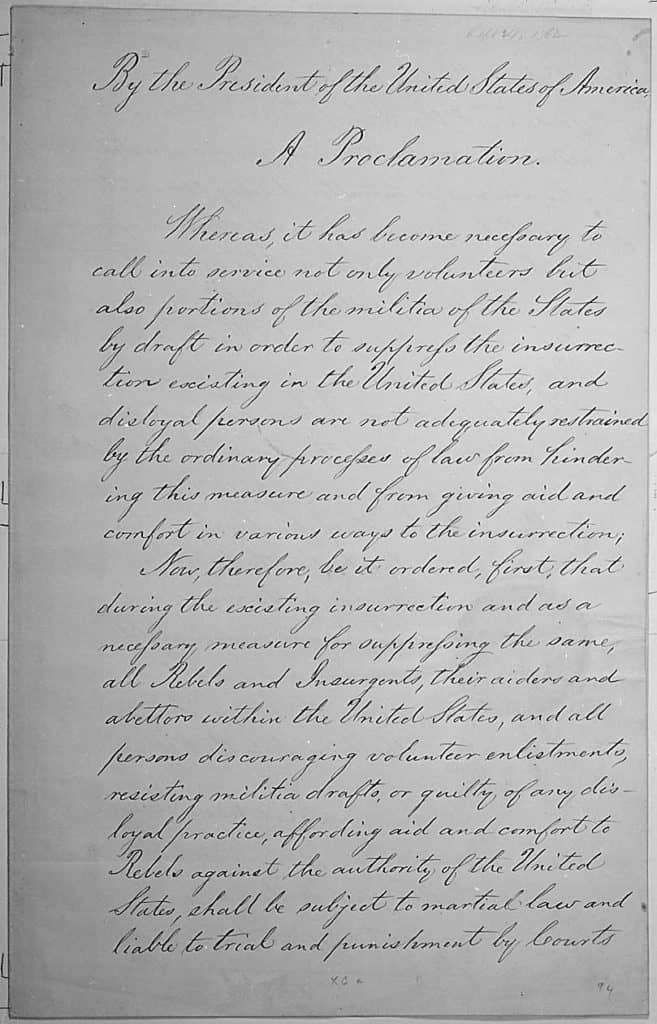
When Abraham Lincoln entered the office of the President seven southern states had already seceded from the Union, and the nation’s capital was bounded by two states in which slavery was practiced – Maryland and Virginia. Virginia had not yet seceded from the Union, but its intentions were clear. Following the attack on Fort Sumter Lincoln set out on a series of steps which would expand the powers of the Presidency, though many of them were of questioned legality and led to strong opposition in the Congress and in the minds of the public. One of the earliest actions was the suspension of habeas corpus.
Lincoln suspended habeas corpus between Washington DC and Philadelphia, giving the army the right to arrest and detain individuals without charging them. On May 25, 1863, a man arrested by the army and held at Fort McHenry applied for his release under a writ of habeas corpus. Chief Justice of the United States Roger Taney found that Lincoln did not have the right to suspend habeas corpus, but did not direct action regarding the prisoner. Lincoln ignored the finding and continued to hold the prisoner, as well as others who were covered under Taney’s finding. In July Lincoln informed Congress that he was authorized to suspend habeas corpus under the Constitution, Article I, Section 9, which allowed for the suspension of the right, “…when in cases of rebellion or invasion the public safety may require it”.


