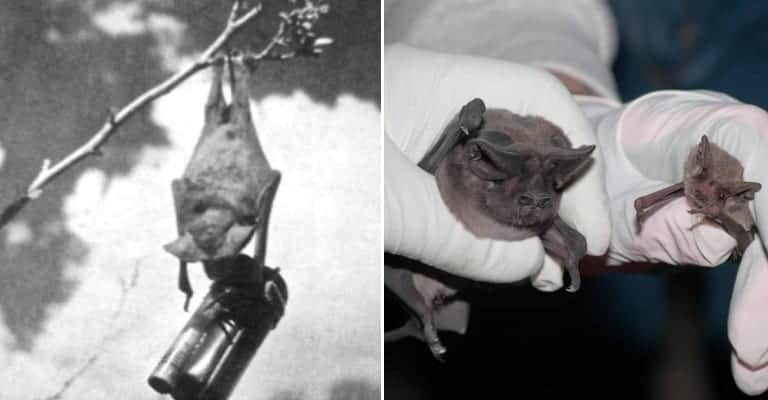
13. Developing Tiny Bombs For Tiny Warriors

Dr. Fieser eventually settled upon a design for a light bomb made of a guncotton case, filled with kerosene. A capsule attached to the bomb contained a timed fuse and trigger assembly, which was affixed to the bat by a wire. When the bat was released, the bomb would dangle from the critter by the wire, and its weight would activate the timed fuse, which would eventually trigger the incendiary.
The Bat Bombs came in two models: a 0.6 ounce incendiary, which produced a 10 inch flame that burned for 4 minutes, and a 1 ounce model, which produced a 12 inch flame that burned for about 6 minutes. By then the critters, released over Japanese cities, would hopefully have roosted inside attics and other nooks and crannies. In theory, the bats would gnaw through the wire connecting them to their incendiaries before they went off, and thus survive their mission and go on to live happy bat lives. If not, they would have the thanks of a grateful nation for their sacrifice.


