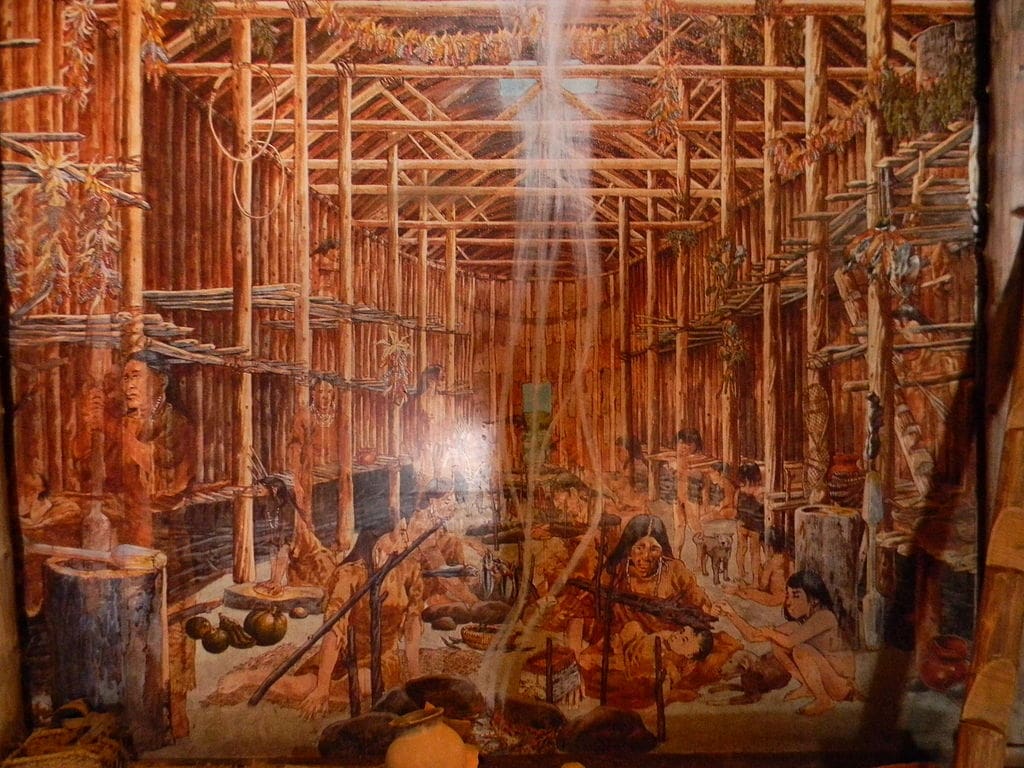
Native American Architecture is a Modern Inspiration

What makes Native American architecture amazing is its template for modern designers. The buildings were sustainable, but also very sturdy, waterproof, and kept cool (or warm) using natural, not mechanized means. These ideas are consistent for every region, from the Arctic to Southwest, from small, migratory bands to the urban centers like Cahokia and Chaco Canyon. The design was often compact rather than clearing great swaths of land for housing and made use of the materials nearby for construction.
True, some of these materials are less sustainable that others, particularly the loss of ancient redwoods in California, but that was an exception. Native American architecture is complex, with a huge variety in styles, details, decorative details, and spiritual meaning. Archaeologists are continuously finding new information about Native American buildings. But more important, architectural traditions live on with the Native American people. These traditions are passed down through generations.
Where did we find this stuff? Additional Sources
A Mohawk Iroquois Village. (n.a.) New York State Education Department, (n.d.)
Ethnographic Notes on California Indian Tribes: Reports of the University of California Archaeological Survey, No. 68, pt. 1. C.H. Merriam, in R. Heizer (1966).
Canada’s First Peoples. (n.a.) Canadian Studies Program Canadian Heritage (n.d.)
Lewis and Clark Expedition. History.com Editors. History.com, 9 August 2009
Native American Architecture. Peter Nabokov and Robert Easton (1989). Oxford University Press.
Native American Cultures. Tom Richey, topmrichey.net, 17 June 2016.
Natural Historical Design. (n.a.) Louisiana Department of Natural Resources, (n.d.)
Pueblo Architecture and its relationship to place. Cassandra Smith. Khan Academy, (n.d.)
Using wood on King’s Island, Alaska. Claire Alix, Etudes Inuit (Inuit Studies). 36(1): 89, January 2012. DOI: 10.7202/1015955ar


