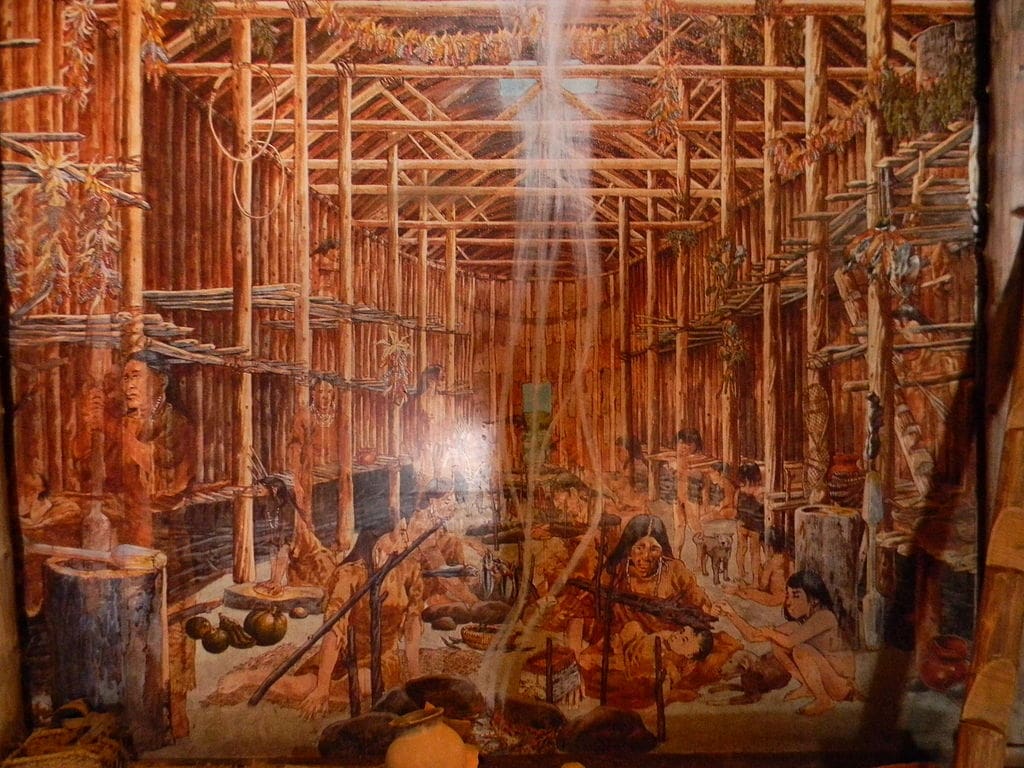
Subarctic Pole House – Life on Stilts

Native American architecture is amazing in how it makes terrible climates and terrains livable. Indigenous people on King’s Island in western British Columbia figured out how to live on rocky, steep cliffs. They built their homes on platforms secured to the cliffside by poles embedded into the ground. As the cliff rises from the ocean the houses are tiered vertically, and tightly arranged side-by-side. Wood staircases between the layers let people move up and down the cliff.
Pole houses had a benefit beyond the cardio of constantly going up and down stairs; the space under the building’s platform, where the wood was driven into the cliffside, was roomy enough to store whaling boats. Indigenous architectural historians Nabokov and Easton (1989) say the boats needed to be “ready to launch whenever sea mammals were sighted.”


