Back to the front page
American History

Juneteenth and Other Lesser Known African-American Historical Culture

Colonel Tye - American Revolutionary War
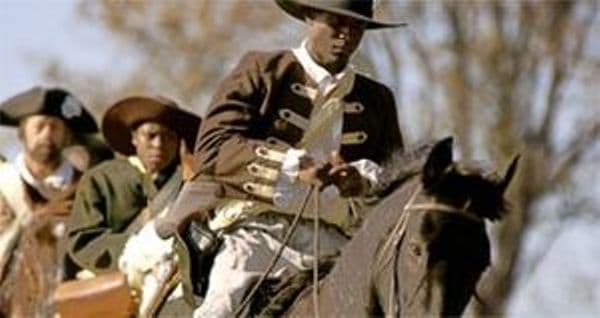
Colonel Tye as portrayed in a PBS documentary. PBS
Advertisement

15. Turning Down the Benevolence of Slavery

Mount Vernon, George Washington’s plantation. PBS

Harry Washington spent years toiling in appalling conditions, enveloped by heat, humidity, and clouds of mosquitoes, before he was taken to his master’s plantation, Mount Vernon. There, he was tasked with looking after Washington’s horses. In 1771, he was demoted from his skilled tasks, and was sent back to grueling manual labor. That prompted him to flee, but he was recaptured a few weeks later, and was restored to slavery.

In 1775, the Revolutionary War started, and Virginia’s governor offered slaves their freedom if they fought for the British. Mount Vernon’s manager assembled the plantation’s slaves, and urged them to trust the benevolence of slavery’s paternalism over the precarious dangers of freedom. Harry preferred the dangers of freedom over the benevolence of slavery. Risking savage penalties if caught, he fled Mount Vernon along with two other black bondsmen.

Written by

A lifelong history buff, I developed a particular passion for WW2 history as a child, when I spent hours listening to my grandfather, enraptured, as he recounted his wartime experiences in the British East African Campaign and with the British 8th Army in North Africa.

I graduated with a history BA from George Mason University, then went on to get a JD from the University of Virginia School of Law. After lawyering for a decade, I moved to sunny Rio de Janeiro and a less demanding career, opening a tourism agency in Copacabana.

A big chunk of my free time is spent blogging (you can follow me on Quora https://www.quora.com/profile/Khalid-Elhassan ) or freelance writing, mostly about my favorite subject, history.

Advertisement

Keep reading