Back to the front page
American History

Juneteenth and Other Lesser Known African-American Historical Culture

Colonel Tye - American Revolutionary War
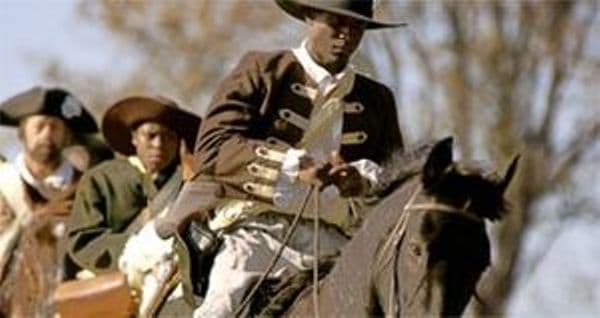
Colonel Tye as portrayed in a PBS documentary. PBS
Advertisement

30. “Freedom”

Slaves being branded. Gauk Artifact

British Freedom’s choice of name proclaims something startling, that runs counter to the widely accepted narrative of the American Revolution. To wit, that it was clear just who were the good guys and who were the bad guys, and that there were well-defined lines separating those fighting for liberty from those fighting for tyranny. In that narrative, the Patriots fought for freedom, while the British fought to oppress those yearning to be free.

It is a flawed narrative when examined from a contemporary black perspective. In the Declaration of Independence, for example, Thomas Jefferson blamed King George III for the institution of slavery. That held no water for black slaves like British Freedom: they blamed slave masters like Jefferson for slavery. From their perspective, the British monarch was their enemy’s enemy, the emancipator who offered them freedom from the likes of Thomas Jefferson, and was thus their friend.

Written by

A lifelong history buff, I developed a particular passion for WW2 history as a child, when I spent hours listening to my grandfather, enraptured, as he recounted his wartime experiences in the British East African Campaign and with the British 8th Army in North Africa.

I graduated with a history BA from George Mason University, then went on to get a JD from the University of Virginia School of Law. After lawyering for a decade, I moved to sunny Rio de Janeiro and a less demanding career, opening a tourism agency in Copacabana.

A big chunk of my free time is spent blogging (you can follow me on Quora https://www.quora.com/profile/Khalid-Elhassan ) or freelance writing, mostly about my favorite subject, history.

Advertisement

Keep reading