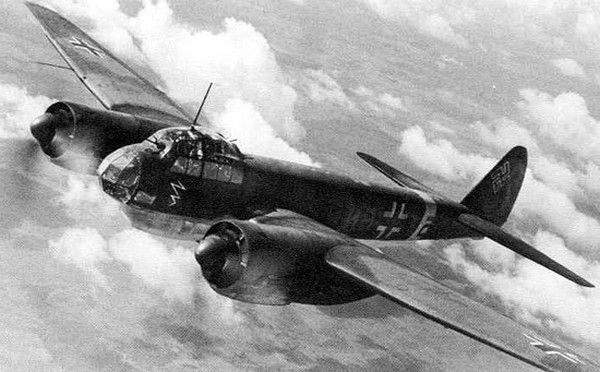
16. The Luftwaffe’s Workhorse Bomber

Ju 88s performed better than other German bombers during the Battle of Britain. However, they remained vulnerable when stripped of fighter protection, and still suffered from a variety of bugs. By battle’s end an improved version of the bomber that resolved the design shortcomings, the A-4, was introduced. With a 5500-pound bomb capacity and a 311 m.p.h. speed, the A-4 was the successful template upon which all future Ju 88s variants were based.
The improved Ju 88s performed exceptionally well in the 1941 invasion of the USSR. In addition to level bombing, a shortage of Stukas necessitated the use of Ju 88s as dive bombers – a role they performed well. In the Baltic, Ju 88s inflicted heavy losses on Soviet shipping. Ju 88s also met with success in Italy, where they proved exceptionally lethal against allied shipping. The Junkers Ju 88 was the most successful twin-engine German bomber of the war, and roughly 16,000, with dozens of variants, were produced during the conflict. That was more than any other German twin-engine airplane.


