
1. The Soviets Ended Up Benefiting From the Molotov-Ribbentrop Pact
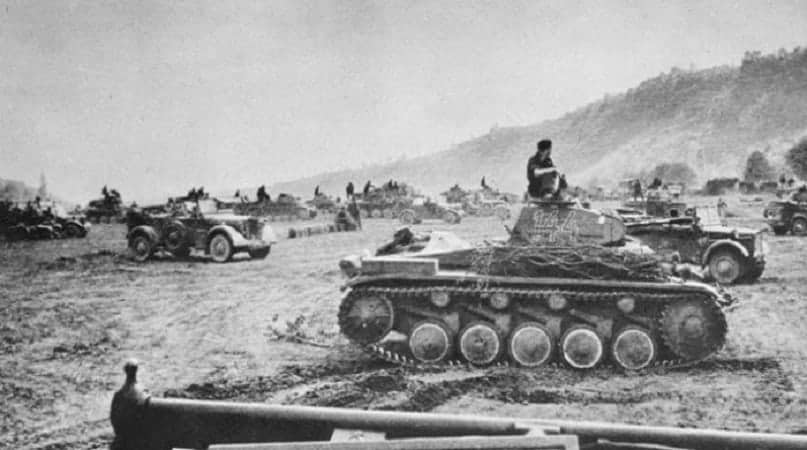
The Pact bought the Soviets nearly two years in which to prepare for war. Poor as the Soviet military’s performance was in 1941, it was even less prepared for war in 1939. Moreover, the Pact, which gave the USSR nearly half of Poland, pushed the Soviet borders hundreds of miles westwards, giving the USSR that much additional buffer. That mattered quite a bit, as space and distance proved decisive to Soviet survival when the Nazis suddenly attacked in 1941.
In 1941, the Germans came within 10 miles of the Kremlin, before they were turned back. Without the Molotov-Ribbentrop Pact, the Germans would have launched their invasion from a start line hundreds of miles further to the east. The same effort that ran out of steam within sight of the Kremlin, would likely have pushed far beyond had it started hundreds of miles closer to Moscow.
_________________
Where Did We Find This Stuff? Some Sources and Further Reading
Atkin, Ronald – Pillar of Fire: Dunkirk 1940 (2000)
CIA Center For the Study of Intelligence, Review – What Stalin Knew: The Enigma of Barbarossa
Clark, Alan – Barbarossa: The Russian-German Conflict, 1941-1945 (1985)
Encyclopedia Britannica – German-Soviet Nonaggression Pact
Encyclopedia Britannica – North Africa Campaigns
Groves, Leslie R. – Now It Can Be Told: The Story of the Manhattan Project (1983)
Historic UK – The Evacuation of Dunkirk, May 1940
Keegan, John – Oxford Companion to World War II (2001)
Kitchen, Martin – Rommel’s Desert War: Waging World War II in North Africa, 1941-1943 (2009)
Murphy, David E. – What Stalin Knew: The Enigma of Barbarossa (2005)
Ranker – 23 ‘Facts’ About World War II That Just Aren’t True
Rhodes, Richard – The Making of the Atomic Bomb (1986)
Skeptoid – No, Hitler Did Not Let the British Escape at Dunkirk
Toland, John – Infamy: Pearl Harbor and Its Aftermath (1982)


