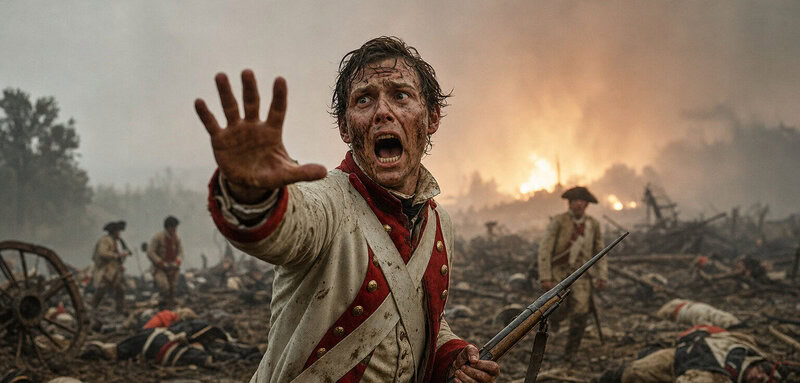
On the night of September 21, 1788, in the darkness of the Timiș River valley near the town of Karánsebes, the largest army the Habsburg Empire had put into the field that year managed to do what the Ottoman Empire had so far failed to do: it tore itself apart. No enemy sword was raised. No foreign general gave an order. The Austrian army, roughly 100,000 strong, simply destroyed itself — and its emperor ended up face-down in a ditch.
A Reformist Emperor, a Ruinous War
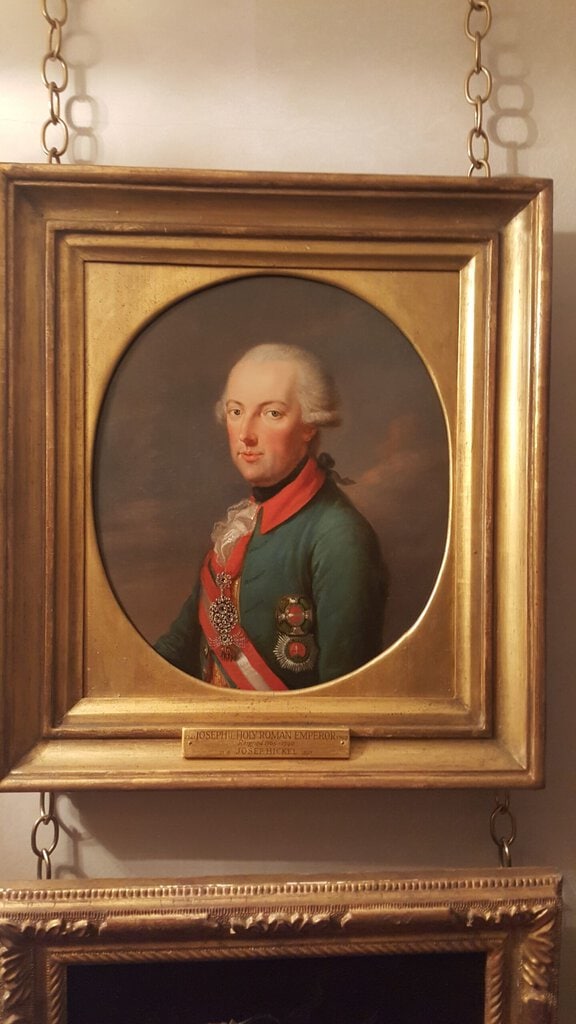
To understand how a night like that could happen, you have to understand the man at the head of that army and the impossible situation he had built for himself. Joseph II of Austria was, by the standards of his age, a visionary. He had abolished serfdom, granted religious tolerance, and dragged his empire’s legal code into the Enlightenment by sheer force of imperial will. He was also, by the late 1780s, a man running out of road. His domestic reforms had generated fury from the nobility and bewilderment from the peasantry, and now he had committed Austria to a war nobody at home particularly wanted.
The occasion was the Austro-Turkish War of 1788-1791. Joseph II had allied himself with Catherine the Great of Russia in her campaign against the Ottoman Empire, envisioning grand territorial gains in the Balkans. What he got instead was disease, supply failures, punishing heat, and a campaign that had already begun to buckle before the first significant battle. His correspondence from this period paints a picture of a man increasingly exhausted, watching the gap widen between the rational, ordered empire he had imagined and the chaotic, suffering reality in front of him.
The army Joseph commanded was, in one sense, a showcase of his own Enlightenment ideals — a multinational force drawing on the full breadth of Habsburg territory. Emperor Joseph II himself was at the head of the army, which consisted of various nationalities such as Serbs, Croats, Italians, and Slovaks. In another sense, that diversity was a catastrophe waiting to happen. These men shared uniforms and, nominally, a flag, but they did not share a language. Orders given in German dissolved into confusion when they reached a Serb hussar regiment. A Croatian infantry unit’s warning shout meant nothing to a Slovak conscript twenty yards away. The army was, in the most literal sense, unable to talk to itself.
Joseph had marched roughly 100,000 of these men into the Banat region — now part of modern Romania — and camped near the town of Karánsebes. It was an army wound tight: hungry, sick, exhausted, and strung along supply lines that could barely keep pace. The campaign had already suffered outbreaks of plague and dysentery severe enough to hollow out entire regiments before they reached a battlefield. All the army needed, in that condition, was a spark.
Schnapps on the Far Bank: How the Night Unravelled
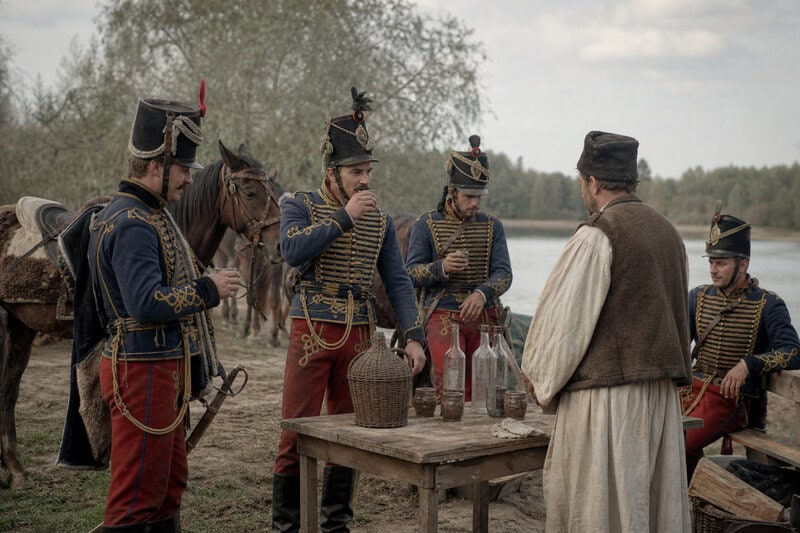
The spark, as it turned out, came in a bottle.
On the evening of September 21, a forward detachment of hussars crossed the Timiș River to scout for Ottoman forces. They found none. What they did find were local merchants willing to sell schnapps, and the hussars — tired, bored, and far from anyone telling them not to — bought it and began to drink. When infantry units crossed the river behind them and demanded a share of the liquor, the hussars refused. An argument erupted between men who, in all likelihood, could barely communicate their grievances to each other. Then someone fired a shot.
Exactly who pulled the trigger first is one of those details history has declined to preserve. It almost doesn’t matter. What matters is what that single gunshot did in the dark, among thousands of soldiers who could not see, could not speak to one another, and had spent months being told the Ottoman army was somewhere nearby looking for an opportunity. Cries of Turci! Turci! — Turks! Turks! — ripped through the units on both banks. In the absence of any way to verify or contradict the alarm, men did what soldiers under sudden threat do: they reached for their weapons and started moving.
Panic, once it starts moving through a large formation at night, does not stop politely at unit boundaries. It spreads. Soldiers fleeing the original commotion were silhouettes in the darkness to the men behind them — unidentified shapes moving fast, accompanied by screaming and hoofbeats. Those men opened fire on the silhouettes. The silhouettes turned out to be other Austrian soldiers, who then fled in a new direction, into another formation, which also opened fire. This catastrophic case of friendly fire fed itself, each wave of panic generating the next, with the darkness and the language barrier ensuring that no voice of reason could cut through in time.
Artillery crews, hearing what sounded from a distance like a full engagement — musket volleys, screaming, the thunder of cavalry — reportedly unlimbered their guns and began firing into the darkness. Into their own men.
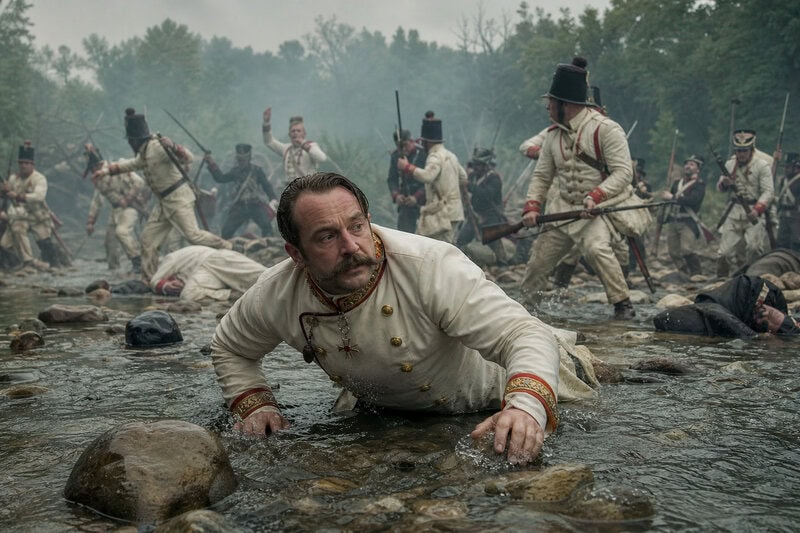
Joseph II, riding to reach the chaos and restore some order, was thrown when his horse was spooked. He went into a small stream and spent a portion of that night — the night of September 21 to 22, 1788 — lying in a ditch, soaking, while the army he had spent years building destroyed itself around him. One could argue this was a perfect metaphor for his entire reign, though the emperor himself was probably not in a philosophical mood at the time.
What the Ottomans Found
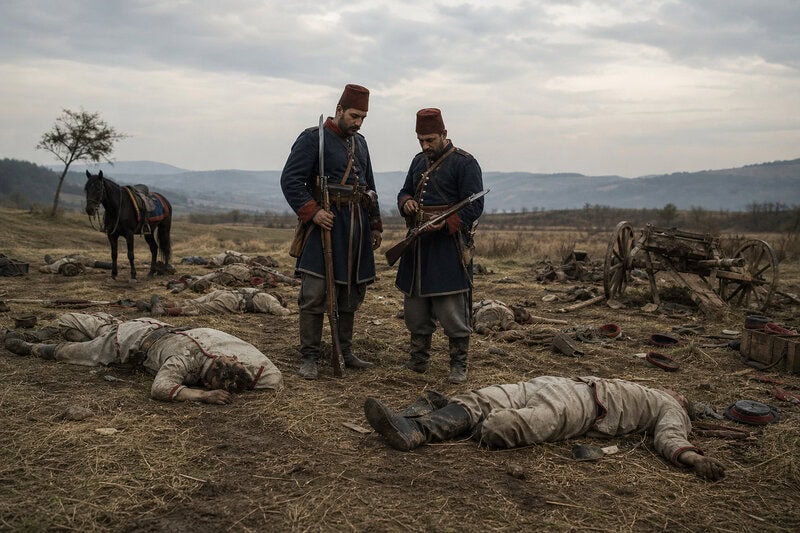
By the time grey light spread across the Timiș valley on September 22, the Austrian camp was wrecked. The force had fragmented. Men had fled in multiple directions, units had dissolved, and equipment had been abandoned across a wide stretch of terrain. The Battle of Karánsebes — as the incident came to be known, with some historical generosity toward the word “battle” — had produced real casualties inflicted entirely by Austrian hands on Austrian bodies. The Ottomans, the actual enemy, had not been present for any of it.
When an Ottoman force under Koca Yusuf Pasha did arrive at Karánsebes in the days that followed, they found not a fortified Austrian position to assault but an abandoned camp — scattered equipment, signs of rout, and a town there for the taking. They took it. A strategic position in the Banat had been surrendered without the Ottomans having to fight for it at all, the gift of an army that had spent a night fighting itself.
What you will not find in the formal Austrian military dispatches of this period is a candid account of what happened. Armies, then as now, were not in the habit of filing detailed paperwork on their own self-inflicted disasters. The incident leaked into popular memory through other channels — later accounts, soldiers’ stories, the kind of tale that spreads precisely because it is too strange and too humiliating to have been invented.
Disputed, Legendary, and Structurally Inevitable
Here is where the historian’s asterisk must be acknowledged. The Battle of Karansebes is described as both legendary and disputed — the most vivid details, including the precise casualty count and the emperor in the stream, may have gathered embellishment across two centuries of retelling. Contemporary primary sources are thin, as one might expect from an event the losing side had every reason to downplay. The story exists in that uncomfortable historical space between documented incident and cautionary legend.
What gives the account its stubborn credibility is not the drama but the structure. The conditions that night were not invented by later storytellers: a multilingual army with no shared operational language, alcohol circulating in a forward position, darkness, an already-demoralized campaign, and the kind of institutional stress that makes soldiers fire at shadows. Military historians studying command-and-control failures have no difficulty recognizing the pattern. Catastrophic friendly fire incidents driven by panic and poor communication were not unique to Karánsebes — what was distinctive was the scale, and the particular combination of vulnerabilities that made the Austrian army of 1788 more susceptible to this kind of collapse than almost any other force of the period. The Habsburg army’s linguistic fragmentation was not incidental; it was a command-and-control problem that Joseph II’s military administrators had flagged without resolution for years before the campaign began.
The lesson, as military historians have continued to note, is one that Joseph II could never publish in a gazette: an army that cannot communicate with itself is an army that can unmake itself without any help from the enemy.
The Emperor Who Never Recovered
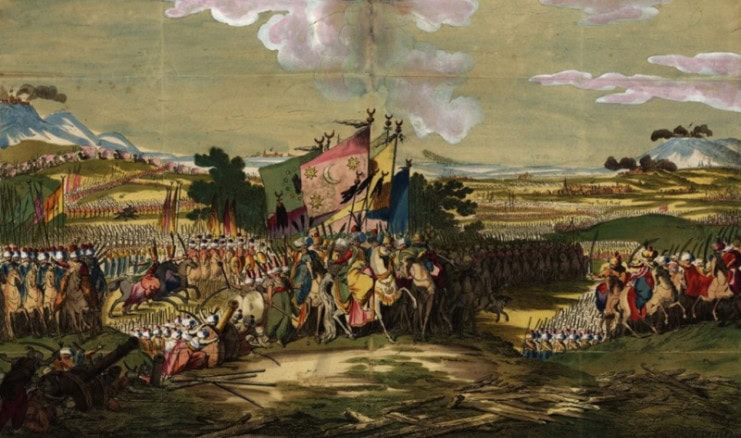
Joseph II survived the ditch. He did not really survive the war. His health, already fraying before the Karánsebes campaign, continued to decline through 1789 and into 1790. In February of that year — less than eighteen months after the night at Karánsebes — he died, having spent his final months rescinding most of the great Enlightenment reforms that had defined his reign. The nobility had pushed back too hard, the peasantry had revolted in too many provinces, and the emperor who had come to the throne with a blueprint for a rational, modern empire left it having watched that blueprint catch fire in almost every direction. The Patent of Toleration, the abolition of serfdom, the restructuring of the Church’s role in public life — reforms that had taken a decade of political capital to push through — were largely reversed before the ink on his death certificate was dry.
Karánsebes was not the cause of Joseph II’s collapse, but it was something perhaps worse: a concentrated image of it. An empire too diverse to coordinate, governed by ideals that outran the institutional capacity to realize them, undone in the dark by the very complexity that was supposed to be its strength. The strangest episode in Austrian military history — arguably among the strangest in the history of warfare — was not really a battle at all. It was a system failure, wearing a uniform.
The Timiș valley is quiet today. The town has long since passed through other hands and other histories. But the story of September 21-22, 1788 refuses to stay buried, surfacing in military history seminars, command-and-control case studies, and accounts of history’s most consequential self-inflicted disasters with a persistence that suggests it is doing real work. It keeps asking, with remarkable patience, the same uncomfortable question: what happens when the army you have built — or the institution, or the empire — can no longer understand itself?