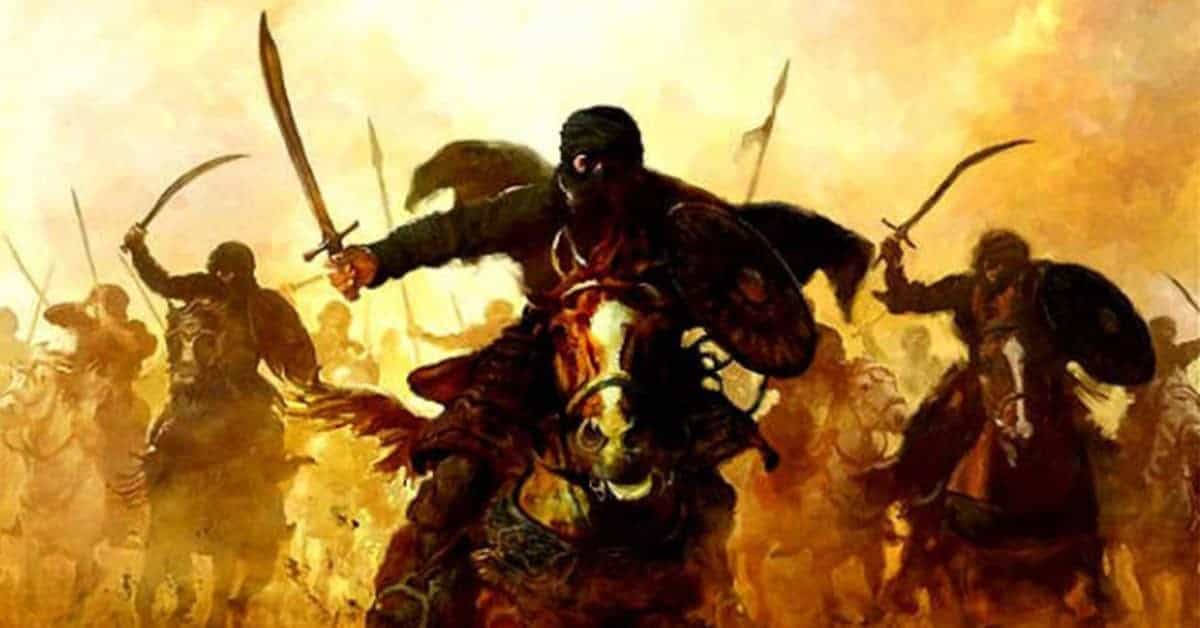

The Khawarij Waged a Centuries-Long Terror Campaign
The Khawarij rose in rebellion against the Caliph whom they had failed to assassinate, who was now Islam’s sole ruler thanks to a helping hand from the Khawarij’s botched plot that had killed his rival, Ali, but left him alive. They contended that he was illegitimate because he gained the Caliphate by force of arms, rather than election by the Muslim community.
Their democratic and egalitarian principles, commendable as they may have been, were more than counterbalanced by a fierce fanaticism that was off-putting to many. They contended that backsliding or sinning, such as drinking alcohol, fornication, missing the daily prayers, failing to fast on Ramadan, or even idle gossip, rendered the sinner an apostate deserving of death. The Khawarij launched a program of terror against the Caliph’s supporters, as well as those who did not meet their purity standards, viewing them as apostates.
As the struggle intensified, they grew in viciousness, and eventually viewed even neutral Muslims as enemies: their failure to support the Khawarij despite the glaringly obvious righteousness of their position proved their apostasy, rendering them kafirs and not fellow Muslims whose blood the Khawarij were prohibited from shedding.
Atrocities abounded, from widespread torture and disfigurement of captives to slitting the bellies of pregnant women, to massacres of entire villages and towns. Their most extreme subsect, the Azariqah in southern Iraq, separated themselves from the entire Muslim community and declared death to all sinners – defined as all who did not share the Azariqah’s puritanical beliefs – and their families.
Their rebellion was eventually crushed, but embers remained, and the Khawarij became the anarchists of Islam’s first centuries, an ever-present irritant and menace. Rejecting the authority of the Caliphate, they engaged in a campaign of terror and assassinations, combined with a low-level insurgency in backcountry regions that would flare up every generation or two into a major rebellion that required considerable expense and effort to beat down.


