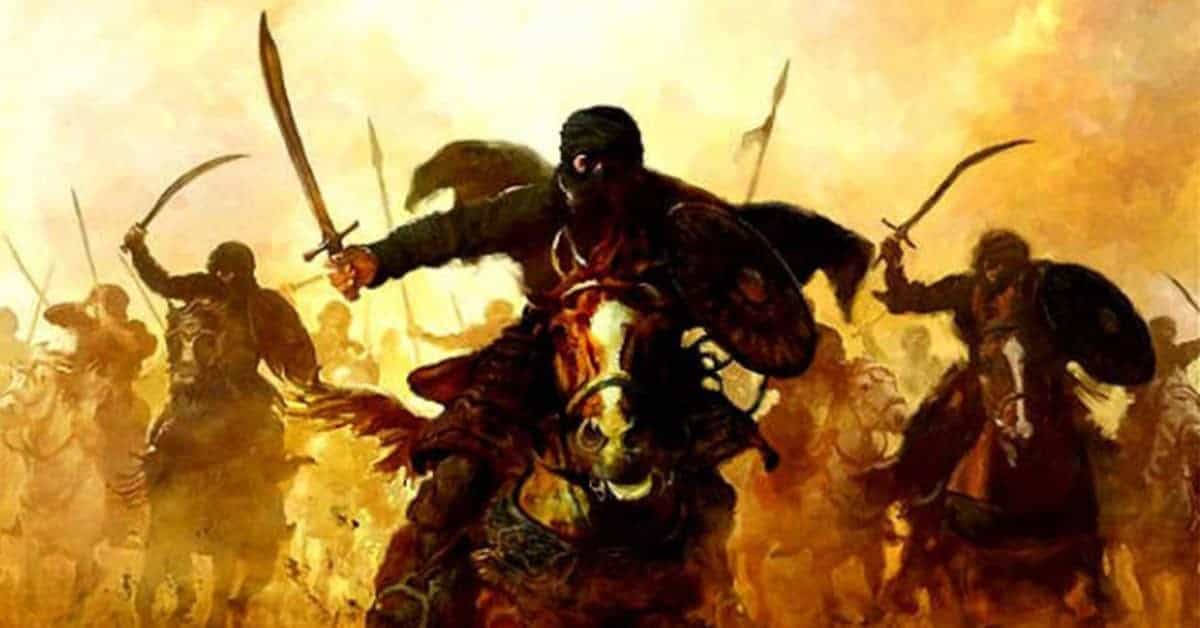

The Qarmatians Sacked and Desecrated Mecca
The Qarmatians combined elements of Zoroastrianism with Shiite Islam to form a radical sect that was deemed heretical by other Muslims. Starting off as bandits who earned a living attacking trade and pilgrimage caravans, the Qarmatians got religion after coming under the sway of a mystic, became a millenarian cult that preached the End of Days was near, and began gathering a large following of fanatics.
They rose in the 9th century and captured eastern Arabia and Bahrain, where they founded a utopian religious republic in 899. From that base, they terrorized the Middle East for generations during which they pillaged their neighbors, engaged in widespread banditry, massacred pilgrims by the tens of thousands, and seized and sacked Mecca.
The Qarmatians believed that pilgrimage to Mecca, a Pillar of Islam, was a superstition, so they began sending raiding parties to interdict the pilgrimage routes. In one such raid in 906, they massacred over 20,000 pilgrims. In 930, as part of a millenarian quest to speed up and usher in the End of Days, the Qarmatians seized Mecca and Medina, Islam’s holiest cities, and sacked both. They killed over 30,000 pilgrims in Mecca, desecrated religious sites, and ritually and literally polluted the holy Well of Zamzam by stuffing it to the brim with the corpses of massacred pilgrims. They also seized the Black Stone, a meteorite rock affixed to the Kaaba and deemed holy by Muslims, took it back to their republic, and smashed it to pieces. They held the shards for a huge ransom, which was paid by the Abbasid Caliphate, who then reassembled the bits and restored them to the Kaaba.
After the sack of Mecca and Medina, pilgrimage came to a halt for nearly a decade, and only resumed after the Qarmatians were paid protection money from the region’s states, the Abbasid and Fatimid Caliphates, to refrain from attacking the holy cities anew. The tribute payments continued until a defeat in 976 to the Abbasids, which initiated a decline in Qarmatian fortunes. Their radicalism waned along with their power, and by 1058 they had abandoned the beliefs deemed heretical by mainstream Muslims and reverted to orthodox Islam. A decade later, the Seljuk Turks inflicted a decisive and final defeat upon the Qarmatians, and brought their republic to an end.


