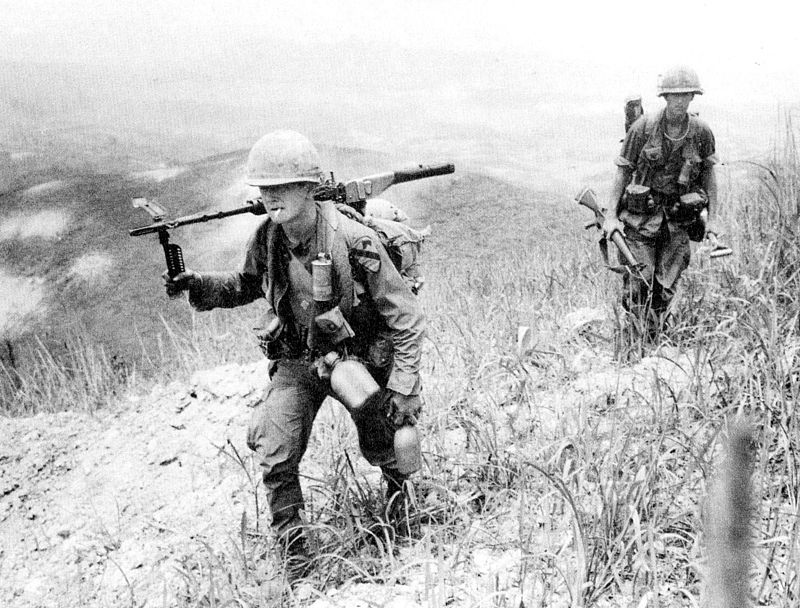

40. Fact: ARVN fought hard and sustained heavy casualties throughout the war
The South Vietnamese Army was poorly equipped early in the conflict, since the Americans had to ensure that their own troops were adequately armed and supplied, leaving only obsolescent weaponry available to supply their ally. By the time of what Richard Nixon and Henry Kissinger called Vietnamization – the transfer of responsibility for successfully prosecuting the war to the South Vietnamese – the weapons provided to ARVN were the same as carried by the Americans. Though corruption was present in the ranks of senior officers throughout the war, the front-line troops fought bravely and well, and many paid the price for their courage once Saigon fell and the futile war against the North Vietnamese ended after more than twenty years of continuous conflict.
Where do we find this stuff? Here are our sources:
“The Nation: Pentagon Papers: The Secret War”. TIME Magazine. June 28, 1971
“In Retrospect: The Tragedy and Lessons of Vietnam”. Robert S. McNamara. 1995
“China’s Involvement in the Vietnam War, 1964-1969”. Chen Jian, The China Quarterly. June, 1995
“The Campaign and Election of 1964”. Kent Germany, Miller Center, University of Virginia. Online
“The US Spent $141 Billion in Vietnam in 14 Years”. The New York Times. May 1, 1975
“Dien Bien Phu: Did the U. S. offer France an A-Bomb?” BBC News Magazine. May 5, 2014. Online
“How the Draft Reshaped America”. The New York Times. October 6, 2017
“Sideshow: Kissinger, Nixon, and the Destruction of Cambodia”. William Shawcross. 2002
“The Air Force in the Vietnam War”. John Correll, Air Force Association. 2004
“GI Heroin Addiction Epidemic in Vietnam”. The New York Times, May 16, 1971
“Vietnam, heroin, and the lesson of disrupting any addiction”. Sanjay Gupta, CNN. December 22, 2015
“Refugee Workers in the Indochina Exodus”. Larry Clinton Thompson. 2010
“Black and White in Vietnam”. The New York Times. July 18, 2017


