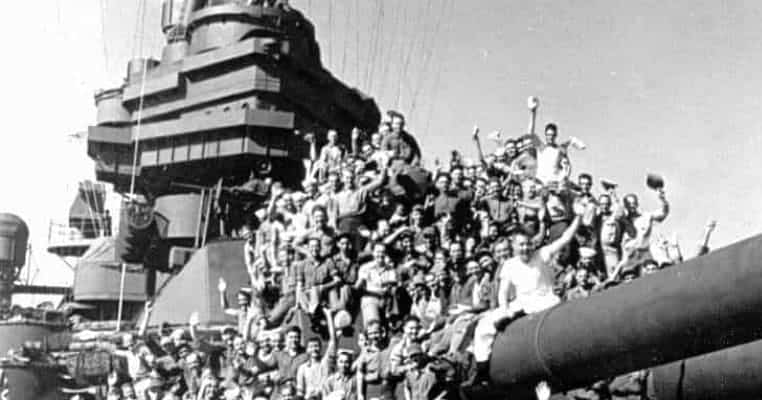
9. The US Navy faced special difficulties during Operation Magic Carpet
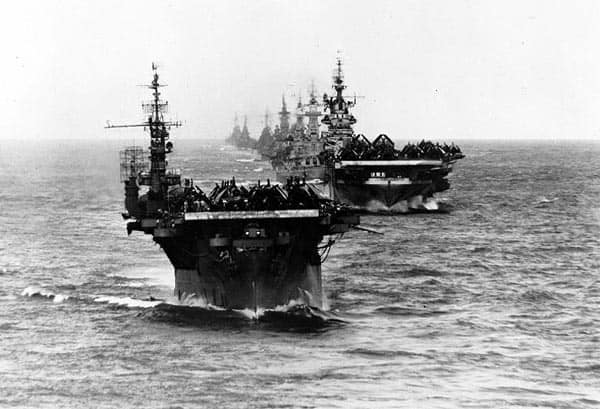
When the Japanese surrendered there were over 3,000,000 men and women serving in the US Navy, the majority of them in the Pacific, and more than 1,300 combat ships, plus vast numbers of PT Boats and their supporting bases, tenders for submarines and destroyers, floating dry docks, yard and ocean-going tugs, cargo ships, hospital ships, seaplane tenders, weapons carriers, oilers and tankers, and bases scattered across the world’s oceans to support them all. In the autumn of 1945, the Navy announced tentative plans to reduce manpower by a minimum of one-third by February of 1946, with at least 325,000 home for Christmas, 1945, discharges in hand. Congress mandated that just over 1,000 ships would be active by the end of 1946.
The Navy planned to keep 30% of the ships on active duty at the time of the surrender, place about half of the fleet in mothballs, and scrap the remainder. At the same time, some new construction had to be maintained in order to keep the shipyards able to employ workers. The problem the Navy faced was that ships, even those being scrapped or prepared for long-term storage, needed crews, and public pressure to discharge the veterans of the war meant that the Navy had to crew ships with inexperienced sailors and officers. The goal of having 500,000 Navy men and women on active duty by the end of 1946 was in direct conflict with the work needing to be done, the highest priority of which was Operation Magic Carpet.


