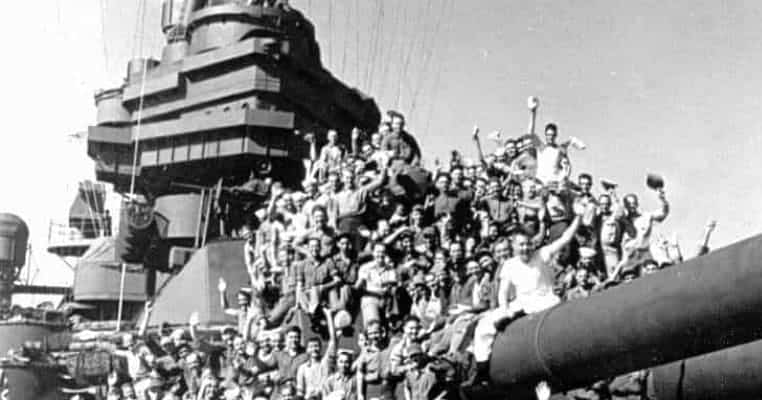
4. Operation Magic Carpet planning was obsolete following the surrender of Japan
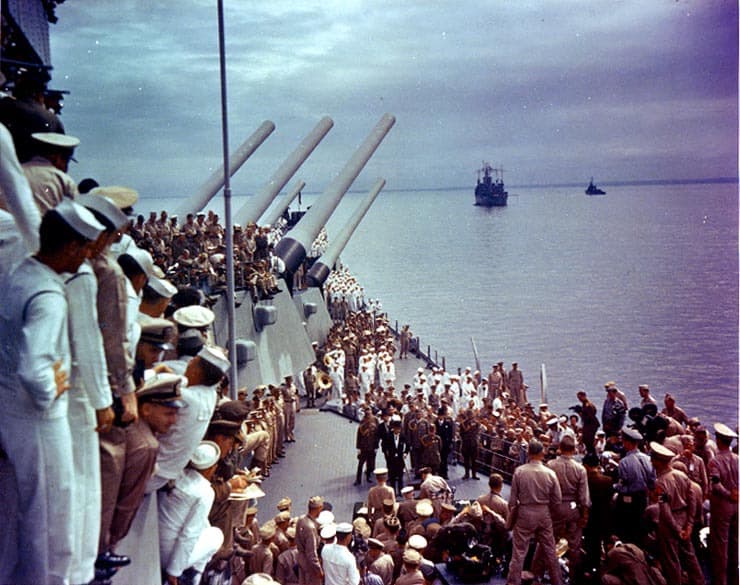
By August 1945 the operation to bring the troops home from Europe was well underway, with the ships returning to the continent laden with replacement troops and supplies. During the war, American troops arrived in the European theater at an average of just under 150,000 each month of the war. The return operation averaged almost three times that rate, with 435,000 per month arriving home, or at least in the United States, where they were processed at separation centers before being released. At that point, the Japanese surrendered and the demand to bring all of the troops home that had served in combat increased to the point of a national frenzy.
The US Navy, at the end of World War II the largest the world had ever seen, had little role to play in the occupation of Japan and the Philippines, and while General MacArthur dithered over the number of military personnel he would need for those operations it released ships for use in Operation Magic Carpet. In October the Navy sent the recently commissioned escort aircraft carrier USS Lake Champlain, the battleship Washington, and several cruisers and destroyers to the Atlantic. Lake Champlain’s cavernous hangar deck was stripped of aviation support equipment and fitted with bunks, allowing it to carry over 3,000 men in one voyage.


