8. Changes to the point system and demands for faster demobilization
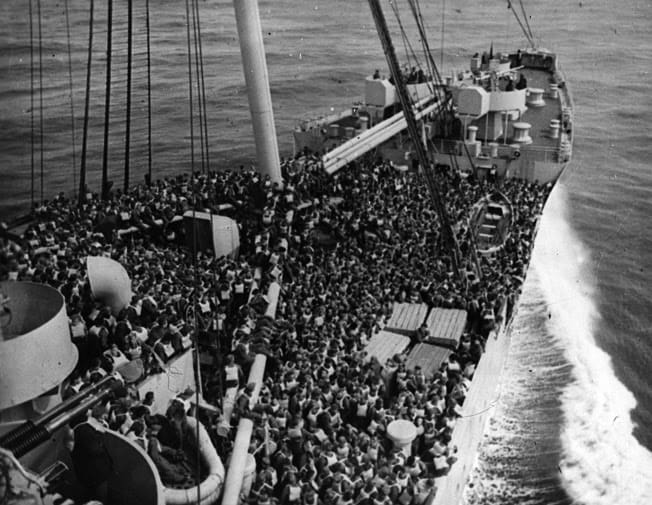
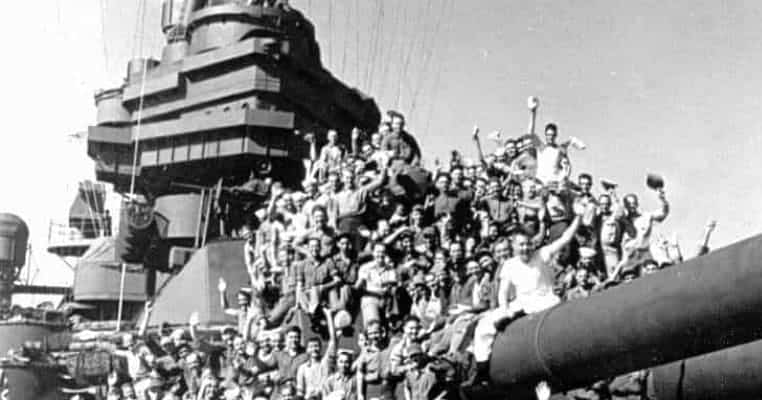
Following the surrender of Japan, there was no longer a need to retain troops which had served in Europe to send to the Pacific, and the troops serving there as well as US Navy and Marine personnel could, for the most part, be discharged. Point levels required for discharge were lowered, and then lowered again until 50 points were sufficient for a service member to be sent home. The European campaign veteran units which had been sent over the summer of 1945 to assemble as 10th Army at Okinawa, part of the planned invasion of Japan, were immediately reclassified for discharge. Battleships and aircraft carriers were sent to carry them to the United States.
Great Britain and the British Empire were soon repatriating troops, to the various areas of the globe from which they had entered the war. Royal Navy ships collected British troops from the China-Burma-India Theater and began the long voyage to get them home. In Australia, war bride trains collected those who had married troops from the UK and the US and delivered them to ports such as Darwin and Perth, where they were boarded on ships modified to carry them for the voyage across the Indian Ocean, the Suez Canal, across the Mediterranean, and thence to England and North America. Other ships made the cross-Pacific voyage to pick up scattered units wherever they were and transited the Panama Canal to the Atlantic.


