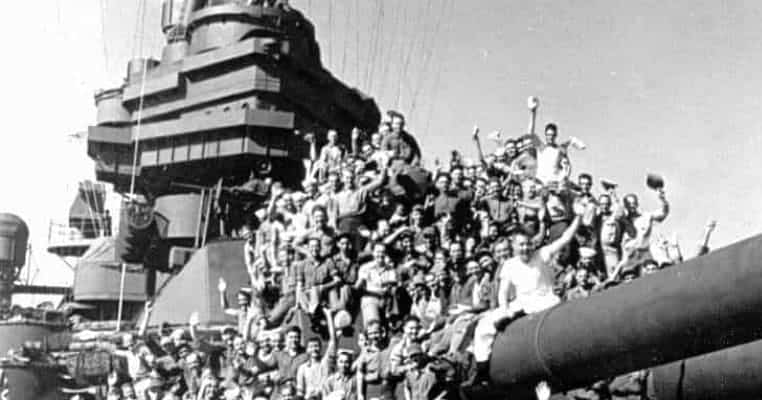
11. The public was dissatisfied with the pace of Operation Magic Carpet

The American public, after the tumultuous celebrations over the end of combat subsided, quickly became dissatisfied with the speed with which the Army and Navy were bringing their loved ones home. The clamor for greater speed grew intense after the surrender of Japan, and every member of Congress was beset with demands for immediate demobilization. The problems of demobilizing the war machine the United States had created and manned were of no concern to them. As the fall of 1945 drew on the cry across the United States was to bring the boys home by Christmas. Most of those from the European theater made that goal, but the problems encountered by the Navy in the Pacific keeping its ships manned slowed the pace.
Congress did what Congress does and established investigating committees and made speeches reflecting the desires of their constituents, but the logistical and manpower problems encountered by the Navy were often insurmountable. There were delays waiting for available ships, delays encountered at sea due to storms in both the Atlantic and the Pacific, and delays awaiting disembarkation facilities as ships lined up for their turn to unload. Nonetheless, in December 1945, the peak month of Operation Magic Carpet in terms of the number of Americans returned to the mainland, 700,000 were carried home from the Pacific theater and landed in west coast ports, in time, it was hoped, to be home for Christmas.


