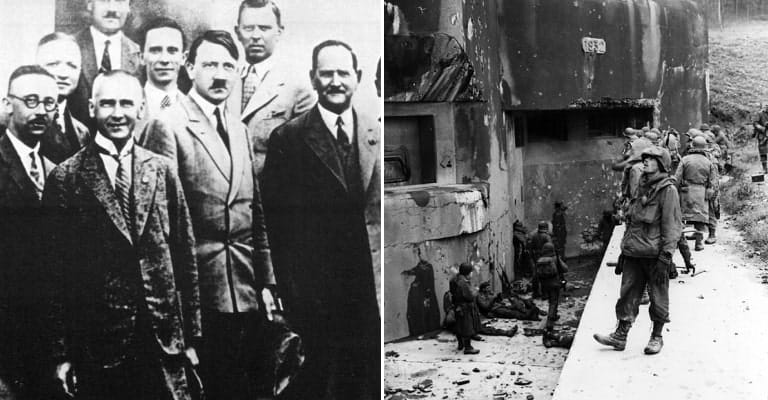

10. Hitler rules by decree for the next four years
Following the passage of the enabling act and the suppression of the communists, evicting them from the government to which they had been elected, Hitler was able to rule Germany by decree, issuing laws and suppressing civil liberties as he chose. Hindenburg remained in place as President, but he was little more than a figurehead to which Hitler deferred publicly, but ignored privately. On July 14, 1933, all political parties in Germany other than the Nazis were outlawed, and political activity which did not support National Socialism became a crime against the state. The governments of the German states were replaced with the machinery of the Nazi party, their authority coming from the central government in Berlin. Party membership became a prerequisite of government office. Hindenburg died in 1934, and rather than appoint himself to the presidency Hitler combined the offices into one, which he held as the Fuhrer, or leader, of the German people.
On the day of Hindenburg’s death Hitler took steps to ensure that the German military, who had to that time been loyal to the president, would from thence maintain unquestioning loyalty to him. It was not his idea. The oath originated with the military command in the hope that it would strengthen ties between the head of state and the army, to the detriment of Hitler’s links with the Nazi party. The oath required every soldier to swear loyalty to Hitler and the nation’s legal institutions, but in none of the forms of the oath (there were slightly different versions administered to civil servants and other positions) was the Nazi Party mentioned.


