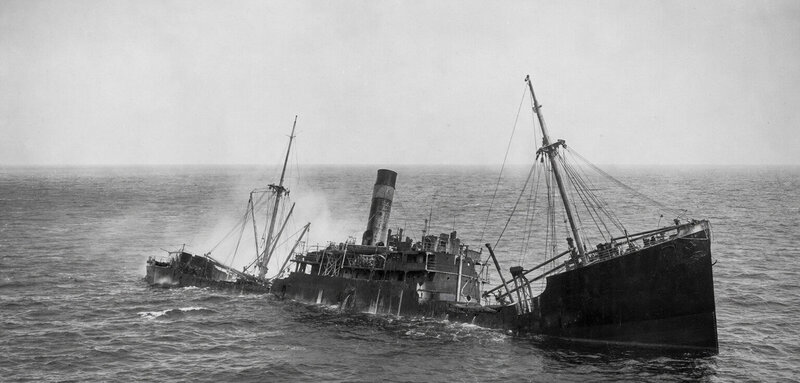
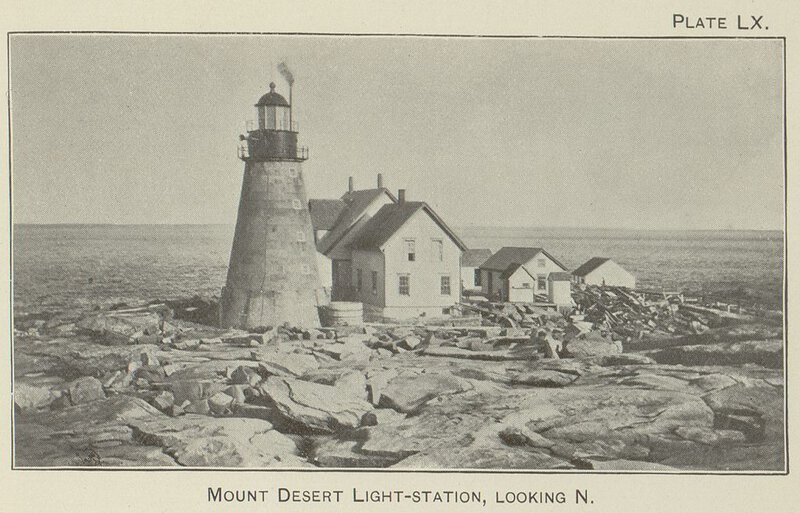
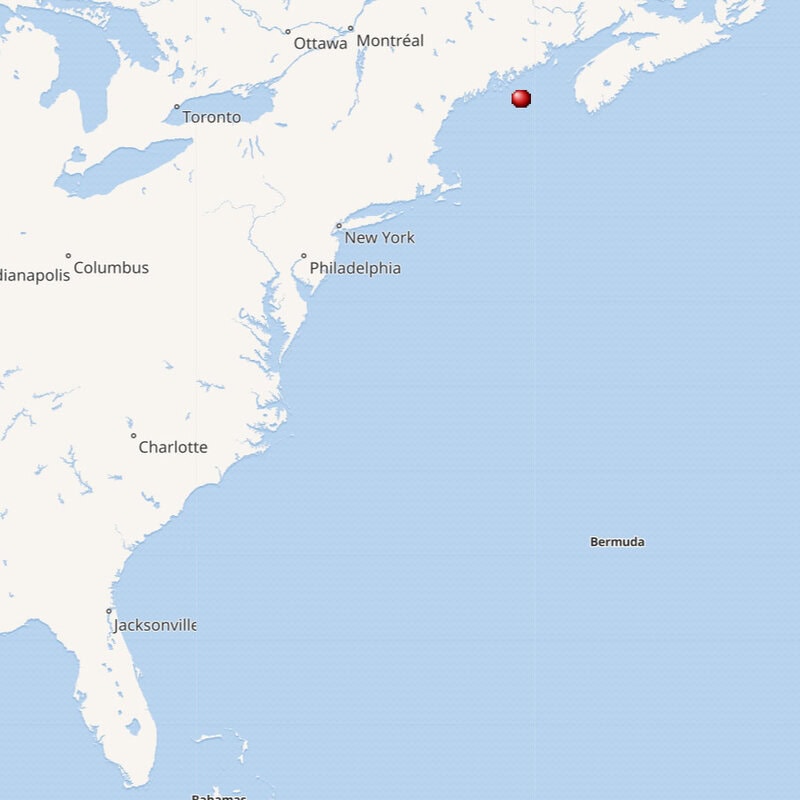
On a cold night in 1944, the merchant vessel SS Cornwallis was cutting through the black water of the Gulf of Maine, close enough to the granite silhouette of Mount Desert Rock that a watchman might have made out the lighthouse beam — and then, in the space of minutes, she was gone. For more than eighty years, the sea kept her. In July 2025, divers finally went down to find her.
The Last Night the Cornwallis Sailed
There were 48 people aboard the SS Cornwallis on the night a German U-boat torpedo found her hull near Mount Desert Rock. Forty-three of them died. That mortality rate — nearly ninety percent — tells you something about the speed of what happened: this was not a sinking that gave its victims time to deliberate, to argue about lifeboats, to write a last note. The cold North Atlantic water did what cold North Atlantic water does, and it did it fast.
Within that toll of 43 dead, there is a smaller, sharper grief. Nineteen of the crew were from Nova Scotia. A single torpedo strike, fired from a submarine the crew almost certainly never saw, sent loss radiating across dozens of households in one Canadian province — fishing villages and port towns where everyone knew everyone, where the news of a ship going down traveled the way bad news always travels in small places: house to house, in person, before supper.
The wreck of the Cornwallis lay undiscovered at nearly 400 feet below the surface of the Gulf of Maine for eight decades. Divers found her in July, hull intact enough to be identified, resting in near-freezing darkness on the seafloor where she had settled in 1944. The dead, at last, have a located grave.
What the SS Cornwallis Was, and Why She Was Out There
The Cornwallis was not a warship. She carried no guns of consequence, flew no admiral’s flag, and featured in no naval strategy document as a vessel of particular importance. She was a merchant ship — part of the vast, unglamorous supply chain that kept Allied ports stocked and war industries fed. Her work was ordinary by design. Merchant vessels like her crossed the same lanes, again and again, because the lanes were where the cargo needed to go.
That ordinariness placed her crew in a peculiar and dangerous position. Merchant sailors in World War II occupied a civilian-military borderland without a clear map. They wore no uniform that guaranteed prisoner-of-war protections under the Geneva Convention. They earned no automatic combat pay. They received little of the public recognition extended to men in uniform. And yet the U-boats hunted their lanes with deliberate, systematic intent, because sinking supply ships was how you strangled an enemy’s war effort without ever engaging his navy directly.
The Gulf of Maine was not the safe backwater that its distance from Europe might suggest. German submarines ranged shockingly close to the American and Canadian eastern seaboard throughout the war, sinking vessels within sight of shore — sometimes within sight of people on the beach. By 1944, Allied anti-submarine tactics had improved significantly, but the threat had never fully disappeared. A merchant ship on a routine passage near the Maine coast was still a target. The Cornwallis‘s final voyage was ordinary by wartime standards. That is precisely what made the torpedo strike so devastating: there was no warning phase, no escalation, no time to prepare for the worst.
The Torpedo and the Silence That Followed
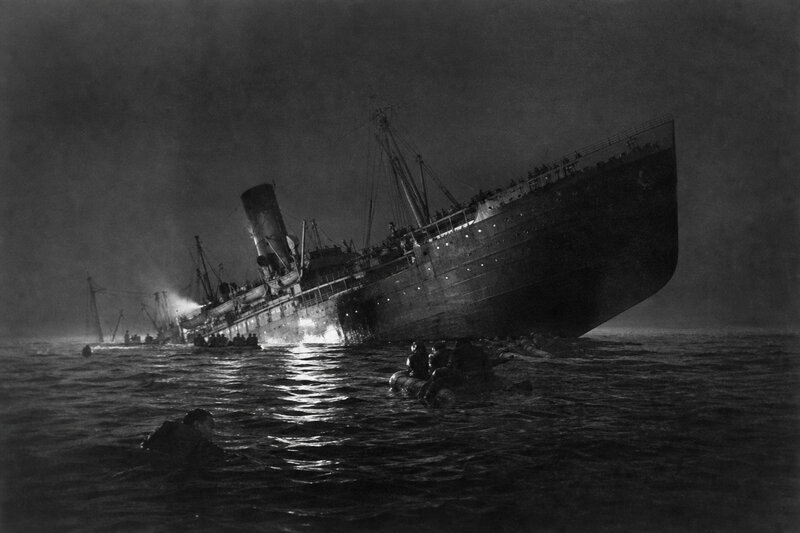
A torpedo strike at close range, in cold northern Atlantic water, in the dark: the physics of survival in that scenario are unforgiving. Hypothermia in the North Atlantic can incapacitate a person in minutes. A ship that sinks quickly offers little time to launch lifeboats, let alone board them in good order. The five people who survived the sinking of the Cornwallis — a number that represents barely ten percent of those aboard — did so against odds that no amount of seamanship or training could reliably overcome. They were, in some meaningful sense, the people the mathematics happened to favor that night.
For the 43 who did not survive, the sea closed over them along with the ship. The Cornwallis sank into what would become nearly 400 feet of cold, dark water, and the official record contracted to what official records always contract to when the evidence is sparse: casualty lists, a general grid coordinate, a date. The wreck itself — the physical ship, the actual site of the actual event — was simply unknown. Lost ships in wartime are listed as lost. The listing is not the same thing as the finding, and for eight decades, no one found the Cornwallis.
The nineteen Nova Scotians aboard represent a geographic concentration of loss unusual even against the broad canvas of wartime casualties. Maritime provinces like Nova Scotia sent a disproportionate share of their working-age men into the merchant marine — the sea was the economy, and the economy was at war. When a single ship went down with nineteen men from one province, the grief was not distributed evenly across a nation too large to feel it in one place. It landed in specific communities, in specific streets, on specific doorsteps.
Why Wrecks Like This Stay Lost for Decades
Nearly 400 feet of depth is not a detail; it is an explanation. Recreational scuba diving reaches, at its outer limit, somewhere around 130 feet — and that is for experienced divers on a good day with excellent conditions. The Cornwallis rested at three times that depth, in water where the Gulf of Maine’s characteristic murk would have defeated any casual search even if the equipment to attempt one had existed. For most of the postwar era, it simply did not.
Technical diving — the specialized discipline that uses mixed breathing gases and purpose-built equipment to reach depths far beyond recreational limits — developed gradually through the latter half of the twentieth century and into the twenty-first. The tools that allowed a dive team to descend to nearly 400 feet in the Gulf of Maine in July and return safely are a relatively recent civilian achievement. The wreck was not hiding because it was particularly well hidden. It was hiding because finding it required capabilities that took decades to develop.
There is also the question of wartime navigation records. Positions recorded in the middle of an emergency, in the dark, in 1944, using the instruments available in 1944, carry a margin of error that can translate to miles of actual seafloor. A ship could be known sunk in a general area — in the vicinity of Mount Desert Rock, near the Maine coast — while its precise resting place remained genuinely unknown. Dozens of World War II lost ships along the United States eastern seaboard remain unlocated for exactly this combination of reasons: depth, murk, imprecision, and the simple fact that the ocean floor is very large and searches are very expensive. The Cornwallis was one data point in a long ledger of vessels officially listed as lost but never physically confirmed — a ledger that World War II left the United States and its allies still working through.
For the families of the 43 dead, those eighty years were not an abstraction. They had a date. They had a general location. They had a casualty notice — the terse, terrible bureaucratic artifact of a loss that the government acknowledged but could not show them. What they did not have was a wreck. No confirmed site, no locatable grave, no coordinates that meant anything to a person standing on a shore in Nova Scotia wondering where, exactly, their father or brother or husband had gone.
The July Discovery: Divers at 400 Feet
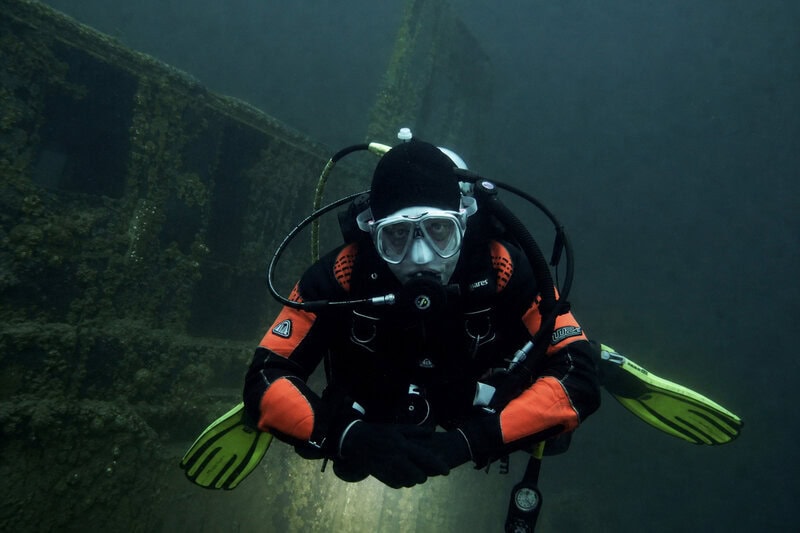
In July 2025, a dive team descended to nearly 400 feet in the Gulf of Maine and found the SS Cornwallis. The merchant ship that had 19 Nova Scotians on its crew when torpedoed in 1944 was lying on the seafloor in a state of eerie, preserved stillness — because near-freezing, near-lightless water at that depth is one of the more effective preservatives the natural world offers. The ship that sank in minutes had, in a sense, barely moved in eighty years.
The hull was intact enough to be identified. That matters more than it might seem. There is a meaningful difference between a coordinate on a loss report and a confirmed, locatable site — the difference between a presumption and a fact, between a date on a memorial plaque and a place on the seafloor that corresponds to the event the plaque commemorates. The identification of the Cornwallis moves her from one category to the other.
The discovery adds the Cornwallis to a growing list of World War II shipwrecks found through modern technical diving and side-scan sonar technology — instruments that translate the murky seafloor into readable images and allow searchers to distinguish a ship’s hull from the surrounding geology without ever getting wet. These tools are slowly returning names to the nameless lost. It is painstaking, expensive, often frustrating work. The Gulf of Maine keeps its secrets at depth, and it kept this one for a very long time.
Nova Scotia’s Long Wait
Nineteen men from Nova Scotia aboard one ship is a number that requires a moment to sit with. Nova Scotia’s relationship with the sea is not metaphorical — it is economic, generational, and in wartime, lethal. The merchant marine drew heavily from maritime communities precisely because those communities produced men who knew ships and water from childhood. When the Cornwallis went down, the loss was concentrated in a way that diffuse national casualty statistics never quite capture.
“Lost at sea” carries a specific ambiguity that other categories of wartime death do not. There is no body. There is no grave to visit, no ground to stand on, no physical place where the fact of the death becomes undeniably real. For families in Nova Scotia’s tight maritime communities, that ambiguity endured for eighty years — long enough to span multiple generations of unresolved grief, long enough for the people who remembered the men personally to age and die themselves, leaving their children and grandchildren with a family story that had no ending.
The discovery of the wreck has renewed attention to merchant marine casualties as a category of World War II loss that received significantly less official recognition than military deaths for decades after the war. In the United States, merchant mariners were not granted veteran status until 1988 — forty-three years after the war ended. In Canada, similar recognition came slowly and incompletely. The men who died on the Cornwallis died in a war they were not, for official purposes, quite acknowledged to have been fighting. The wreck on the seafloor of the Gulf of Maine is, among other things, evidence of a debt that was tallied very late.
What a Found Wreck Means — and What It Doesn’t Change
A located wreck is not a resurrection. The 43 dead remain dead. The eighty years remain elapsed. The five survivors of the Cornwallis — the people the mathematics happened to favor on that cold night near Mount Desert Rock — are, given that 1944 is a very long time ago, almost certainly gone too. The discovery changes nothing about the past, and it would be a disservice to the dead to pretend otherwise.
What it changes is the record. The Cornwallis moves from presumed lost to confirmed found, joining the small fraction of World War II lost ships that have been physically identified along the United States eastern seaboard. Maritime archaeologists and historians treat such sites as war graves — the wreck is simultaneously an artifact and a tomb, and the question of how to honor it without disturbing it is one the discovery immediately raises. The seafloor of the Gulf of Maine is not a salvage site. It is a place where 43 people died, and it will, in all likelihood, remain undisturbed at nearly 400 feet for the foreseeable future.
The Gulf of Maine, like every ocean that World War II touched, holds more secrets than it has given back. The Cornwallis is one answered question in a long, unfinished list of lost vessels — ships that went down fast and far from shore, whose crews became casualty statistics before the week was out, and whose precise resting places remained unknown while the world moved on and the water stayed cold and dark and very, very deep. That the answer came eighty years later is, depending on your disposition, either a long time or better than never. It is, at minimum, something. The dead have a found ship now, and a marked place, and a story told in full.