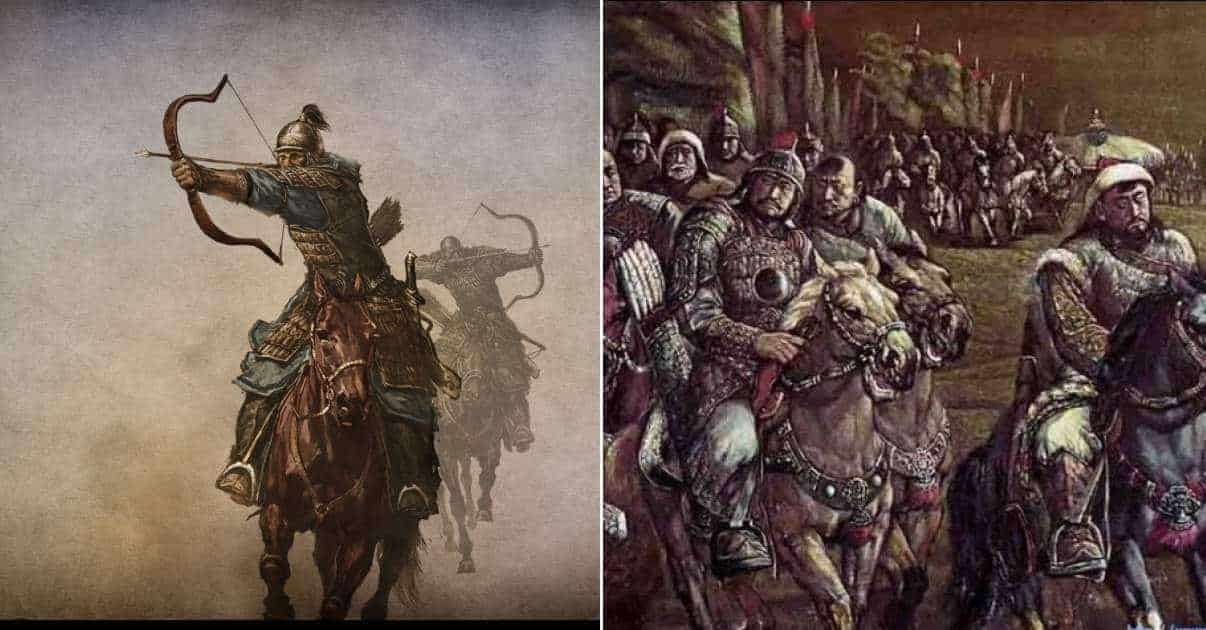

The Mongol Army Was Surprisingly Modern
A Mongol military trait that seems remarkably modern was the wide flexibility and leeway afforded soldiers and officers in carrying out their orders. The Mongol chain of command effectively communicated the overall objectives and the commander’s vision and aim. Subordinates were not micromanaged, and initiative was encouraged, so long as they carried out orders promptly and effectively served the overall plan.
Another modern trait was strategic flexibility. The Tumans of 10,000 Mongols usually operated independently, marching separately to sweep across and devastate wide swathes of enemy territory. They were kept in contact with each other and with corps or army commanders in charge of two or more Tumans by a steady stream of message bearing couriers. If a Tuman made contact with an enemy force too big to handle, the other Tumans could quickly be called in and concentrated into an army.
Centuries later, Napoleon would use a similar methodology of advancing on a broad front, with separate army corps making their own way, marching like the outstretched fingers of a hand. If and when a corps made contact with the main enemy force, it would engage to fix it in place, or otherwise operate in a manner that maintained contact. In the meanwhile, the remaining corps would rush in and concentrate upon the corps in contact with the enemy, transforming from a widespread advance like outstretched fingers, and into a solid fist.
Additionally, the Mongols were anything but conservative when it came to war. Far from being wed to the traditional Steppe way of fighting, the Mongols were open minded and receptive to adopting the military techniques of others, so long as they were effective. For example, there was no tradition of siege of warfare in the Steppe. Yet the Mongols successfully besieged numerous cities by employing Chinese, Persian, Arab, and European specialists. They learnt how, and incorporated engineering into their military establishment.


