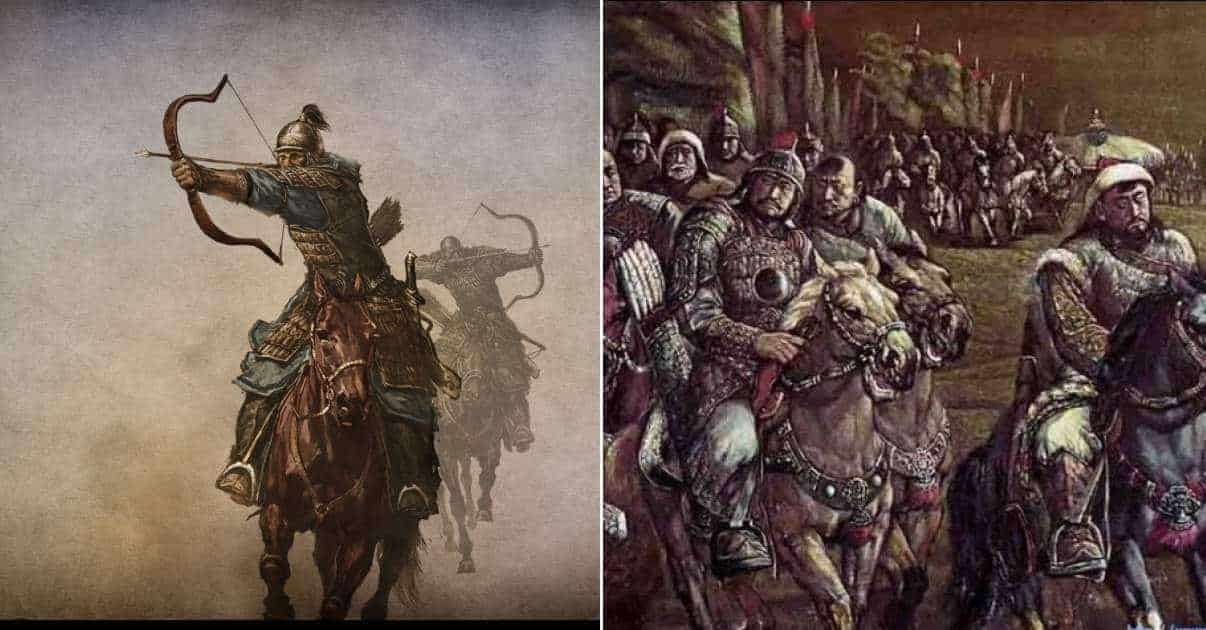

The Mongols’ China Branch Became a Chinese Dynasty
Kublai Khan (1215 – 1294) was a grandson of Genghis Khan, and the brother of Hulagu and of the Great Khan, Mongke, whom he succeeded in 1260. He conquered the Song Dynasty of southern China and founded the Yuan Dynasty, thus reuniting China for the first time in centuries. He was the nominal overlord of all Mongol domains, from the Pacific to the Carpathians. However, his actual authority and attention were focused on China and its periphery, which was wealthier and more populous than all the remaining Mongol domains put together.
Kublai heeded the advice that “one can conquer an empire on horseback, but cannot rule it from horseback“. After conquering the Song in a campaign that he largely led in person, Kublai spent his remaining years in the civilian tasks of governance, rather than military affairs. He ordered some campaigns along the periphery of his domain, which met with mixed success, or ended in disaster such as two failed invasions of Japan that were wrecked by typhoons. However, domestic politics and governance interested him more than war.
Kublai’s reign and founding of the Yuan Dynasty highlighted the transition that successful nomadic conquerors eventually undergo. Once they come to appreciate the benefits and pleasures of settled life, the nomads start abandoning the roughneck ways of the Steppe. Gradually, they join the civilization which they had conquered, and eventually get absorbed into it.
Kublai had to overcome fierce resistance from Mongol traditionalists, who preferred the old ways and their felt tents to the courtly life in Chinese palaces, but he prevailed. His conquest of the Song Dynasty reunified China after centuries of fragmentation, and the borders of the Yuan Dynasty, encompassing Manchuria, Tibet, and Mongolia, established the broad outline of Chinese territory that survives to this day.


