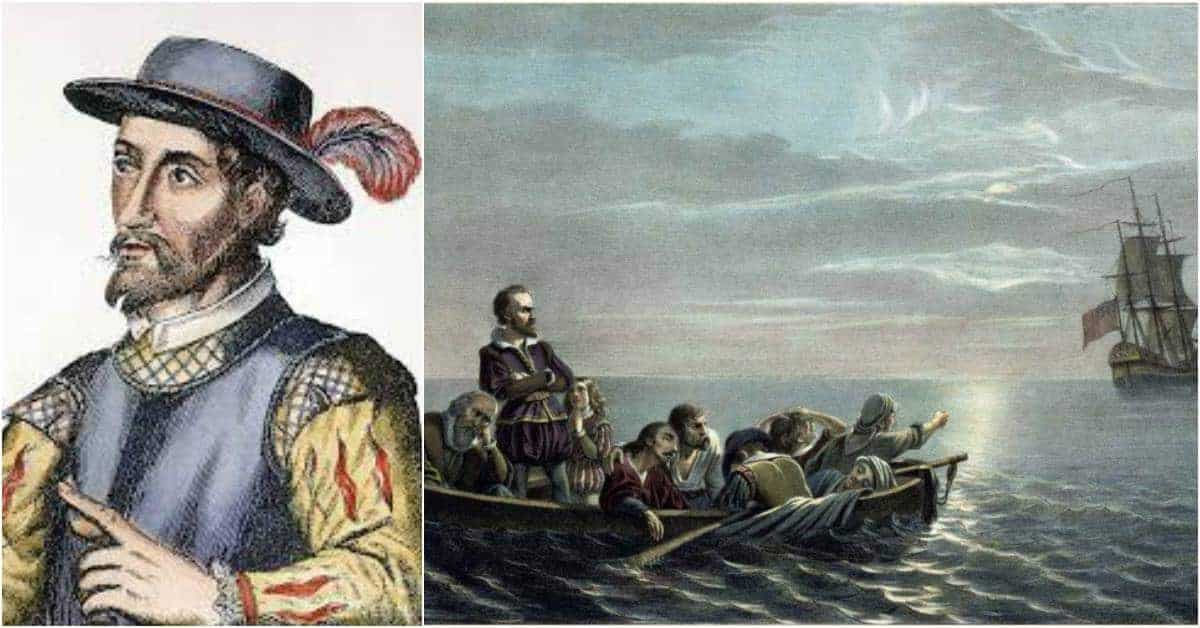

6. Alvar Nunex Cabeza de Vaca 1527-1537
Alvar Núñez Cabeza de Vaca was an explorer born into Spain’s nobility. As a young man he served in the military, fighting with distinction in several far-off battles associated with the Crusades. Due to his military experience, he was appointed to the Narvaez Expedition as treasurer setting sail from Spain in 1527. The goal of the expedition was to establish garrisons to protect Spanish colonies. Of the 600 men that set sail, only four are known to have survived and returned to Spain.
In April 1528, the expedition landed near present-day St. Petersburg, Florida. Claiming the land for Spain. Abandonment and death adversely impacted the expedition. It was common for men to abandon expeditions as they formed families with native women. For these men, it was economically advantageous to remain in the New World instead of remaining on an expedition and eventually returning to Spain. Death also impacted the success of the expedition. Many died of new diseases, harsh conditions, lack of fresh water, and starvation. Even Pánfilo de Nárvaez died shortly after arriving in Florida.
Early during the expedition, native inhabitants kidnapped and enslaved Cabeza de Vaca and some of his men. Over several years, he labored as a sort of traveling merchant and healer. De Vaca documented the harsh landscape of Florida and the coastal areas along the Gulf of Mexico providing detail about the numerous native tribes that he interacted with and their nomadic cultures. He provided meticulous accounts of the routes in which he traveled, the animals, and the vegetation.
After 10 years traveling as a slave, merchant, and faith healer, Cabeza de Vaca returned to Spain in 1537. His “news of the human race” was published in 1542 and remains in print today as The Journey and Ordeal of Cabeza De Vaca. Over time, archaeologists, anthropologists, map makers, geographers, zoologies, and historians have sued his account as a tool to understand the onset of foreign exploration in the New World as well as how natives lived before their encounter with Europeans. De Vaca is credited with being the first European to see the mouth of the Mississippi River as it emptied into the Gulf of Mexico.


