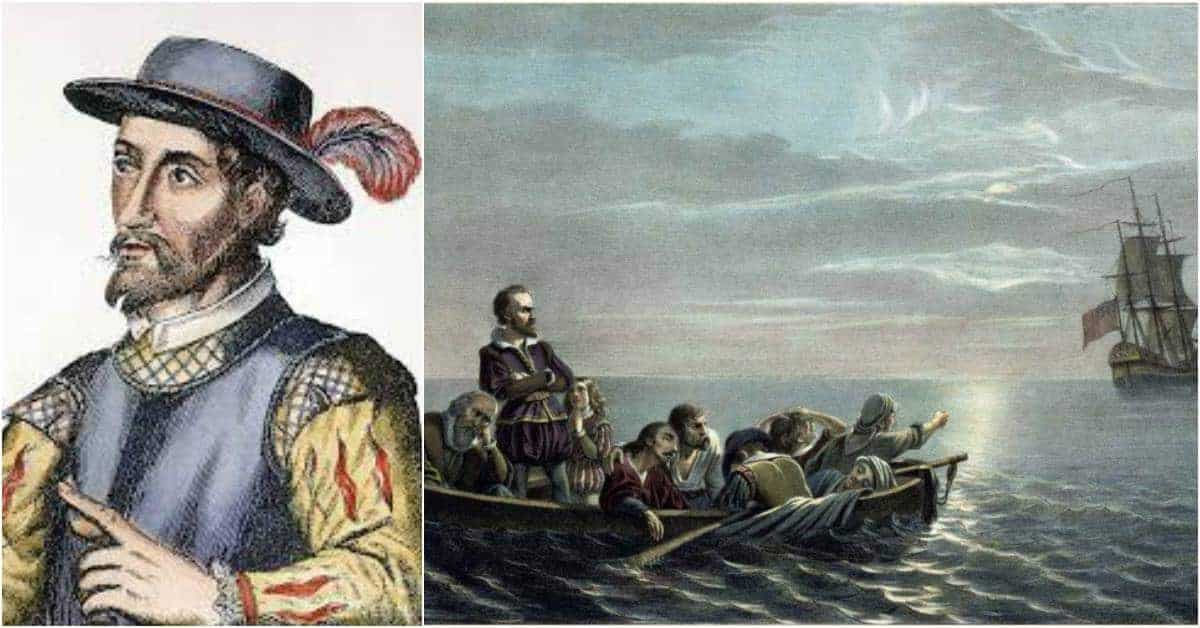

5. Hernando de Soto 1524-1542
Hernando de Soto was a Spanish explorer and conquistador born in 1495. He grew up listening to stories of men obtaining military glory and riches in the New World and wanted that for himself. As a young man, he sailed to Panama with its new governor, Pedrarias Dávila, and participated in the conquest of Central America.
In Nicaragua, de Soto was awarded an encomieda from the Spanish Crown for his efforts in conquering the native inhabitants. Desiring wealth and military glory, de Soto led soldiers into the Yucatan Peninsula in search of gold and a new route between the Atlantic and Pacific Oceans. The men plundered native villages, taking some of their booty back to Spain.
After hearing about the adventures of Cabeza de Vaca in Florida, de Sota set his sights on exploring what is now the southeastern United States. With 600 plus men of various ethnic backgrounds, he led an expedition into the interior of North America. His purpose was to find the elusive gold, find territory for settlement, and then colonize the native inhabitants.
Exactly where de Soto and his soldiers entered into the American southeast is disputed. What is known is that he traveled into Florida, Georgia, North and South Carolina, Tennessee, Arkansas, Alabama, Mississippi, and Louisiana. As he did in Central America, de Soto and his men plundered, pillaged, raped, and inflicted violence and terror on the native inhabitants.
While in southern Alabama, de Soto and his men encountered a Mobilian tribe under the leadership of Chief Tuskaloosa. De Soto’s men claimed that the natives ambushed them. Reports from the native inhabitants differ in that that de Soto’s men forced entry into Tuskaloosa’s cabin demanding gold and supplies. No matter how the interaction began, it resulted in the Spaniards looting the village of supplies, setting it on fire, and then killing between 2,000 and 6,000 warriors.
De Soto’s military victory was in name only. Over 200 Spanish soldiers were dead with over 150 wounded. Over the next several weeks, some of the wounded died. Afraid that his hollow victory would reach Spain, he marched his men to the interior instead of toward the fortified city of Mobile. His men encamped for the winter of 1540-1541 near present-day Tupelo, Mississippi where they ran low on food, weapons, and other necessities.
Glory as an explorer came for de Soto when he and his men reached the Mississippi River. On May 8, 1541, the group was credited with being the first Europeans to cross the mighty river. Over the next year, de Soto continued on his quest for gold, a route to the Pacific, and a place for settlement. He was never successful and died of a fever in May 1542. The location of his death has been disputed but it was somewhere near the Mississippi River at the Arkansas and Louisiana borders.


