
8. Henry Hudson 1607-1610
Henry Hudson was an Englishman, navigator, and explorer. Merchants hired him to find a route to the Pacific Ocean and the silk and spice trades. Hudson traveled to the Arctic and northern North America four times, documenting all that he saw. The information he provided assisted in the launching of a very lucrative fur trade that funded settlements throughout North America and fueled wars for empire between European powers.
The Muscovy Company hired Henry Hudson to find a route to the Pacific Ocean and China. Hudson sailed on Hopewell with a crew of 10 men and one boy, leaving England on May 1, 1607. At the time of the voyage, people believed that the Arctic would be a place of great warmth due to three months of almost continuous sunlight. Cold and unsuccessful, they returned to Europe on September 15, 1607. In April 1608, he was hired by the East India and Muscovy Companies. Again on the Hopewell, Hudson and his crew traveled over 25,000 miles, mostly in the Arctic Circle. The ice was impenetrable and they returned to England in August.
Hudson was an experienced explorer and now knew more about the Arctic than any other European. Again hired by a trading company, Hudson set off on a third voyage, leaving from Amsterdam on April 4, 1609. By mid-July, he had reached the coast of Nova Scotia and anchored the Halve Maen off the coast.
Crewmembers obtained permission to set off on a fishing expedition. While away, they encountered native inhabitants. When the Europeans asked for supplies, the natives refused and the Europeans attacked. Native men, women, and children were forced from their settlement while the crewmembers took pelts, boats, and other goods for trade. Despite this encounter with the native inhabitants of Nova Scotia, Hudson took his crew up the Hudson River on September 2, 1609. The land that Hudson saw, he claimed for the Dutch.
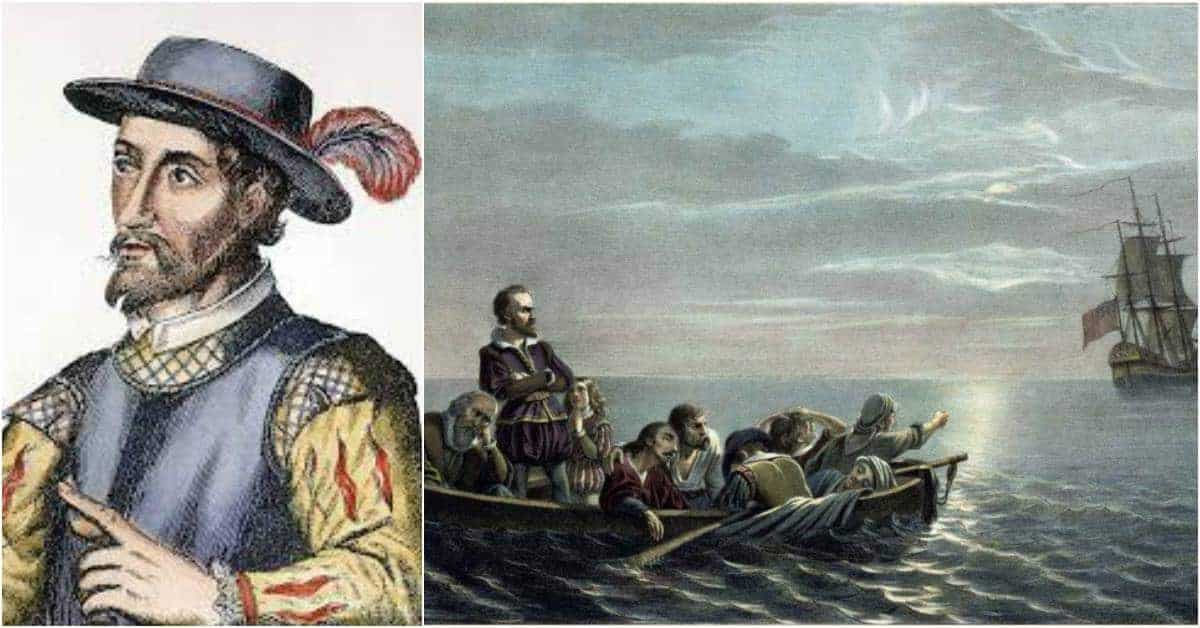
In 1610, the Virginia and the British East India Companies hired Hudson for another voyage. He landed off of the coast of Labrador on June 25. He entered into a large bay that he believed to be the Pacific Ocean and meticulously documented the eastern shoreline of the Hudson Bay. When Hudson wanted to cross the bay, his crew mutinied and placed Hudson, his son, and other crewmembers on an open boat and sent them adrift. They were never seen again.


