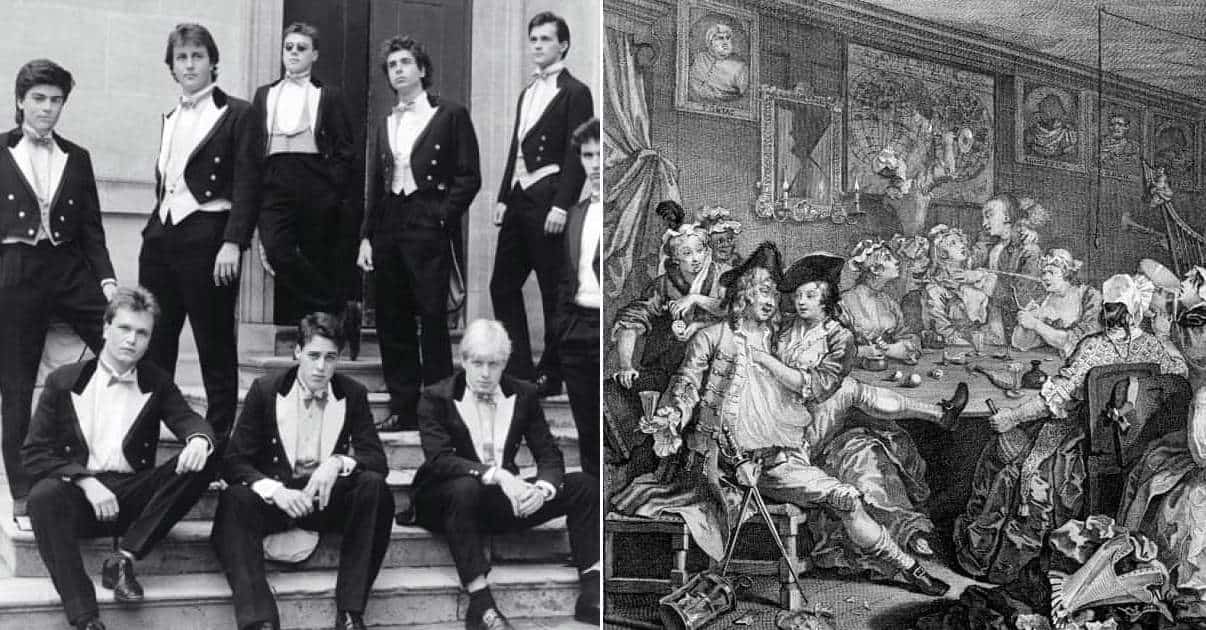

Privilege and Prostitution
Prostitutes are a regular fixture at Bullingdon events. The annual ‘brekker’ (breakfast) is frequently attended by a clutch of prostitutes: ‘We always hire whores’, says Ralph Perry-Robinson, a veteran of the 1987 skirmish. ‘Prostitutes were paid extra by members who wanted to use them’. The main role of the prostitutes is to stand around and encourage the young men to drink themselves into a stupor (NB however the entry on Lord Randolph Churchill below). As with the ritualised restaurant-trashing and brawling discussed above, there a childish desire to behave badly according to conventional standards that underlies the invitation to prostitutes.
Prostitution has a long history in the city of Oxford. Magpie Lane, which runs beside Oriel College, was once known as ‘Grope Cunt Lane’ on account of the many brothels located therein. In the nineteenth century, there were so many prostitutes in Oxford, attracted to the city by the students, that the University’s Vice Chancellor appealed to Parliament to give him more powers for their detention. Prostitutes were incarcerated below the Clarendon Building on Broad Street until 1906, but this had mixed success: demand was so high that as soon as one group were imprisoned, new prostitutes arrived from London.
If the thought of an all-male club hiring prostitutes makes you scent misogyny, you are indubitably correct. Women not involved in the sex industry were openly subject to harassment, and encouraged to commit degrading acts. ‘Women aren’t allowed to formal dinners but at informal gatherings we would make them get down on all fours like a horse, whinny, and bring out hunting horns and whips’, remarks an anonymous ex-member. This inherent sexism, fertilised by the Buller, seems never to leave some alumni: whilst Prime Minister, David Cameron was often rebuked for the lack of women in his cabinet.


