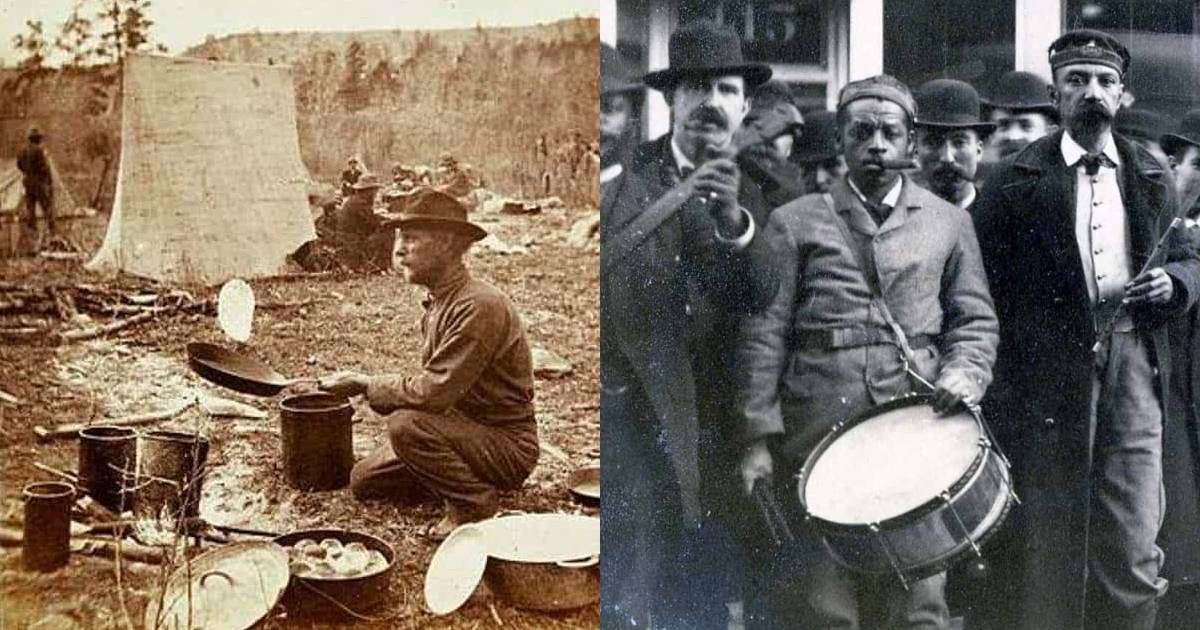

25. Food Played a Key Role in the Civil War’s Outcome
Compared to the Rebels, Union soldiers had it good when it came to food. Their regular rations included salt pork, fresh or salt beef, hard and soft bread, flour, potatoes, beans, split peas, dried apples, peaches, and vegetables, vinegar, salt and pepper, plus ham and bacon on occasion. Union troops were also regularly issued coffee and sugar – luxuries to be found only in Confederate soldiers’ dreams. Civil War gallows humor had it that the ferocity of Rebel charges could be explained by the eagerness of hungry Southerners to get their hands on the contents of Yankee soldiers’ haversacks.
Food was a key factor in the Civil War’s outcome. When Robert E. Lee finally threw in the towel and surrendered at Appomattox, he told Ulysses S. Grant that his men had been without food for two days, and some for even more. He asked the victor to supply them with provisions, and a magnanimous Grant was more than happy to send enough rations for all of Lee’s soldiers. Despite the bitterness of defeat and surrender, the starving Southern soldiers sent up a rousing cheer at the sight of the Union food wagons sent by Grant.


