Food as a Means to Manipulate Child Slaves

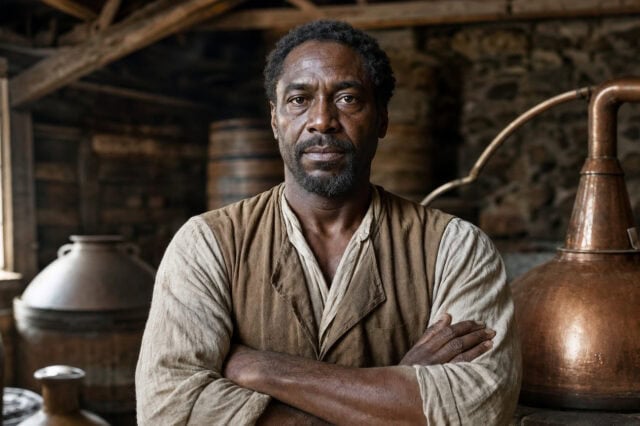
Thomas Jefferson’s child slaves toiled in his tobacco fields: children were the right height to reach and kill tobacco worms. When Monticello shifted from tobacco to wheat, which required less manual labor, Jefferson had the children taught trades as an alternative to field toil. As he put it, his slave children must “go into the ground or learn trades“.
He used food to make the kids work harder: if they did a good job, they got more food. If they were particularly diligent, they might also get new clothes. Jefferson had a clock installed on a Monticello wall that only had an hour hand. Jefferson, who believed that blacks were racially inferior and “as incapable as children,” figured that hour increments were all that the slaves could understand or needed to know.

Jefferson had cabins built for the house slaves about a hundred yards from and facing the mansion. Blacks who worked the fields were housed further away. That way, they and their backbreaking labor would be out of his sight in both the literal and figurative senses. Originally, Jefferson’s slaves lived in two-room cabins, with one family per room and a single shared doorway to the outside.
From the 1790s onwards, the slaves were housed in single-room cabins, each with its own door. By the dismal standards of American slavery at the time, the lives of Jefferson’s slaves at Monticello were less terrible than average. Their lot was still quite horrible, but not as horrible as the lot of most other slaves with most other masters.
_________________
Where Did We Find This Stuff? Some Sources and Further Reading
Ancient Origins – Adolf Frederick: The Swedish King Who Ate Himself to Death
Atlas Obscura – When Tomatoes Were Blamed For Witchcraft and Werewolves
BBC – The Rise, Fall, and Rise of Status Pineapple
Catton, Bruce – Bruce Catton’s Civil War, Three Volumes in One (1984)
Bear, James A. Jr. – Jefferson at Monticello (1967)
Brodie, Fawn McKay – Thomas Jefferson: An Intimate History (1974)
CNN – ‘Game of Thrones’ Author George R.R. Martin: Why He Wrote the Red Wedding
Encyclopedia Britannica – McDonald’s, American Corporation
Encyclopedia Britannica – Columbian Exchange
Gabriel, Richard – Subotai the Valiant: Genghis Khan’s Greatest General (2004)
Gonick, Larry – The Cartoon History of the Universe (1990)
Harari, Yuval Noah – Sapiens: A Brief History of Humankind (2014)
History Collection – How George Cheyne Created the First Fad Diet, the Georgian Diet
Kroc, Ray – Grinding it Out: The Making of McDonald’s (1977)
Library of Congress – Civil War Thanksgiving Foods
National Geographic Genographic Project – The Development of Agriculture: The Farming Revolution
National Park Service – Fort Scott: Cooking Food Rations
Nordstjernan – King-Sized Meal: A Cautionary Tale
NPR – When the Supreme Court Decided Tomatoes Were Vegetables
Paris Review, April 25th, 2018 – The Strange History of the “King-Pine”
Ranker – Old School Fast Food Photos That Remind Us of ‘The Way We Ate’
Ranker – Unconventional Foods People Ate to Survive the Civil War
Salon – Drinking Culture: Why Some Thinkers Believe Human Civilization Owes its Existence to Alcohol
Slingerland, Edward – Drunk: How We Sipped, Danced, and Stumbled Our Way to Civilization (2021)
Spoon University – The 9 Items on McDonald’s Very First Menu
Times of India, June 9th, 2014 – The World’s First McDonald’s Restaurant