
20. The emergence of creation science was not entirely an attempt to disprove evolution
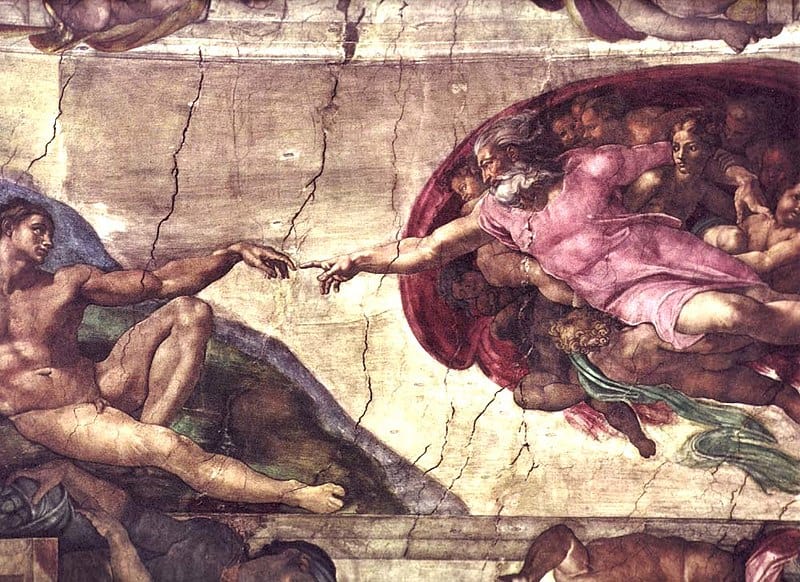
By 1959 – the centennial of On the Origin of Species – Darwin’s findings and subsequent works by himself and other scientists were considered mainstream science. It found opposition in few quarters, other than in fundamentalist Protestantism which supported the literal inerrancy of Genesis, as well as the rest of the Bible. A new form of creationism emerged in the following decade, called by its supporters’ creation science. Creation science disputed the evidence of evolution, offering its own explanations for “facts” which proved the Genesis narrative was literally true. Despite being called a science, neither the scientific community nor for the most part courts of law accepted it as such.
The scientific community rejected it as science, since among other things it offered no hypotheses supported or refuted by evidence. Nonetheless, by the 1970s creation science was taught in schools, as an alternative to the evolution as described by Darwin and subsequent scientists. In 1981 the Arkansas legislature enacted a law which defined creation science and mandated its presentation in schools. It included a provision for separate creation of humans and apes. In 1982 the law was struck down by the US District Court for Eastern Arkansas. The state did not appeal. In 1987 a similar law in Louisiana was struck down by the United States Supreme Court, which rendered the teaching of creation science unconstitutional.


