
14. The battle over the theory of natural selection continued after Darwin’s death
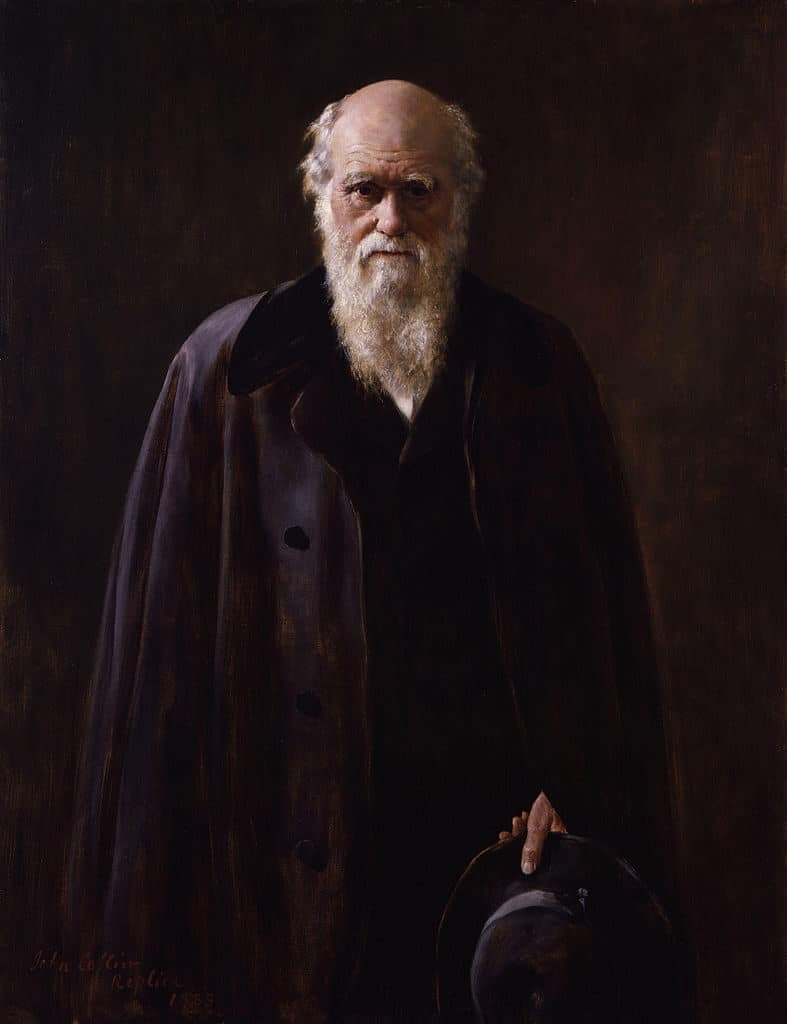
Charles Darwin continued to work on the process of natural selection for two decades after the publication of On the Origin of Species, collecting scientific evidence and collaborating with other evolutionists. By the time of his death in 1882 his theories, with some modifications, were widely accepted, and acceptance within the scientific community was nearly universal by the end of the 19th century. The theory of evolution also gained acceptance with the general public. In the early 20th century, particularly following the First World War, rejection of his work on religious grounds intensified.
As religious opposition intensified in the latter stages of Darwin’s life he was denigrated as an atheist in the arguments against his work. Darwin claimed to be an agnostic in the sense of the word as coined by Thomas Huxley – meaning that he followed his reason as far as it could take him – but denied he was an atheist. “I have never been an atheist in the sense of denying the existence of a God…” he wrote. Darwin also addressed the existence of an afterlife, writing, “As for a future life, every man must judge for himself between conflicting vague possibilities”.


