9. The crew of PT 109 was considered to be lost

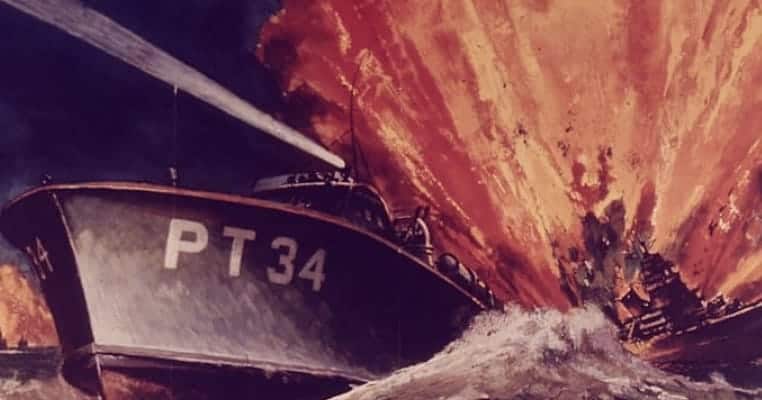
PT 109 was rammed in waters which were surrounded Japanese-held islands. On several of them, coastwatchers operated in secret. Their job was to observe the movements of Japanese troops, ships, and aircraft and report them to military authorities. The confused melee in the Brackett Strait had been seen as had the huge fireball which marked the destruction of PT 109. Motor Torpedo Squadron 2 held a memorial service for Kennedy and his crew. An aerial search of the area where the explosion occurred was ordered to locate survivors. It located the remains of the wreck, but by the time it was conducted the crew had moved to hide on the islands.
An Australian coastwatcher had seen the explosion from his hidden lair on Kolombangara, an island he shared with more than 10,000 Japanese troops. The coast watcher, Arthur Reginald Evans, decoded radio messages reporting PT 109 missing and lost. Evans sent natives with whom he worked, to search for survivors from the crew. While Kennedy sought help near Ferguson Passage, natives passed between the islands in a dugout canoe, ignored by the Japanese and the Allies as they went about their business. Two Melanesian natives, Biuku Gasa and Eroni Kumana, began to probe the small islands in search of survivors from the American crew.


