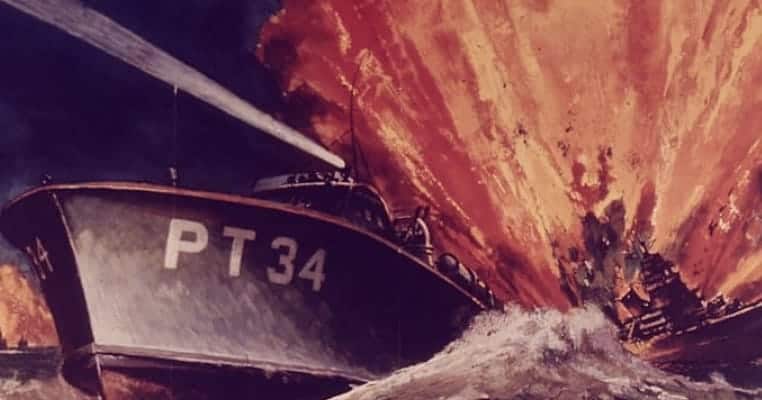
14. The entire rescue was accomplished in the darkness

Kennedy was picked up from the water off Gomu after dark on August 7, and the PT boats arrived at Olasana around midnight. He had noted the many reefs and coral protrusions around the island, which had cut his feet on his swims, as well as those of the other men who had taken to the water. The presence of Japanese on islands throughout the area threatened the operation. Olasana Island was large enough that the men had only explored a small portion during their searches for food. Whether there was a Japanese presence on the island was unknown. Japanese patrol boats were always possible.
The boats operated without lights, and Kennedy navigated through the reefs until they were close enough in to launch rubber rafts, which carried him and an escort ashore. After rousing the sleeping survivors of PT 109, the men were carried to the boats. By dawn, the boats were back at the base on Rendova, where the crew of PT 109 all received medical attention. Naval authorities opened an investigation into the loss of the boat. Kennedy’s action report claimed the boat was unable to “get out of the way” because it had been idling on one engine (idling meant a forward way of about six knots, with no wake). Kennedy later told a reporter that he spun the wheel to attack the destroyer, but his boat responded sluggishly.


