Back to the front page
American History

Most People Picture History Wrong, These Facts Will Set them Straight

Franklin D. Roosevelt - Joseph Stalin
The Big Three of Stalin, Roosevelt, and Churchill, at the Tehran Conference in 1943. Rare Historical Photos

6. Combining Soft and Hard Steel
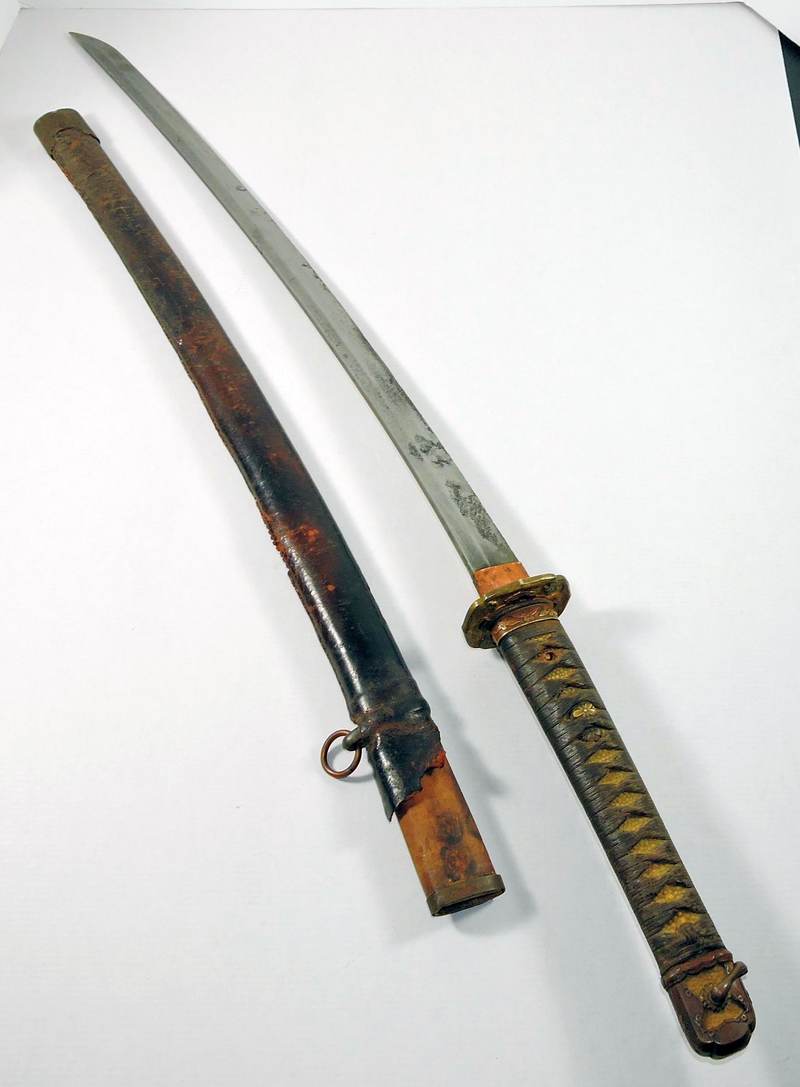
A WWII military issue katana. Pintrest

Katanas are made from tamahagane steel. It is produced by traditional Japanese smelting processes that result in layered steels with varying carbon concentrations, that are welded, folded, and hammered out to reduce impurities. A katana needs a sharp and hard edge. However, steel that is hard enough for a sharp edge is brittle, while softer steel that is not brittle will not take and retain a sharp edge.

Katana makers solved the dilemma by using four metal bars: a soft iron bar to guard against breaking, sandwiched by two hard iron bars to prevent bending, and rounded off with a steel bar to take the cutting edge. The result was a sword that had a hard enough blade with a sharp cutting edge. However, contra many a WWII tall tale, no katana was ever hard enough, or sharp enough, to cut through machine gun barrels.

Written by

A lifelong history buff, I developed a particular passion for WW2 history as a child, when I spent hours listening to my grandfather, enraptured, as he recounted his wartime experiences in the British East African Campaign and with the British 8th Army in North Africa.

I graduated with a history BA from George Mason University, then went on to get a JD from the University of Virginia School of Law. After lawyering for a decade, I moved to sunny Rio de Janeiro and a less demanding career, opening a tourism agency in Copacabana.

A big chunk of my free time is spent blogging (you can follow me on Quora https://www.quora.com/profile/Khalid-Elhassan ) or freelance writing, mostly about my favorite subject, history.

Keep reading

Advertisement