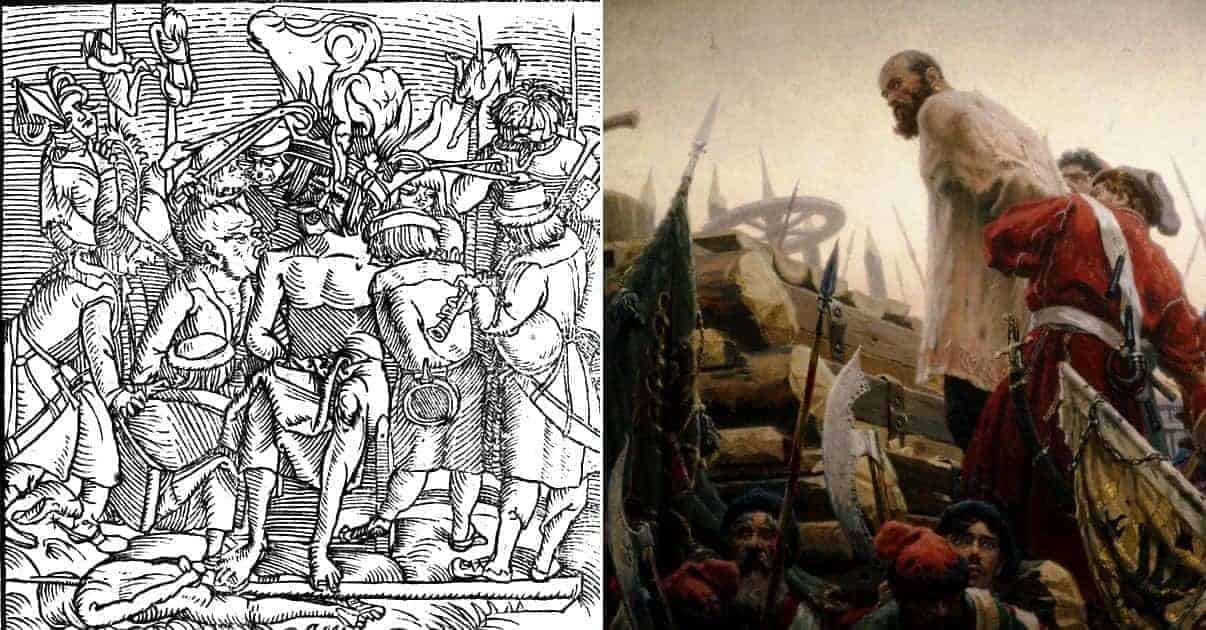

Cade’s Rebellion
In 1450, Jack Cade, an Irishman of unknown occupation and little known background residing in Kent, organized a rebellion among peasants and small proprietors angered by oppressively high taxes and a recent steep rise in prices, coupled with widespread corruption and abuse of power by the royal advisors and officials of the weak and hapless king Henry VI. The rebellion gathered steam, and soon became a major popular revolt and peasant uprising that shook England and terrorized its government and aristocracy.
Cade had been living in Sussex until 1449, when he fled to France to escape a murder charge. He returned to England under an assumed name in 1450, and settled in Kent. That June, he emerged as the leader of a rebellion against the royal government, and calling himself John Mortimer, identified with the king’s rivals, the York branch of the royal family.
Cade issued a manifesto, demanding the removal of several royal ministers, and the recall of Richard, Duke of York, from Ireland, where he was a virtual exile. A royal army sent to the suppress the rebels was defeated in Kent, after which the insurrectionists’ rapidly increasing host marched on London. They captured the city on July 3rd, 1450, along with the hated royal treasurer, James Fiennes, Lord Saye and Sele, whom the rebels executed.
Despite Cade’s attempt to maintain discipline, once they entered London, many rebels took to looting. The lawlessness led Londoners to turn on the rebels, expelling them from the city on July 6th, after a battle at London Bridge. To end the revolt, the government persuaded most rebels to disperse by issuing royal pardons. Cade fled, but was tracked down a week later, wounded in a skirmish with royal forces, and captured. He was taken to London, but died of his wounds en route, his death marking the end of the rebellion. While the revolt failed, it contributed to a breakdown of royal authority and prestige that set the stage for the Wars of the Roses.


