
German Peasants War
The German Peasants War of 1524 – 1525 was Europe’s largest popular uprising prior to the French Revolution of 1789. For generations, German peasants had experienced a steady curtailment of their ancient rights to fish, hunt, bear arms, or collect wood from common lands, while their noble overlords’ exactions grew increasingly more onerous. The conflict was reportedly, and perhaps apocryphally, sparked by the countess of Lupfen’s orders to her serfs to stop tending their crops in order to collect snail shells for her to use as thread spools. Neglecting their fields and crops meant starvation, so the peasants took up arms.
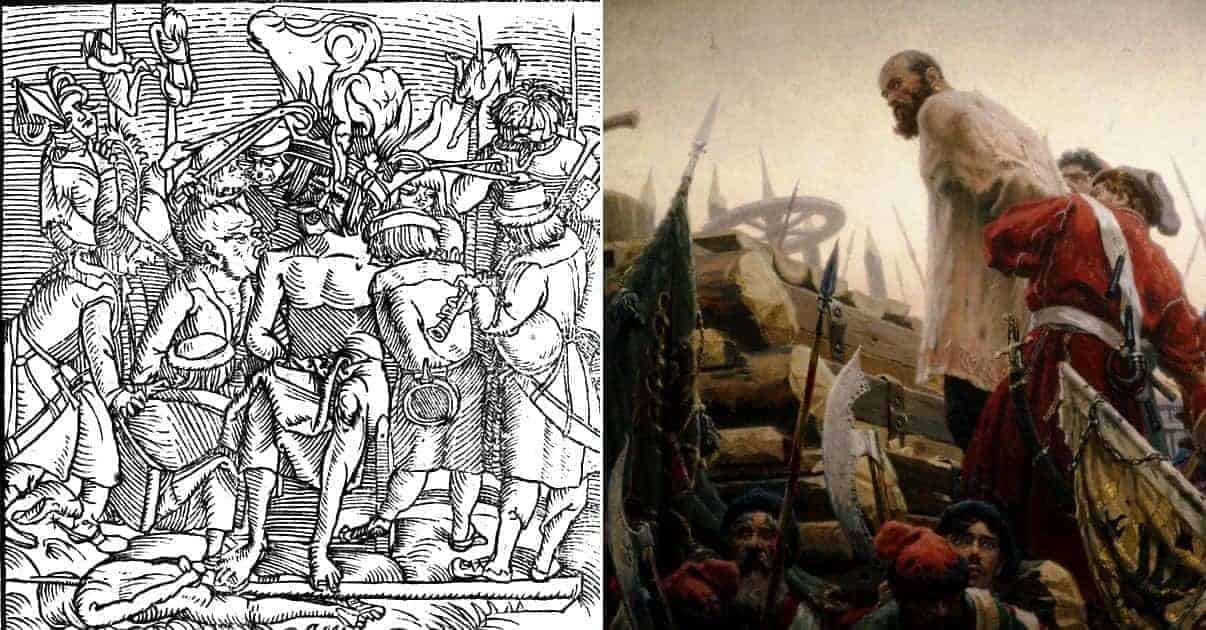
Wherever and however the uprising began, shared and widespread grievances ensured that it spread quickly among the peasantry. The pent up resentments also ensured that when the peasants finally turned to violence against their noble lords, they turned to violence in a big way. Atrocities abounded, and a noble or landlord who fell into the rebels’ clutches was in for rough treatment, in which a captive being forced to run a gauntlet between rows of peasants wielding clubs and whips was considered to be at the milder end of the spectrum.
Many were inspired by changes brought about by the Reformation, recently launched by Martin Luther, and invoked divine law to support peasant rights and freedom from oppression by the nobles and landlords. The peasants’ demands were encapsulated in a manifesto titled The Twelve Articles of the Christian Union, which also provided biblical justification for the rebels’ cause.
Some prominent Protestant reformers, such as Huldrych Zwingli and Thomas Muntzer, supported the peasants and the justice of their cause. Martin Luther, however, knowing on which side his bread was buttered, wanted nothing to do with the rebels and sided with the nobility, going so far as to pen a pamphlet titled Against the Murderous, Thieving Hordes of Peasants.
The revolt spread quickly through Germany, and at its height, over 300,000 peasants were under arms. However, their lack of organization, military training, artillery, or cavalry, doomed them to ultimate defeat. As with most peasant uprisings, the revolt was crushed once the forces of reaction gathered their strength, and the peasantry were subjected to widespread retaliatory vengeance in which over 100,000 were massacred. Notwithstanding the revolt’s failure, it had a lasting impact on history, as The Twelve Articles – the document listing the peasants’ demands – has been described as an inspiration for the French Revolution and a model for America’s Bill of Rights.


