16. Ballard used the techniques developed for Scorpion to locate and explore Bismarck
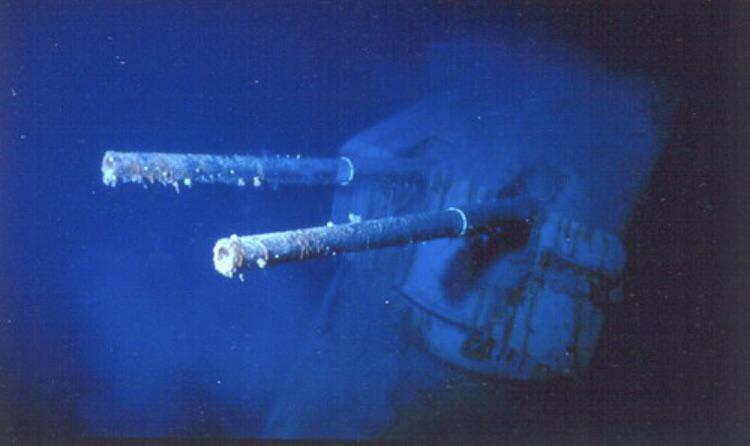
In 1988 Ballard and his team began a search for the wreck of Bismarck, using the techniques developed in the exploration of the sunken Scorpion. The last violent moments of the German battleship were well documented by survivors from the German battleship and British naval records and observations, but the location of the wreck remained elusive. The search was inconclusive. Ballard returned to the site the following year near the end of May, and the search team found evidence of a massive avalanche down the side of a seamount, the source of which proved to be the huge battleship sliding down the side of the inactive volcanic mountain as it settled to the bottom.
The hull of the ship was upright, sitting two-thirds down the slope with its bow nearly buried in the debris of the avalanche. Ballard found the hull to be in remarkably good condition, intact other than a short section of the stern, which had broken off. The four turrets of the main battery had fallen out as the ship rolled over during sinking, and are on the bottom upside down near the hull. Ballard’s team announced the finding of the ship and released photographs of the wreckage, but refused to announce its precise location, in order to prevent the scavenging of the ship as was already happening to Titanic.


