Back to the front page
Crime

History’s Most Lunatic Events and People

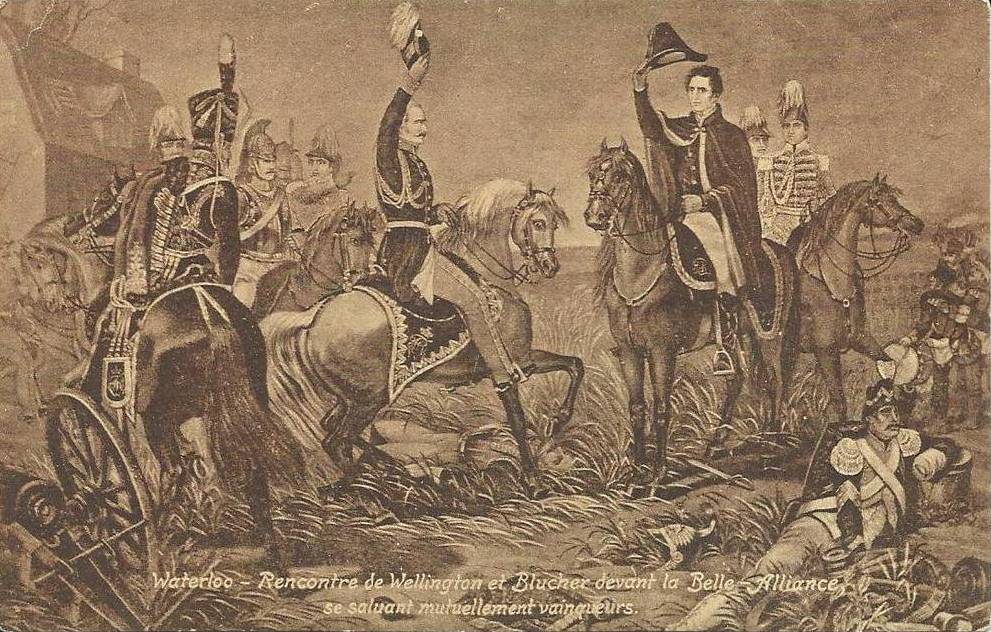
La Belle Alliance - Battle of Waterloo
Blucher, left, meeting Wellington at Waterloo. Wikimedia
Advertisement

38. A Head Case From Early On

Prussian hussars. Art Station

Blucher gained significant experience as a cavalry officer during the Seven Years War. He had an abundance of wild courage and an aggressive way about him, that made him a great fighting officer. However, while that kind of high-strung and hard-charging temperament was an asset during wartime, it was a decided liability during peacetime. That became clear in 1772, when then-Captain Blucher subjected an unruly priest to a mock execution.

Even by eighteenth-century standards, mock executing priests was frowned upon – the behavior of a lunatic, not that of a professional officer in the army of a civilized state. As a result, Blucher was passed over for promotion to major in 1773. Never known for being able to keep his temper in check, Blucher submitted an angry letter of resignation from the Prussian Army. An incensed King Frederick the Great responded: “Captain Blucher can take himself to the devil!

Written by

A lifelong history buff, I developed a particular passion for WW2 history as a child, when I spent hours listening to my grandfather, enraptured, as he recounted his wartime experiences in the British East African Campaign and with the British 8th Army in North Africa.

I graduated with a history BA from George Mason University, then went on to get a JD from the University of Virginia School of Law. After lawyering for a decade, I moved to sunny Rio de Janeiro and a less demanding career, opening a tourism agency in Copacabana.

A big chunk of my free time is spent blogging (you can follow me on Quora https://www.quora.com/profile/Khalid-Elhassan ) or freelance writing, mostly about my favorite subject, history.

Advertisement

Keep reading