
The Photo That Captured the Decline of Britain’s Colonial Fortunes in Asia

In 1942, the Japanese invaded the Malay Peninsula from the north, and brushed aside or sidestepped all opposition. Although outnumbered by the British, they swiftly reached and captured the fortress city of Singapore at the peninsula’s southern tip. That convinced the British that their foes were natural “jungle fighters”. However, Japan has no more tropical jungles than does Britain, and the Japanese had no more natural aptitude for jungle combat than any other people who dwell well north of the Tropics. The Japanese won because their troops were hardened veterans, while their opponents were inexperienced and ill-trained. Japanese soldiers were also innovative and adaptable. For example, their vanguard commandeered bicycles to speed up the advance, while British commanders ranged from mediocre to incompetent. British generals saw all the greenery of the Malay Peninsula, assumed it was impenetrable jungle, and thus never expected an advance on Singapore from that direction.
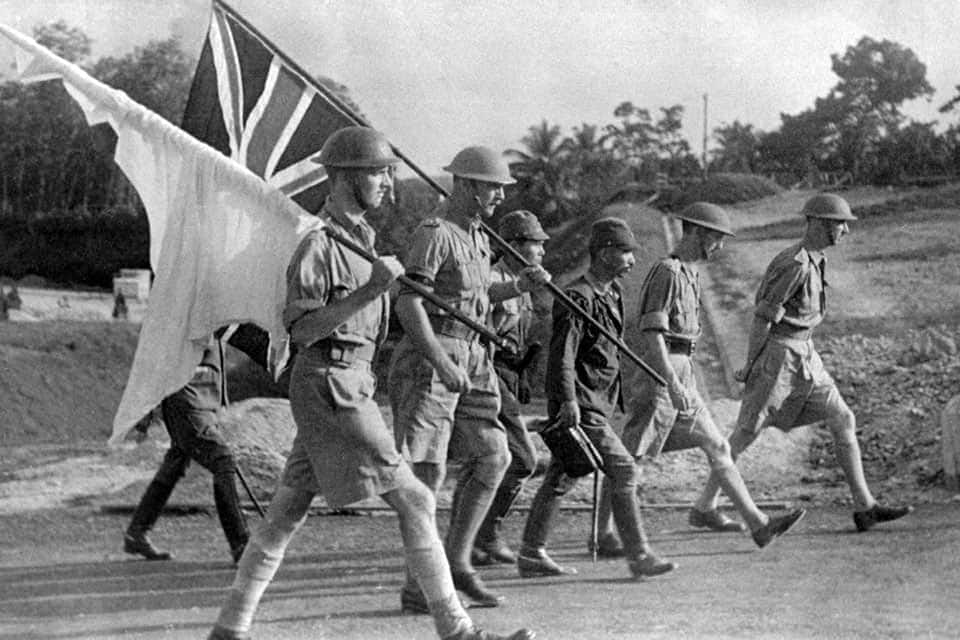
British commanders set up defensive positions, frequently anchoring their flanks to “jungle” on one or both sides. However, much of the foliage was not jungle, but plantations. They looked formidable when seen from the air, but on the ground they posed no barrier, comprised as they were of rows of trees with wide spaces in between, carefully cleared of underbrush. They formed straight leafy boulevards, through which the Japanese easily bicycled or marched in the shade. The result was a humiliating surrender of a large British garrison in Singapore to a smaller Japanese force. Images of the surrender, capturing the British commander, Lieutenant General Arthur Percival as he toted a Union Jack while an aide carried a white flag, circulated around Asia. That broke the spell of British colonial invincibility, and hastened the fall of the British Empire after the war.


