In March 1944, as Allied bombers pounded Nazi-occupied Europe from their bases in southern Italy, the deadliest threat to one U.S. bomb group wasn’t the Luftwaffe — it was the ancient volcano looming over their airfield, stirring to life for the first time in nearly four decades.
79 AD: The Volcano That Never Truly Went Quiet
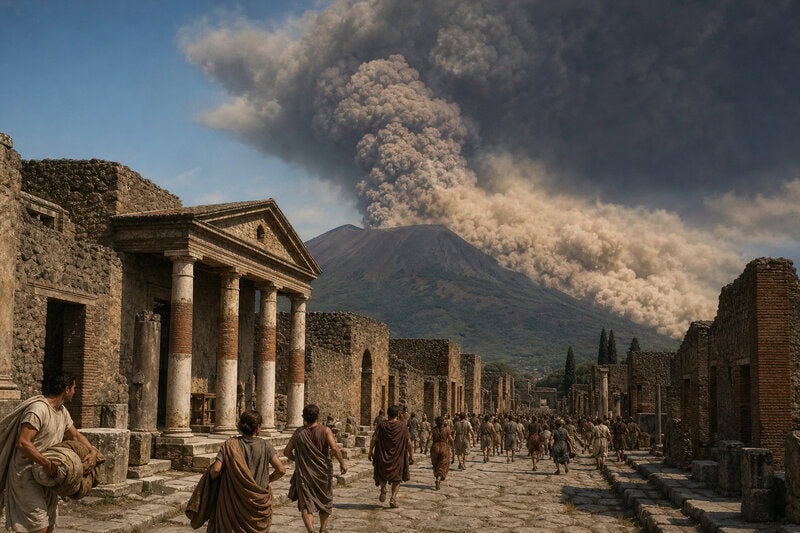
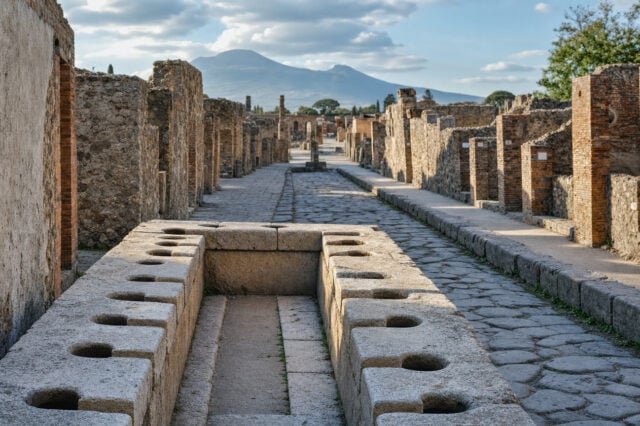
When Vesuvius erupted in 79 AD, it didn’t just destroy Pompeii and Herculaneum — it froze them, burying thousands of residents under meters of ash and pumice and creating an accidental time capsule that still astonishes archaeologists today. The history of Vesuvius stretches across millennia of repeated violence, with dozens of significant eruptions in the centuries that followed, each one reminding those living in its shadow that the mountain was resting, not retired.
By the time World War II brought American servicemen to the region, Vesuvius had been quiet since 1906 — nearly four decades of silence. That was long enough, apparently, to make parking a fleet of heavy bombers at the volcano’s foot feel like a perfectly sensible decision.
1943: The Allies Choose a Volcano’s Shadow for Their Airfield
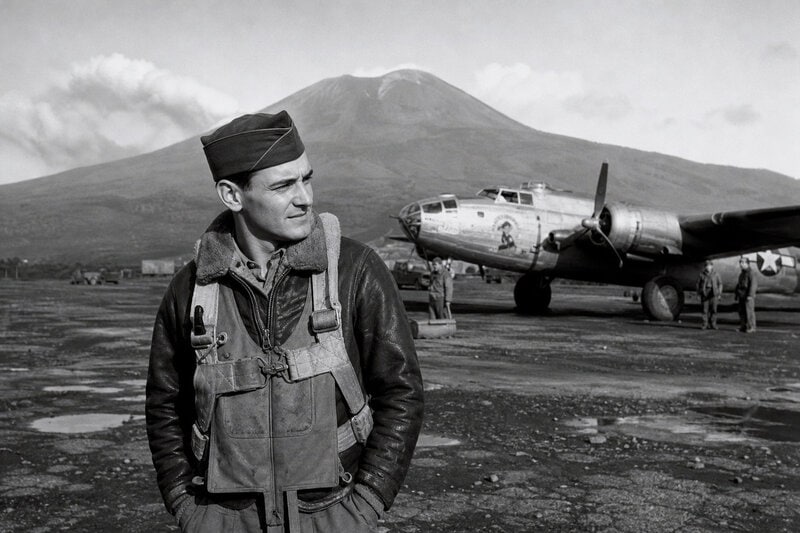
After the Allied invasion of Italy in 1943, the U.S. Army Air Forces’ 340th Bomb Group established operations at Pompeii Airfield, a base positioned near the foot of Vesuvius just outside Naples. The logic was sound by purely tactical standards: the terrain was flat and workable, and Naples was the beating heart of the Italian campaign’s logistics and supply chain.
No formal warning about volcanic risk appears to have made its way through the chain of command. With the mountain dormant for the better part of four decades and a war actively demanding attention elsewhere, the geological hazard beneath the runway went largely unconsidered.
March 18, 1944: Vesuvius Wakes Up
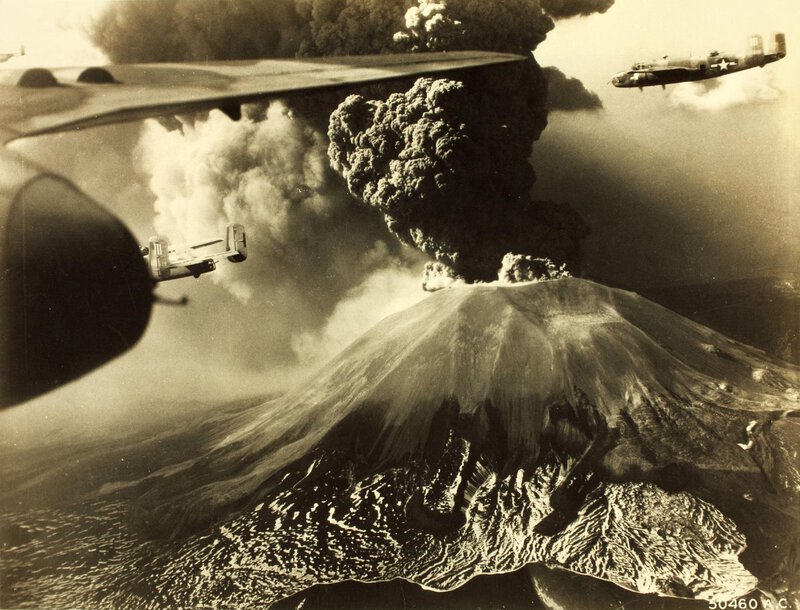
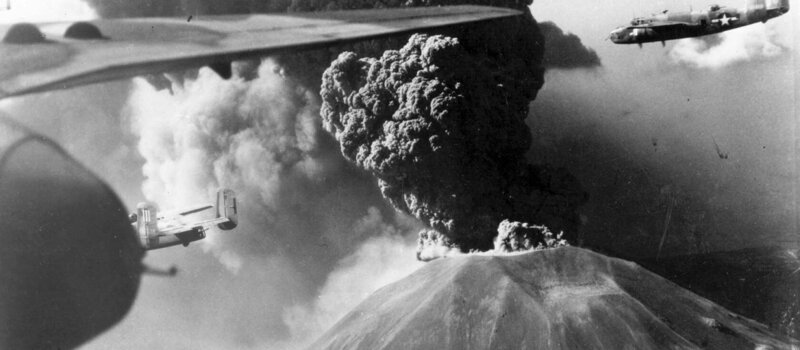
On the evening of March 18, 1944, Vesuvius ended its long silence. Lava began spilling down the volcano’s flanks in slow, glowing rivers, and the sky above the mountain took on an orange glow visible for miles across the Bay of Naples. The initial phase was destructive but not explosive — the lava crept rather than surged, giving civilians in its path precious time to gather what they could and flee.
For American servicemen stationed nearby, the eruption was, at first, more spectacle than threat. Soldiers gathered at a distance to watch, writing home about the strange experience of witnessing one of nature’s great performances while a war churned on around them. Photographs of American troops watching the eruption of Vesuvius capture that mixture of awe and disbelief on their faces.
March 19-21, 1944: Lava Consumes the Towns of San Sebastiano and Massa di Somma

As the eruption intensified over the following days, the towns of San Sebastiano al Vesuvio and Massa di Somma bore the full weight of Vesuvius’s destructive power. Lava flows swallowed homes, churches, and vineyards that families had tended for generations, leaving only rooftops and chimneys protruding from the cooling rock. Thousands of residents were evacuated in an operation conducted in parallel with an active war — a logistical reality that defined life in wartime Italy.
Allied military personnel and journalists documented the destruction in real time, some lending hands to the evacuation effort while, just miles away, the battles of Monte Cassino and Anzio consumed thousands of lives. The eruption and the war existed simultaneously, each indifferent to the other.
March 22, 1944: The Eruption Turns on the Bombers
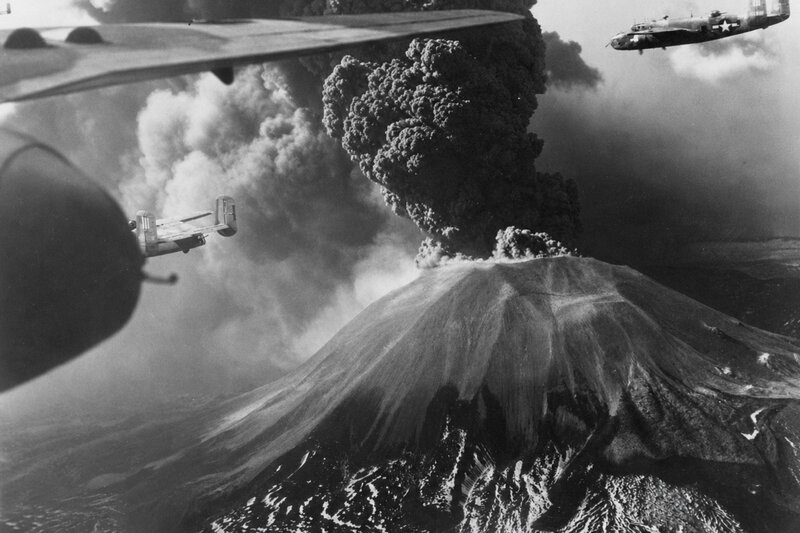
Four days into the eruption, the character of Vesuvius’s activity shifted sharply. The volcano began hurling large incandescent rocks skyward and generating dense clouds of wind-driven tephra — hot ash, cinders, and debris that the wind carried directly toward Pompeii Airfield. What had been a distant, watchable event suddenly became an immediate emergency for the 340th Bomb Group.
Hot ash and cinders rained down onto the B-25 Mitchell bombers parked on the flight line. The accumulating weight of ash buckled wings; the heat and flying embers ignited aircraft fabric and fuel. Fires spread down the rows of parked planes, and ground crews found themselves powerless against a force that no amount of training or ordnance could answer. The eruption’s assault on the Allied bomber base near Naples unfolded with brutal efficiency.
Dozens of B-25s Wrecked — More Than the Luftwaffe Destroyed That Same Week
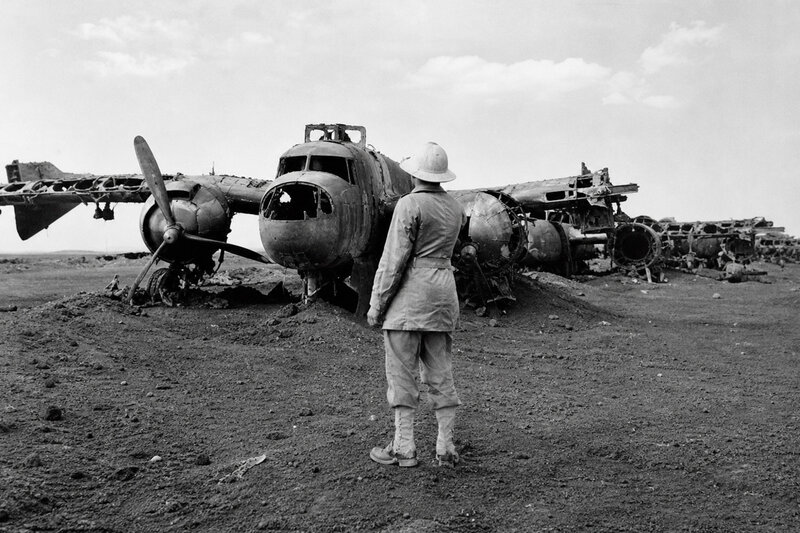
When the destruction was tallied, the numbers were striking. Dozens of B-25 Mitchell bombers were destroyed or rendered beyond repair. German air operations across the entire Mediterranean theater that week inflicted far fewer losses on Allied aircraft, making Vesuvius, by a wide margin, the most destructive force the 340th Bomb Group encountered that month.
Each destroyed B-25 represented far more than twisted metal. Behind every aircraft lay months of factory production in the United States, transatlantic shipping through U-boat-patrolled waters, and the accumulated training of experienced crews. The volcano had, in a matter of hours, undone a logistical effort that had taken the Allied war machine the better part of a year to assemble.
Ash Blankets Southern Italy

The eruption’s reach extended well beyond the airfield. Ash fell on the town of Ottaviano and spread a grey shroud across much of southern Italy, settling on roads, rail lines, and agricultural fields already strained by two years of war. Allied supply operations around Naples — the critical artery feeding the Italian campaign — were complicated by reduced visibility and ash-coated equipment.
For Italian civilians already enduring occupation, bombardment, and food shortages, the eruption compounded an already catastrophic situation. The ash that had buried Pompeii nearly two thousand years earlier was falling again, this time on a population caught between an ancient geological force and a modern industrial war.
The Soldiers Who Watched, Photographed, and Wrote Home About It
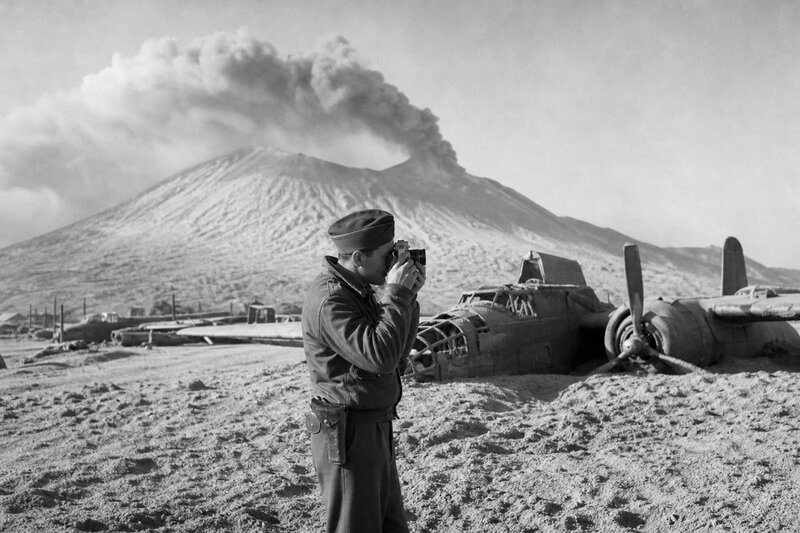
Despite regulations restricting personal cameras, American servicemen produced a remarkable photographic and written record of the eruption. The images they captured — rivers of lava moving through olive groves, B-25s half-buried in grey ash, the mountain lit from within against a night sky — are among the most vivid documents of the entire Italian campaign. Members of the 340th kept diaries and wrote letters describing the roar of the mountain and the surreal sight of their own aircraft being consumed by volcanic debris.
The story made it home. Life magazine and other publications ran photographs of the eruption, briefly pulling American readers’ attention away from battlefield dispatches and toward an older, stranger kind of destruction. For a moment, Vesuvius competed with the war for the front page.
Late March 1944: The Eruption Subsides, the 340th Regroups
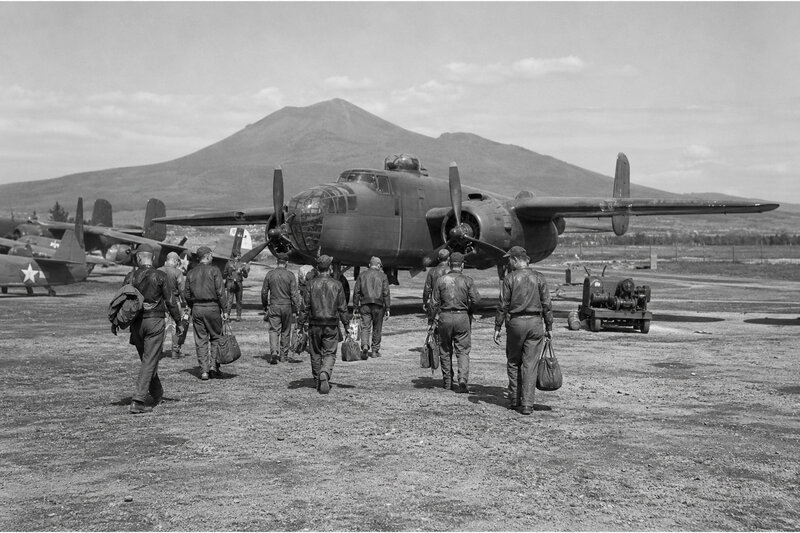
By late March 1944, Vesuvius fell quiet. What had begun on the evening of March 18 wound down over the course of roughly two weeks, ending what would prove to be the volcano’s last major eruptive episode to date. The 340th Bomb Group was re-equipped with replacement B-25s and was back in combat operations within weeks — the war waited for no one, not even a volcano.
In the official histories of the Italian campaign, the episode shrank to a footnote. The concurrent battles at Monte Cassino and the Anzio beachhead were consuming tens of thousands of lives and generating the kind of human drama that fills chapters. Vesuvius, having done its worst, was quietly filed away.
Vesuvius Today: A Dormant Giant Above a City of Millions
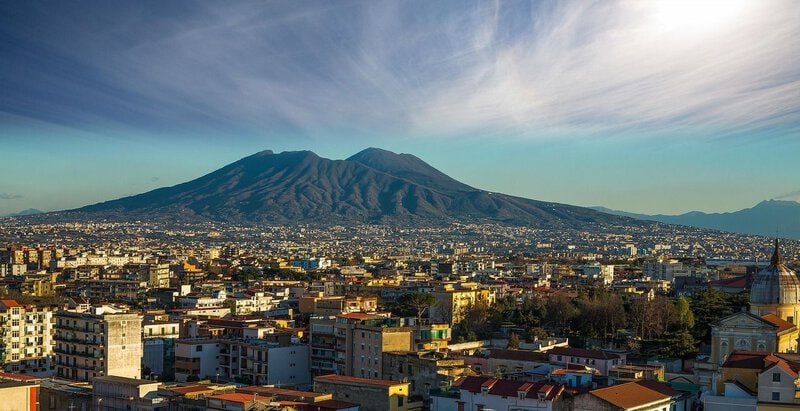
The 1944 eruption remains Vesuvius’s most recent, meaning the volcano has now been silent for more than 80 years — a dormant stretch longer than any since the 1600s. Volcanologists regard this extended quiet not as reassurance but as cause for careful monitoring. The population living within the volcano’s designated red zone numbers in the hundreds of thousands, part of a greater Naples metropolitan area of roughly three million people who have built their lives on some of the most fertile — and most dangerous — soil in Europe.
The wrecked B-25s and the ruins of Pompeii rest in the same shadow, separated by nearly two millennia but subject to the same geological force. Vesuvius has shaped the history of this landscape since before recorded memory, and its silence, however long, has never been a guarantee.
From the soldiers who stood open-mouthed on the flight line in March 1944 to the volcanologists monitoring seismic tremors today, the lesson of Vesuvius has remained consistent: the mountain is always the most dangerous thing in the room, and it keeps its own schedule.