On a cold Northumberland morning, a group of university freshmen who had never held a trowel before pressed those tools into the earth for the very first time — and the earth, apparently unaware it was supposed to ease them in gently, handed them gold.
The Morning the Ground Gave Everything Up
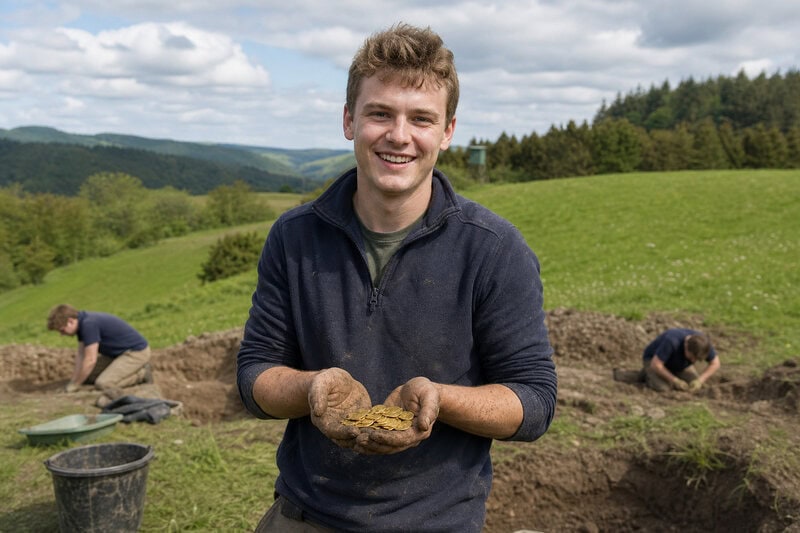
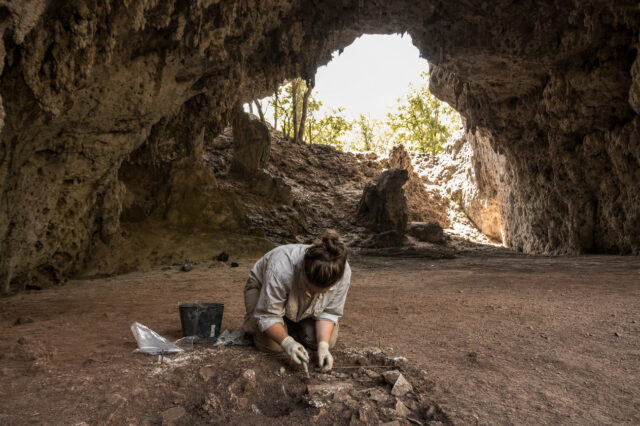
The field at Redesdale looks, at first glance, like any other stretch of upland Northumberland pasture: green, quietly windswept, indifferent to human ambition. A Newcastle University archaeologist had chosen it carefully — not because he expected drama, but because prior survey work suggested buried Roman activity worth investigating. The dig was designed as a field school: a supervised training exercise where first-year students would learn the fundamental rhythms of excavation — how to hold a trowel, how to read a soil layer, how to record what they found before they touched it. Modest, methodical, educational. That was the plan.
Within hours of breaking ground, the plan had been comprehensively revised by the ground itself. Freshman archaeology students at Newcastle University found an array of Roman treasures, including part of a gold chain — small, articulated links that had lain undisturbed for roughly two thousand years — alongside other gold jewelry, carved stone inscriptions, and a finely worked gemstone. The haul was enough to stop even seasoned researchers mid-sentence. Reports note carefully that researchers were surprised by both the quantity and the quality of what emerged. Archaeologists choose the word “surprised” with some care. This was that kind of surprised.
The students doing the finding had never excavated before that morning. The first thing the soil gave them was gold.
What They Actually Found
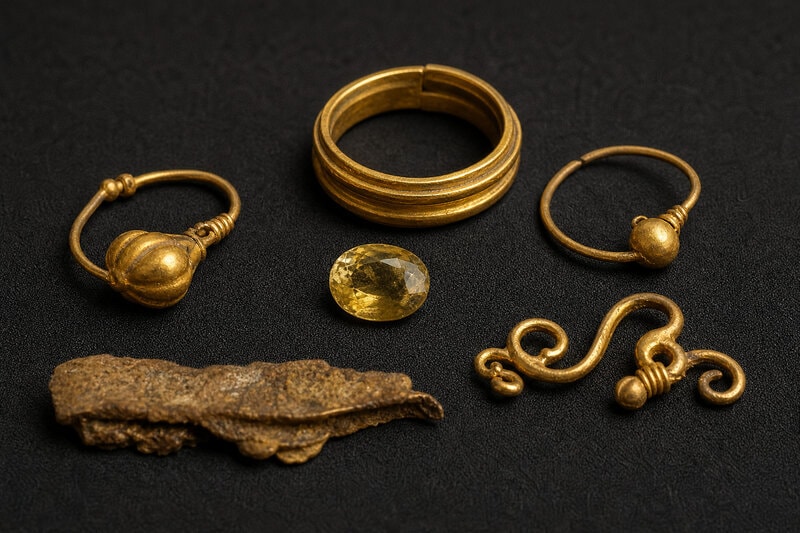
It is worth pausing on the objects themselves, because they resist being reduced to a list. The discoveries include gold jewelry, inscriptions, and a finely carved gemstone, found at the site in Redesdale, Northumberland — but each of those categories carries its own freight of human meaning.
The gold chain fragment, with its small linked sections, is the kind of object that prompts an involuntary shift in scale. Someone wore this against their skin. Someone fastened it, or had it fastened, as part of dressing on an ordinary morning — or perhaps an important one — sometime in the first few centuries of the common era. It is personal in a way that a coin or a potsherd, for all their archaeological value, rarely manages to be.
The gemstone is a different kind of intimacy. Finely carved intaglio gems — stones engraved with figures or symbols in reverse relief — served as personal seals in the Roman world, pressed into soft wax to authenticate documents, letters, and contracts. This small stone may once have closed a military dispatch, authorized a supply order, or simply identified its owner in the daily transactions of frontier life. It is, in effect, a Roman signature, surfacing in a Northumberland field two millennia after it was last pressed into wax.
The stone inscriptions add a third register entirely. Carved Latin text was how the Roman world made things official and permanent: dedications to gods, records of building projects, memorials to the dead. Fragments of inscription carry the possibility — tantalizing, not yet resolved — of names. A commander. A deity. A unit. Someone whose existence may already be documented in Roman military records, waiting to be reconnected to a physical place.
Taken together, the assemblage spans the personal and the administrative, the decorative and the functional. This is not the profile of a single buried hoard. It is a cross-section of Roman life — which raises the question of what kind of place generated it.
Redesdale: Why This Valley Keeps Its Secrets So Well
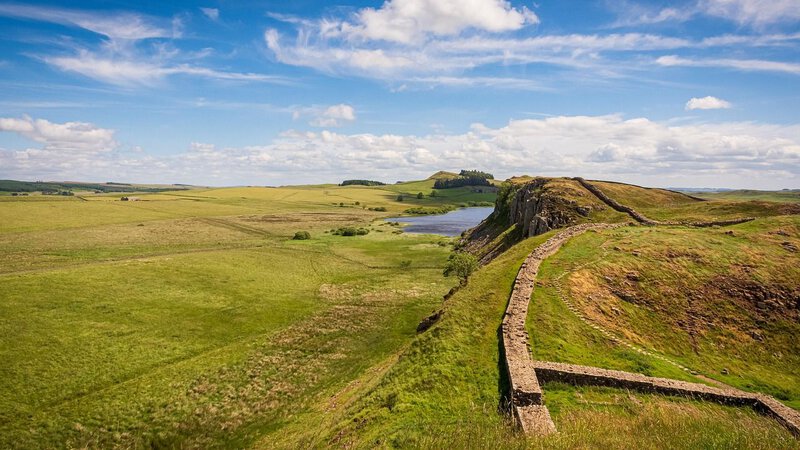
Redesdale sits roughly fifteen miles south of Hadrian’s Wall, in the landscape that made the Wall possible. This was not the frontier itself but the hinterland behind it: the zone of forts, roads, supply depots, and administrative centers that sustained the empire’s northernmost edge for generations. High-status objects — gold jewelry, personal seals, formal inscriptions — do not accumulate randomly. They cluster around people with resources and authority, around buildings that mattered, around sites where Roman power was exercised and displayed.
The region’s upland pasture has historically been spared the deep ploughing and development that disturbs or destroys buried archaeology elsewhere. Roman layers can survive here intact, and close to the surface — close enough, it turns out, for a careful first-year student with a brand-new trowel to reach on their first morning.
The Newcastle team had chosen Redesdale based on prior survey work indicating buried Roman activity worth investigating. What the freshmen found on day one suggests those surveys had underestimated what was actually there — a revision that will almost certainly reshape the site’s entire research agenda going forward. The field that looked like any other field has, it appears, been quietly holding something significant for a very long time.
The Pedagogy of Surprise
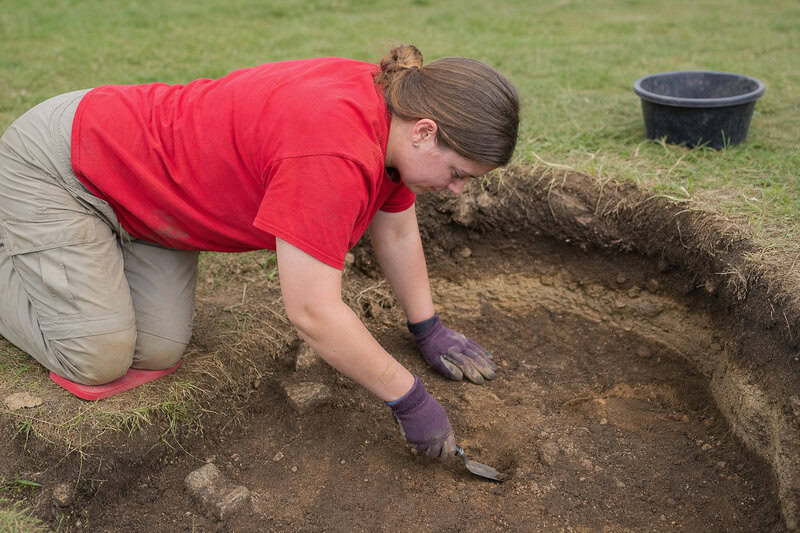
Field schools occupy a particular place in archaeological education. The logic is straightforward: you cannot learn excavation from a textbook, any more than you can learn surgery from a diagram. Students must work real ground, process real finds, and make real decisions — under supervision, with the safety net of expert oversight, but with actual soil on their hands and actual consequences to their choices. The pedagogical value lies in the method and the discipline, not in the expectation of discovery. Most field schools yield instructive but modest results.
The Newcastle dig was designed as exactly that kind of exercise. First-year students would learn trowelling technique, context recording, and finds processing. They would develop the habits of observation and documentation that separate scientific excavation from treasure hunting. The site was real, the work was real, the learning would be real — and if something interesting turned up, so much the better.
What turned up was rather more than “something interesting.” The surprise registered by the research team is not a minor footnote to the story — it is the detail that anchors its significance. When researchers with significant excavation experience describe a find as genuinely surprising in its quantity and quality, the words carry weight. The scale of what the students uncovered on their first excavation reframes what Redesdale may represent in the wider landscape of Roman Britain’s northern frontier.
For the students, the experience transformed in real time from a training exercise into a live discovery with actual research consequences. For the research team, it did something similar in the other direction: a site chosen partly for its pedagogical convenience revealed itself as something archaeologically substantial. The ground, as it sometimes does, made its own argument.
First-Timers, Real Stakes
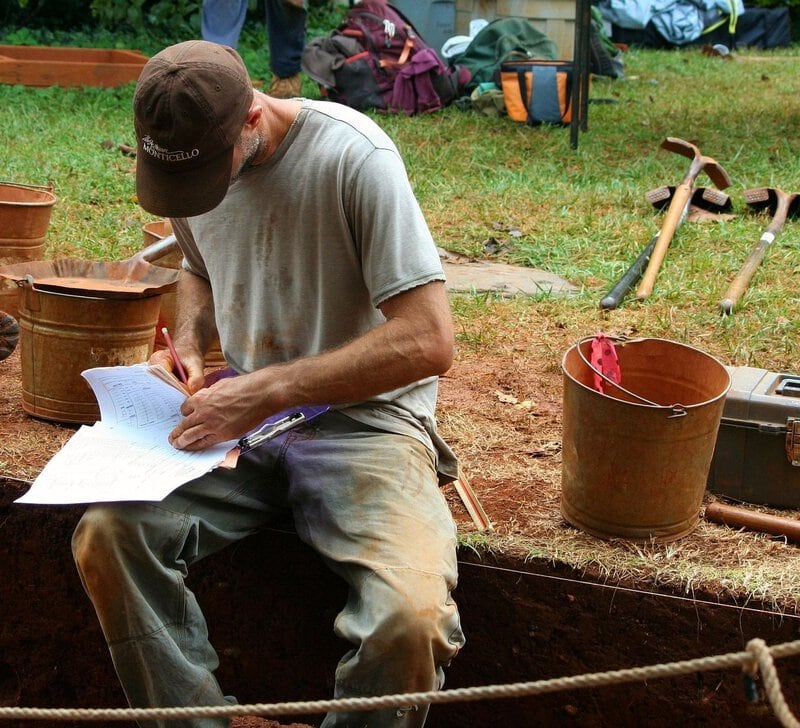
Excavation is irreversible. This is the fact that every student in a field school learns early, and it carries a weight that grows heavier the more you think about it. The act of lifting an artifact from its context destroys that context permanently. The relationship between an object and its surrounding soil — its precise position, its depth, the layer it sat within, the other objects nearby — exists only once. Record it correctly, and that information becomes part of the archaeological record forever. Fail to record it, and it is gone. No second chances, no restoration, no undo.
This is why the training matters as much as the finding. When a Newcastle freshman uncovered a length of gold chain or pressed a carved gemstone free from two thousand years of soil, protocol kicked in before the awe did: document it, photograph it, record its coordinates, call it in. The discipline that makes the difference between a treasure hunt and a scientific discovery had been drilled into these students before they ever touched the ground — and it held, on a morning when holding it must have required some effort.
Those students are now part of the permanent provenance of objects that will enter the archaeological record and, eventually, the published literature. Their careful work on that first morning will be attached to these finds as long as the finds are studied. It is not a small thing to be the person who first saw a Roman gold chain in two millennia. It is an even more specific thing to be a college freshman who had not held a trowel four hours earlier.
Roman Britain Through a Gemstone: The Bigger Picture
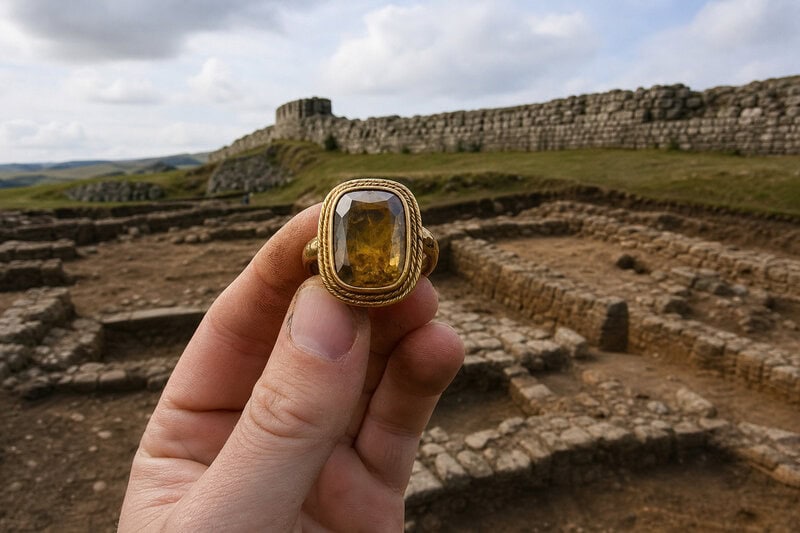
The Roman occupation of Britain lasted nearly four centuries, from the invasion of AD 43 to the effective withdrawal of imperial administration around AD 410. Northumberland represents its most militarized, most contested edge — the place where the empire drew a line, literally, in the form of Hadrian’s Wall, and committed generations of soldiers and administrators to holding it. The objects emerging from Redesdale are not civilian clutter drifting north from a distant city. They are artifacts of empire operating under sustained pressure, in a landscape shaped entirely by the demands of frontier control.
Intaglio gemstones, gold jewelry, and formal stone inscriptions cluster around Roman military and administrative elites. Their co-presence at a single Redesdale site raises a pointed question: what stood here? A fort annexe? A commander’s residence? A roadside shrine maintained by a garrison? The inscription fragments may eventually offer an answer, if the carved letters include a place name, a unit designation, or a dedicant’s name that can be cross-referenced with the written record of Roman Britain’s northern frontier.
Each such connection would do what archaeology at its best always does — give a named human face to a landscape that history tends to treat as an abstraction. The soldiers who garrisoned this frontier came from across the empire: from Spain, from the Rhineland, from the Balkans, from North Africa. Someone, one of them, wore that gold chain. Someone pressed that gemstone into wax. Someone cut those Latin letters into stone. The Redesdale find brings those lives perceptibly closer.
What Comes Next — and Why This Find Matters Beyond the Headlines
The artifacts will not remain as found. Conservation, formal analysis, comparative study, and eventual publication lie ahead — the long, unglamorous work that transforms a dramatic morning in a Northumberland field into peer-reviewed knowledge that other researchers can examine, challenge, and build upon. The discovery day is the beginning, not the end.
The Newcastle team will return to Redesdale. A find of this density and quality on the first day of excavation is not a signal that the site has given up its best; it is a signal that the site has more to give. The research questions that brought the team to this field have been substantially rewritten by what the freshmen uncovered, and answering the new questions will require more seasons, more students, and more careful work with trowels on cold Northumberland mornings.
For the students themselves, the experience has done something that no seminar, however well taught, can replicate. They have held gold that a Roman hand once wore. They have freed from soil an object that last saw light when the empire that made it still stood. They know, now, in a way that is physical and not merely intellectual, that the past is not a metaphor for proximity — it is literally underfoot, waiting with considerable patience for someone to finally ask.
The story of college students finding Roman artifacts on their first archaeology dig is also, quietly, an argument for field schools — for the stubborn pedagogical faith that untrained hands on real ground will learn things that cannot be taught any other way. The Newcastle team designed an exercise in method and found, instead, a site that may redefine what we understand about Rome’s northern frontier. The freshmen came to learn how to use a trowel. The first thing the earth gave them was gold. Archaeology rarely makes promises like that. When it does, it tends to keep them.