When Mount Vesuvius buried Pompeii in 79 CE, it committed an act of accidental genius: it sealed the city’s cesspits, drain channels, and latrine pipes at the precise moment ordinary Romans were living ordinary lives. What archaeologists have been slowly coaxing out of that preserved filth tells a story no painted mosaic, inscribed tablet, or polished marble statue ever could — a story of what people actually ate, how their bodies actually suffered, and how sharply money divided who got to relieve themselves in comfort.
Fossilized Excrement That Survived Nearly 2,000 Years
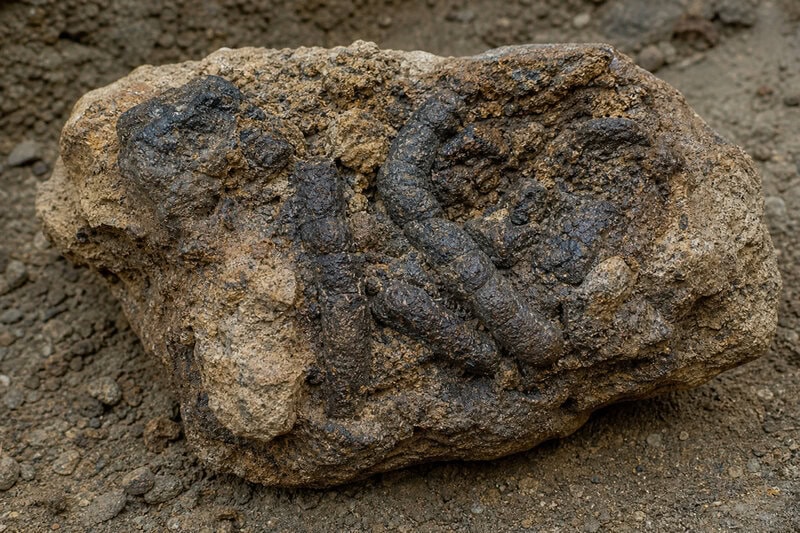
The volcanic debris that smothered Pompeii acted like a hermetic seal over the city’s waste infrastructure, trapping organic material in an anaerobic environment that short-circuited the normal process of decomposition. Archaeologists working on Pompeii toilet archaeology have recovered ancient fecal matter — called paleofeces — intact enough for modern laboratory analysis, including DNA sequencing and chemical profiling.
That organic snapshot has become one of the most direct windows into the biology of a Roman town that any other artifact simply cannot match. A mosaic can tell you what a wealthy patron wanted to project; a cesspit tells you what his household actually consumed and excreted the week the mountain exploded. The two records are not in competition — they are simply measuring entirely different things, and the cesspit is measuring the ones that matter most for understanding everyday life.
A Daily Grocery List Written in Gut Chemistry
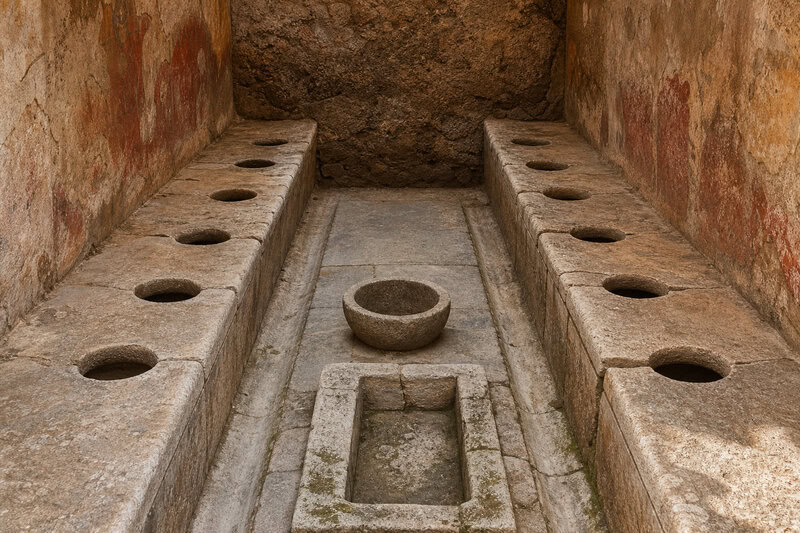
Chemical and biological analysis of waste deposits has revealed what Romans in Pompeii actually ate day to day — not what they said they ate, or what elite writers recommended, but the real diet of real people. Researchers have identified residues pointing to fish, olives, figs, lentils, and grain products, confirming that the staple diet was plant-heavy and preserved-seafood-rich, a portrait far removed from the peacock-and-dormouse excess that dominates ancient culinary literature.
Because food references in Roman writing skew heavily toward elite banquets, the latrine evidence stands as one of the only unfiltered records of ordinary Roman nutrition in Pompeii. What the gut processed and discarded is, in a very real sense, more honest than anything a Roman author chose to write down. It is worth pausing on what that means methodologically: the lower the social status of the evidence, the higher its value as a record of common experience.
Coins Dropped — or Hidden — Down the Drain

Excavations of Pompeii’s cesspits have turned up coins mixed in with organic waste, an unexpected find that required careful interpretation. Some coins were almost certainly lost accidentally — a sestertius slipping from a fold of toga while a user wrestled with heavy fabric in a cramped space. Others may carry a darker explanation: in the terrifying final hours before the eruption, a cesspit offered a hiding spot that no looter, however desperate, would want to search.
Either way, the finds underscore that Roman latrine archaeology yields economic data alongside biological evidence. Denominations, mint dates, and circulation patterns embedded in layers of organic waste let numismatists and archaeologists cross-reference the financial life of a neighborhood against its biological record — an unlikely but genuinely productive combination that no single discipline working alone could achieve.
Phantom Upper-Floor Toilets Visible Only as Pipe Stubs
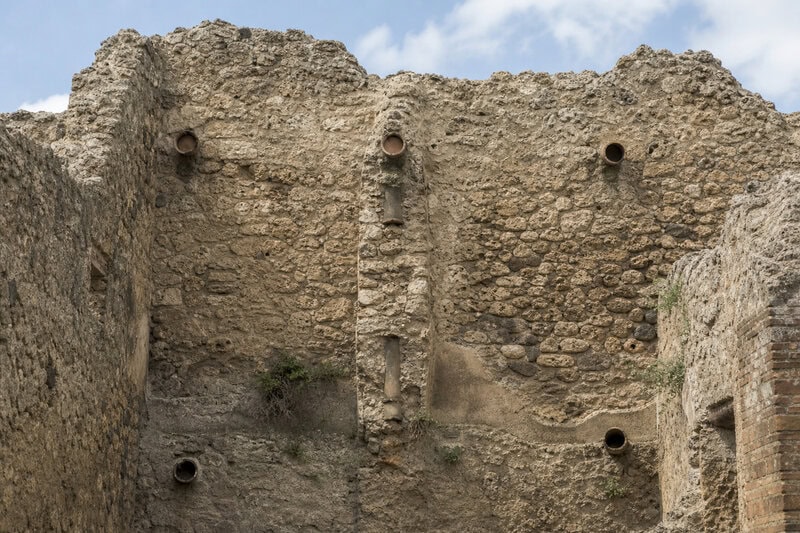
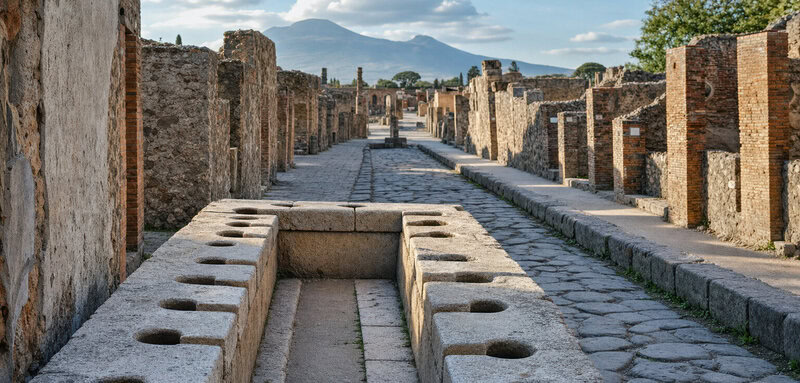
Structural analysis has identified vertical drain pipes running up through Pompeii’s walls to floors that no longer exist, strongly indicating that toilets were once installed on second stories. Because the upper floors of most Pompeian buildings collapsed or eroded long before modern excavation began in earnest, this plumbing ghost-evidence is the only proof those facilities ever existed — the pipes are, in effect, signatures left by rooms that have entirely vanished.
The discovery, reported by NBC News, reshapes assumptions about Roman domestic sanitation: multi-story convenience was apparently expected rather than exceptional. A city we sometimes imagine as a single-story Mediterranean streetscape was, in plumbing terms, considerably more vertical than its current ruins suggest. The pipes also imply construction investment and ongoing maintenance costs that point to deliberate planning, not improvised convenience.
A Flush Mechanism Buried in the Wall
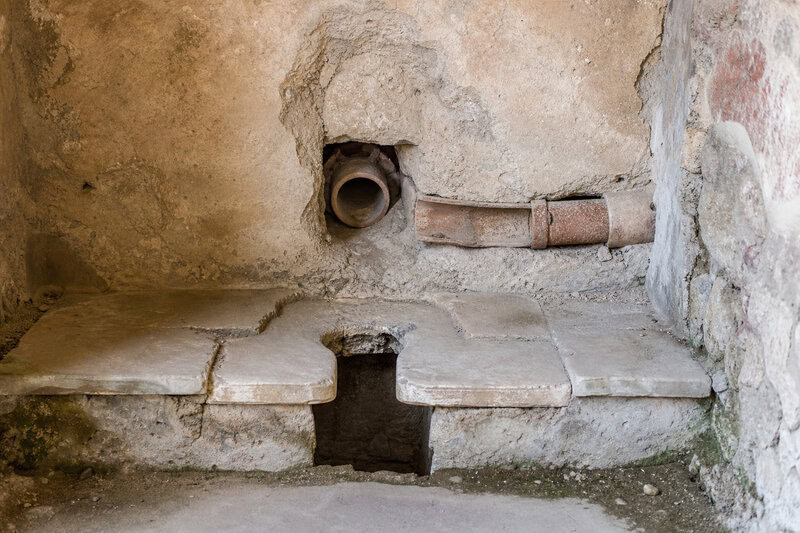
Analysis of Pompeii’s plumbing has identified side pipes connected to some toilets that likely delivered a stream of water to clear waste — a rudimentary flush system built directly into the wall. The water almost certainly came from the city’s pressurized aqueduct network, the same infrastructure that supplied the street fountains and the elaborate bath complexes the Romans are more widely celebrated for engineering.
This means certain Pompeian toilets were not static cesspits passively filling over time, but active, water-cleared fixtures that reset after each use — a function that predates the period in which running water in private homes is usually discussed in mainstream plumbing history. The engineering was neither accidental nor improvised; it was deliberate civic infrastructure applied at the household scale, as the surviving plumbing evidence from Pompeii makes clear. That the technology existed does not mean it was universal — access remained tightly bound to wealth — but its existence at all reframes what Roman domestic engineering was capable of.
A Sharp Class Divide Mapped Toilet by Toilet
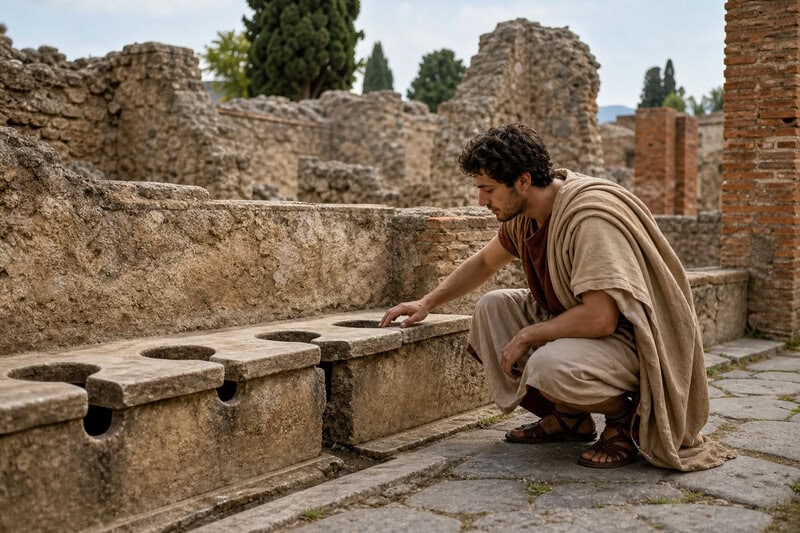
Wealthy householders in Pompeii had in-home toilets connected either to the city sewer system or to private cesspits — a mark of significant investment and social status that required both construction costs and ongoing maintenance. Poorer residents had no such access and relied on chamber pots, which were emptied into street drains, dung heaps, or handed to fullers who used urine in the cloth-cleaning process, turning bodily waste into an industrial commodity.
By mapping which addresses had sewer connections versus no plumbing at all, archaeologists can reconstruct an economic geography of the city block by block, without a single tax record or property deed. The sewer map is, in its way, a wealth map — and it reveals a city where the distance between comfort and squalor could be as short as a single city block. That geography also has public-health implications: neighborhoods without sewer access faced waste accumulation that neighborhoods with private cesspits did not, a disparity with direct consequences for the parasite loads discussed below.
Chamber Pots as Urban Infrastructure

Chamber pots were not a backup option in Roman Pompeii — they were standard sanitation technology for the majority of the population, as routine as a water jug or a cooking vessel. Ceramic vessels identified as chamber pots have been found in domestic contexts across the city, and their contents, where preserved, contribute to the same dietary and biological record as fixed latrines, extending the data set well beyond the homes of the wealthy.
The sheer scale of chamber-pot use means that waste management was an active, daily logistical challenge for the city as a whole, not a solved problem quietly confined to underground sewers. Someone had to carry, empty, and dispose of those vessels every single day — a hidden labor force whose work kept a dense urban population functioning, and whose effort left almost no written record. The absence of that record is itself informative: it marks the boundary of whose labor Roman authors considered worth documenting.
Parasite Eggs That Survived the Eruption
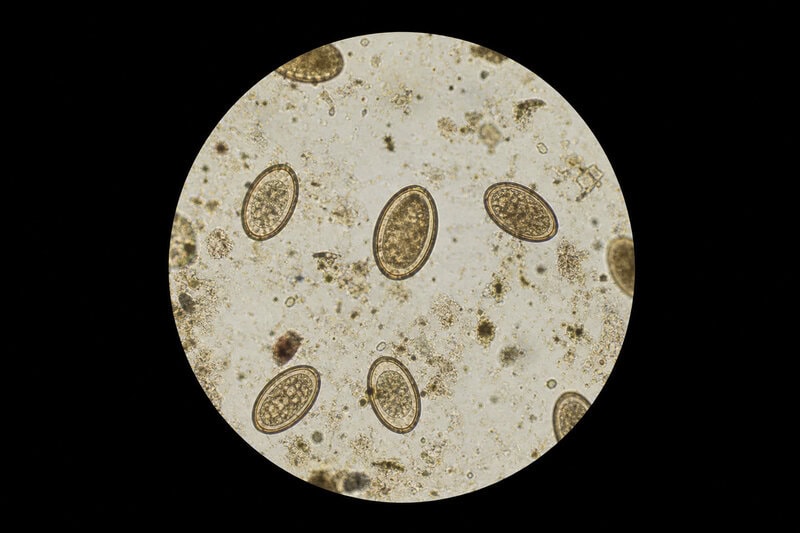
Microscopic analysis of cesspit sediment from Pompeii has identified eggs from intestinal parasites, including whipworm and roundworm species — organisms whose durable outer shells make them capable of persisting in sediment for millennia after all other organic traces have dissolved. That durability makes them reliable biological markers even in deposits where little else survives for analysis.
The parasite record tells epidemiologists which infections circulated in the population and delivers a sobering corrective to the image of Pompeii as a city of sophisticated civic engineering. Despite the aqueducts, the fountains, and the flush pipes, gut-parasite burdens appear to have been common across social classes — a reminder that having running water and understanding the relationship between contaminated waste and human disease are very different things, separated in Pompeii’s case by roughly eighteen centuries. Infrastructure without germ theory has hard limits, and the parasites in the sediment mark exactly where those limits fell.
Sewer Sediment as a Neighborhood-Level Time Capsule
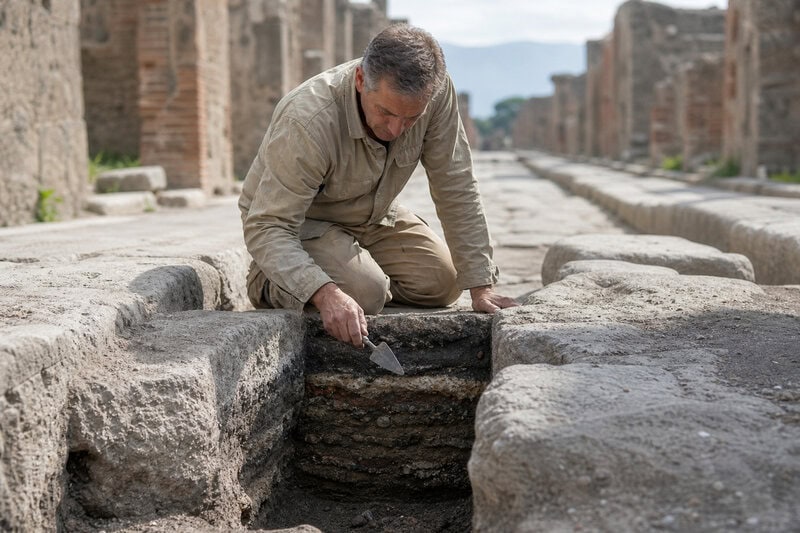
Because waste from multiple households converged in shared sewer channels, the sediment layers within those channels capture activity from an entire neighborhood rather than a single family — a collective biological diary written one deposit at a time over generations. Stratified layers can be correlated with different periods of the city’s occupation, letting researchers track changes in diet, parasite load, and refuse-disposal practices across decades before Vesuvius finally closed the archive for good.
No single mosaic covers that breadth of ordinary life across time. No inscription tracks the slow dietary shift of a working-class neighborhood across three generations. The sewer does it passively, accumulating evidence the way sewers always have — without ceremony, without authorship, and without any intention of being read at all. It is the most democratic archive in the city precisely because nobody chose what went into it.
Pompeii’s grand monuments have always drawn the eye, but it is the city’s humblest infrastructure — its drains, its cesspits, its cracked ceramic chamber pots — that has quietly held the most intimate record of how those people actually lived, eaten, and endured. The science of reading that record is still young, and each excavation season adds new layers to what can be known. Sometimes the most revealing history is the kind nobody meant to leave behind — and sometimes it takes nearly two thousand years, a buried city, and a willingness to look very closely at very unglamorous evidence to find it.