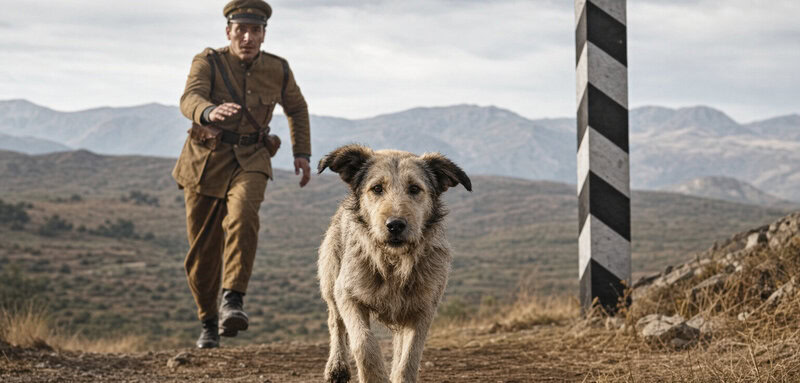
On the morning of October 18, 1925, a Greek border officer had every reason to expect an ordinary day — a cold autumn watch on a scrubby Macedonian hillside, the kind of posting that dulled the senses with its tedium. Then a dog ran the wrong way across a border, a soldier ran after it, and within a week two countries stood on the edge of war.
One Dog, One Border, One Very Bad Morning
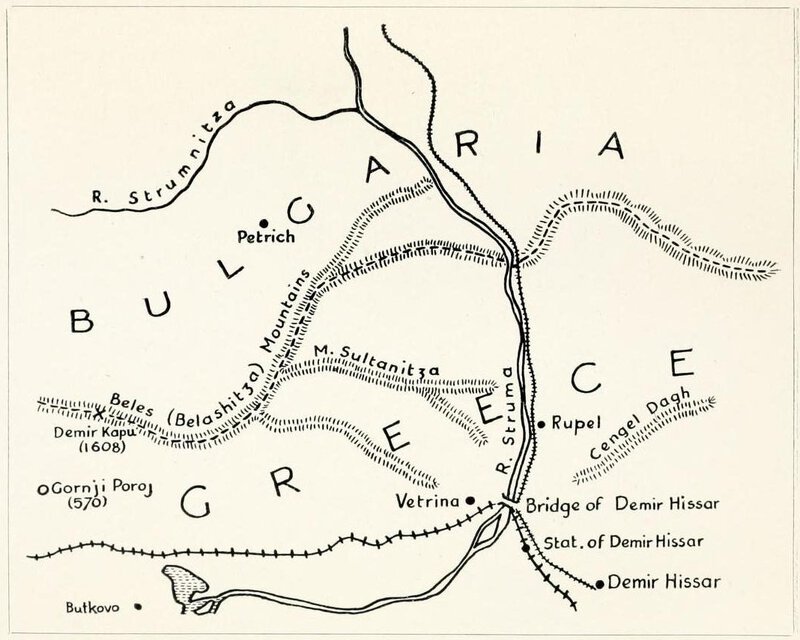
The frontier near Petrich, in what is now southwestern Bulgaria, was not the kind of place that inspired confidence in human reason. The hills looked the same on both sides of the wire. The villages looked the same. The grievances, however, were very much alive and very much pointed at one another. Greek border guards on this terrain knew the Bulgarian sentries across the line the way you know a neighbour you have never quite forgiven — close enough to watch, too far to trust.
When the soldier’s dog bolted across the frontier that morning, the man chased after it without thinking. It was the kind of instinctive, unconsidered act that people perform a hundred times before breakfast. The Bulgarian sentries, whose nerves had been filed to a point by years of cross-border skirmishes and provocations, opened fire. The Greek soldier was killed. He had crossed an international border to retrieve a dog, and he did not come back.
The incident report that followed — a document that climbed the Greek chain of command and described, in the flat language of military bureaucracy, an event of almost operatic consequence — was the spark. What it ignited would later receive two names: the Incident at Petrich, in the careful phrasing of international law, and the War of the Stray Dog, in the language of everyone who found the whole affair almost too cosmically absurd to believe.
A Border Built on Grudges
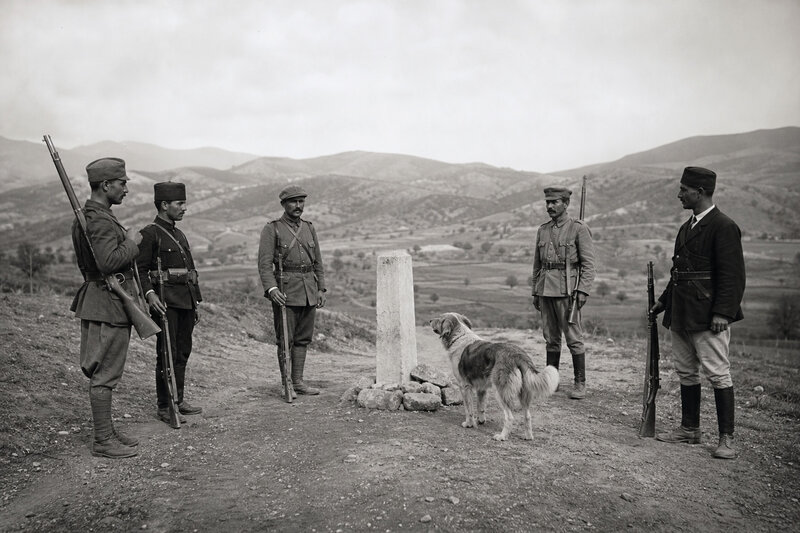
To understand why a dog could nearly start a war, you have to understand what kind of border this was. The Greece-Bulgaria frontier of 1925 was barely five years old, redrawn by the Treaty of Neuilly in 1919 after Bulgaria had backed the losing side in the First World War. The peace settlement stripped Bulgaria of access to the Aegean Sea, transferred Western Thrace to other hands, and left significant Bulgarian populations on the wrong side of new lines. For the Bulgarians, Neuilly was a wound that had not closed. For the Greeks, it was an arrangement worth defending.
In the years between the treaty and that October morning, Greek and Bulgarian irregular bands had spent considerable energy raiding, burning, and displacing one another across Macedonia in what amounted to a slow, undeclared war of ethnic consolidation. Almost every village on both sides of the frontier had relatives, enemies, or unresolved property claims across it. The official border was, in many respects, a legal fiction drawn over a landscape still crackling with unfinished violence.
As historians of the period have noted, the incident that followed was not really about a dog at all — it was the culmination of strained relations between the two nations, in a region so saturated with accumulated grievance that almost any spark would do. The dog just happened to be available.
The Incident Escalates: From Dog to Diplomatic Crisis
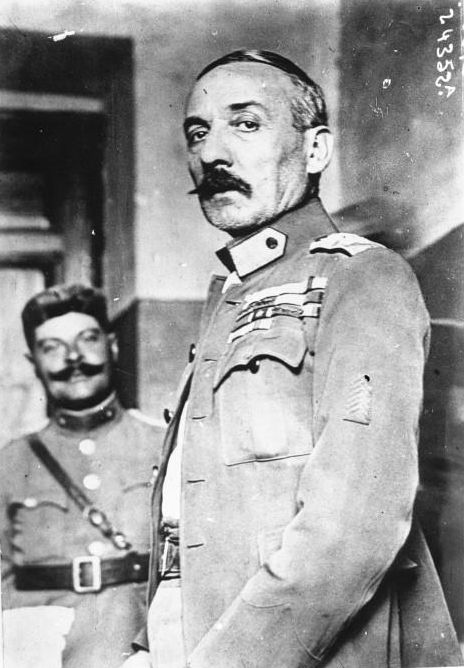
Within hours of the soldier’s death, the report had climbed the chain of command and landed in Athens. The Greek government at the time was operating under the heavy influence of General Theodoros Pangalos, a strongman who had seized effective control of the state and who was not, by temperament or by political interest, inclined toward restraint. The death of a Greek soldier on a Greek border post was exactly the kind of provocation a man like Pangalos could use.
Greece issued an ultimatum to Bulgaria demanding an apology and financial compensation within twenty-four hours — a deadline and a sum calibrated more for humiliation than for genuine diplomatic resolution. When Bulgaria’s response was judged insufficient, Greek forces crossed the border and occupied the Bulgarian town of Petrich itself. This was not a skirmish or a patrol gone wrong. It was a calculated military occupation of a foreign town, with Greek soldiers in Bulgarian streets and the Bulgarian government watching from Sofia with no good options in front of it.
For the civilians of Petrich, the geopolitics were rather less interesting than the immediate reality of a foreign army in their market square. The town that gave the incident its formal name had done nothing whatsoever to cause it — it was simply the nearest Bulgarian settlement of consequence, and consequence had arrived in uniform.
Sofia’s Impossible Position
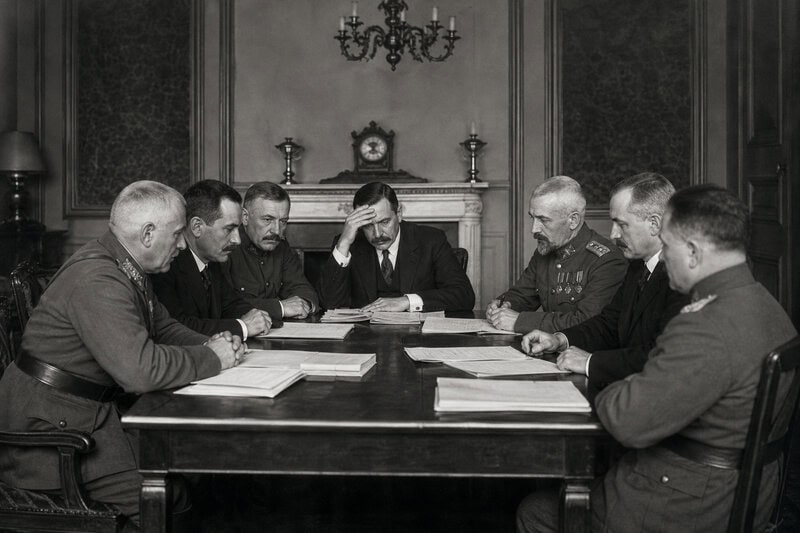
Bulgaria’s government understood its situation with painful clarity. Its military was still depleted and constrained by the same Treaty of Neuilly that had already cost the country so much — the treaty imposed strict limits on Bulgarian armed forces, which meant that expelling the Greeks by force was not a realistic option. Fighting back would likely produce a worse defeat than the one already unfolding.
So Bulgaria did what weaker parties do when the rules of the system are nominally on their side: it went to Geneva. The Bulgarian appeal to the League of Nations was filed with remarkable speed, reaching the Council within days of the invasion. Sofia’s diplomats framed the Greek action not as a disproportionate response to a border incident but as straightforward aggression against a sovereign state — which, stripped of context, it rather plainly was.
The bureaucratic paper trail that began with a dog now wound through the corridors of the League of Nations building in Geneva.
Geneva Steps In: The League of Nations at Its Best
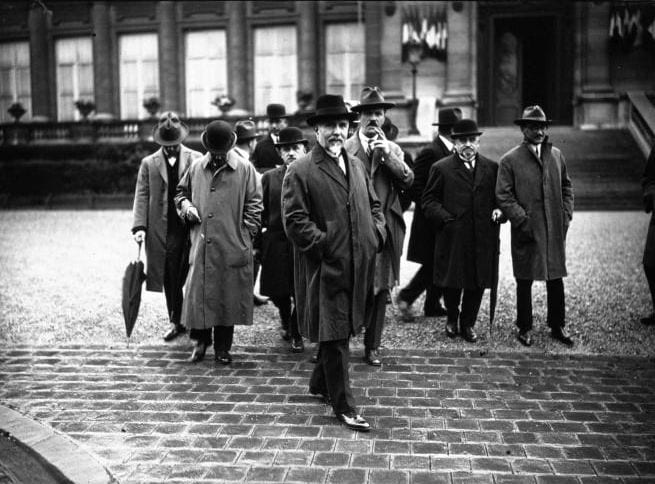
The League of Nations in 1925 was still a young institution with something to prove. It had failed visibly in earlier crises and was hungry for a success story it could point to. The Greek invasion of Petrich gave it exactly that opportunity, and the Council moved with unusual speed — an emergency session was convened, a commission of inquiry dispatched, and the machinery of collective security set in motion before the Greek occupation had time to become a permanent fact on the ground.
The League’s investigation arrived at a conclusion that would not have surprised anyone watching from outside: Greece had massively overreacted. Whatever had happened at the border on October 18 — and the death of a Greek soldier was not nothing — an armed invasion and occupation of a neighbouring town was not, by any reasonable standard of international law, a proportionate response. The ruling landed firmly in Bulgaria’s favour.
Greece was ordered to withdraw its forces from Petrich and to pay Bulgaria financial compensation — a reversal that stung Athens considerably, where Pangalos had framed the entire operation as a matter of national honour. National honour, it turned out, had a price tag, and the League had just presented the invoice. The withdrawal was carried out. The compensation was paid. The crisis, improbably, was over.
Why History Remembered the Dog and Forgot the Diplomats
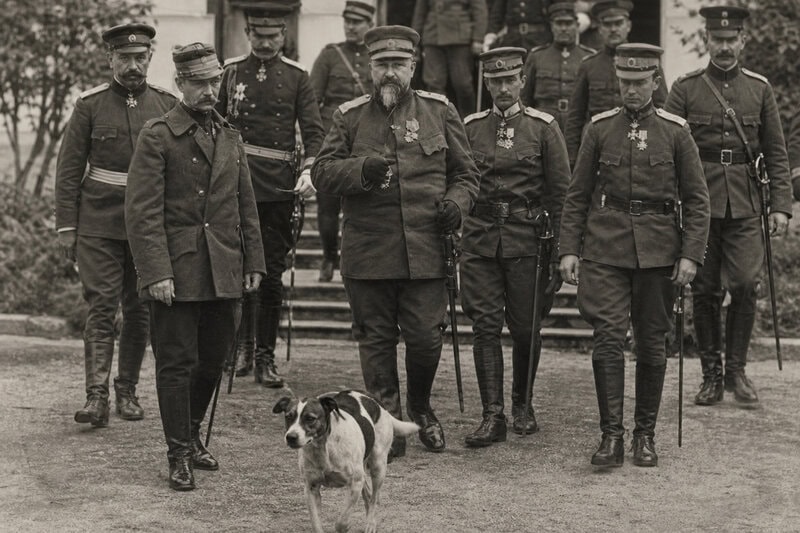
The label “War of the Stray Dog” was applied retrospectively by historians and journalists who found the gap between cause and consequence too striking to ignore. The bare facts of the case — a dog runs across a border, a soldier follows, two countries mobilise — have the structure of a parable, or perhaps a very dark joke about the machinery of escalation.
The incident takes its place in a small and strange pantheon of conflicts ignited by implausible triggers: the War of Jenkins’ Ear, the Football War between El Salvador and Honduras in 1969, the various cattle raids and boundary disputes that have sent armies into motion over the centuries. What these episodes share is not absurdity at their core — the underlying tensions are always real, always serious — but rather the accidental nature of the specific spark. The underlying tensions between Greece and Bulgaria in 1925 were entirely capable of producing a war on their own. They just happened to find their detonator in an animal with no interest in international law.
That is, perhaps, the most honest thing the incident tells us: history does not announce itself. It just starts running.
What the Stray Dog Left Behind
The Incident at Petrich is now studied in international relations courses as an early case study in two things simultaneously: the terrifying ease with which disproportionate escalation can transform a local incident into a regional crisis, and the genuine, if limited, capacity of multilateral institutions to contain such crises before they become catastrophes. It worked in 1925 partly because neither Greece nor Bulgaria was a great power with the ability to defy Geneva without consequence. The cynics who noted this were not wrong. But it worked.
For Greece, the episode was a diplomatic embarrassment that settled into an already unstable political atmosphere. General Pangalos, whose aggressive posture had driven the invasion, was overthrown in a military coup the following year — the Petrich humiliation one item among many on a long charge sheet.
For Bulgaria, the League’s ruling was a rare and genuine vindication. A small, treaty-constrained country had been invaded, had appealed to international law, and had actually won — receiving both a military withdrawal and financial compensation in return for the occupation of its town. In the brutal arithmetic of interwar Balkan politics, that counted for something.
The border officer whose report began it all was left with the particular distinction of having filed the most consequential routine document in the history of Greek-Bulgarian relations. He had watched a dog run across a border. He had done his job. The world had done the rest. As for the dog itself — presumably, eventually, it came home.